
How to Install Metal Roofing

Metal roofs are the best replacements or additions to your construction. Not only are they an attractive alternative to asphalt shingles but are also strong enough to withstand and survive hurricanes and wildfires. Metal roofs are extremely durable with a life span of 50 years or more depending on the type of metal used as well as the climatic conditions. There are several advantages of using metal roofs such as energy savings owing to their ability to reflect the sun’s heat, their tendency to last for decades, strength and durability and much more. Moreover, metal roofing sheets are cost-effective with respect to maintenance and can be easily configured into different profiles. The installation of metal roofing can be a tad bit complicated and can slightly vary based on the brand of panels you select. Bansal Roofing recommends that you seek the help of 1-2 individuals and fall protection equipment designed for roof work. It is important to understand the safety aspect of installing metal roofs. Always ensure prioritizing your own safety when working above the ground. Use gloves and safety goggles and use saws or power drill like materials with utmost safety as well. Ensure no electrical wires or low branches are hanging over the roof. Secure your ladder at the base and the point of contact with the roof. Don’t forget to test the ladder to be certain that it will not shift under your weight. Use proper fall protection equipment and be sure of the system. That it is anchored to your roof studs correctly. Wear appropriate safety shoes. Before getting to the steps of installing metal roofing, it is important to understand the various types of metal roofs that exist. Metal roofs are made from a variety of metals such as tin, zinc, steel, aluminium and copper. Every metal has its own advantages and disadvantages as well as cost consideration like factors. Steel, for instance, is the least expensive option while copper is the costliest. In addition to choices of material, metal roofs are also available in 3 design types; Through-fastened panels known as corrugated panels, Modular panels and Standing seam or crimped panels. While through-fastened corrugated metal panels are the most common of the 3, they are common and readily available roofing that can be installed over roof sheathing or purlins. Modular panels on the other hand are mimics of asphalt shingle and tile like roofing materials and are available in a wide range of colours and styles. Crimped or standing seam panels install over solid or skip sheathing; which is sheathing with gaps in between, and has a very complex installation process. Installing Metal Roofing Panels: #1 – Measure the Roof: Whether you install a metal roof with off-the-shelf corrugated panels or by replacing the special order, it is imperative to have the right length and amount of materials which can be started upon by knowing the square footage of the roof. In addition to knowing the square footage, you must also need to know the length of each section from the ridge to the outer edge of the eave. This distance will give you an idea of how long the panels need to be. For a basic gable roof, start by measuring the rake of the roof which is the point from the ridge to the outer edge of the eaves. For example 14 feet. Now measure the width of the roof: From one side of the roof all the way to the other side, including the eaves on each end. For example 35 feet. Multiply these two numbers to get the area of one side. For instance: 14 x 35 = 490. Multiply the result by 2 to get the total square footage of the roof. For example: 2 x 490 = 980 square feet. Order roofing supplies by the square foot, which shall also lower the chances of any excess or wastage. Try to order panels sufficiently long to run the full length from the ridge to the eave so that seams can be avoided. Be sure to order your roofing screws at the same time as your metal roofing panels so that you’ll match the colours, a service available at Bansal Roofing. Also Read: How To Select Roofing Sheet #2 – Remove Old Roofing and Repair Prior Damage: One can install a metal roof over asphalt shingles, however, a full tear-off of the old roof is a recommendation from our end. By removing the old roof you will be able to inspect the sheathing and flashing as well as mend any problem areas before moving forward. This reduces the chance of a leak. Begin from the top of the roof and remove the old shingles along with the vents and flashing underlayment. Hammer down or pull off any large nails that are exposed in the open by the removal. Inspect the underlying roof sheathing for damage. Make any needed repairs by using sealants and roofing adhesive. Install a layer of roofing underlayment, including a layer of felt paper or rosin slip sheet, as a personal recommendation from Bansal Roofing. Metal panels expand and contract at different rates than the sheathing, hence it’s important to follow the manufacturer’s guidelines regarding underlayment. #3 – Install Drip Edge and Closure Strips: A comprehensive guide to the same is; Use 1 1/4-inch galvanized roofing nails to install a drip edge along the eaves and rake the roof. Nail into the sheathing about every 16 inches. If installing multiple runs of drip edge, lap them by 1/4 to 1/2-inch and keep the nail back from the lapped joint. If there are gutters installed on the eaves, the drip-edge flashing should be installed to overhang the lip of the gutter by about 1/2-inch. Once the drip edge is installed around the perimeter of the roof, add sealant tape along the top of the drip edge and about 1 inch in from the edge of the drip flashing. With the sealant tape set along the drip edge, remove the top protective
Pre-Engineered Buildings – Components and Advantages

Pre-Engineered Buildings also known as PEB have taken over the construction market by their multiple advantages and virtues. A PEB manufacturer designs a PEB and has a single design fabricated using various materials as well as methods that can satisfy different kinds of aesthetic and structural requirements of clients. Hence, one could say that a pre-engineered building is made of components that are manufactured at a factory and assembled at a particular site. PEBs are structures of steel and have been booming in the construction market as alternatives to conventional steel buildings. The components of every PEB are fabricated at the manufacturing factory to an exact size and are transported to the main site for assembling the same. The main components building up the PEBs are: The structural steel framing system Metal roofing system And Wall panels of various materials In order to design a pre-engineered building with precision, a clear span between bearing points, roof slope, live loads, dead loads and much more needs to be determined. These buildings can be adapted to suit a wide range of structural applications, which leads to potential savings in the area of a structural framework as well. Let’s take a look at the components of a Pre-Engineered Building: #1 – Main Frame or Vertical Columns: The mainframes consist of rigid steel frames of the building. These steel frames are made of tapered columns and tapered rafters. They are fabricated using state of the art technology at BRPL, while the flanges of the same are welded. Also Read: How To Maintain PEBs; A Simplified Explanation #2 – End Wall Framing: An end wall framing is designed as a main rigid frame. The beam end wall system of framing consists of columns with pinned ends and these supporting the horizontal rafters are known as end wall rafters. #3 – Purlins, Girts and Eave Struts: These are secondary components of a PEB. In this preparation, there is no need for welding. They are prepared by wielding the steel coil in order to give the same desired shape. The Z shape is for purlins and girts and the C-shape is for eave struts. #4 – Crane System: The crane system is utilized to improve material handling productivity hence allowing more utilization of space by reducing traffic due to forklifts. The runaway beams of the crane are supported via built-up sections with the cap channels. Also Read: How To Choose The Best PEB Contractor For Your Steel Buildings Manufacturing #5 – Sheeting and Insulation: The sheets made of steel are galvanized profile sheets that are permanently coated with colour. These sheets are coated with special paints to enhance their anti-corrosion properties. They are insulated through insulation slabs and the steel sheets are fixed on top of the same as roofing steel sheets. #6 – Mezzanine System: The mezzanine system is a framing system that consists of a black deck supported by joists framed into the main mezzanine beams. #7 – Paints and Touches: Pre-painted steel is produced on a high-speed coil, painting lines where the surface preparation prior to painting and paint curing is done on a highly automated line under optimum conditions. Let’s look at the advantages of PEB: Pre-Engineered buildings have a number of advantages the very foremost one being they reduce construction time. Here are the major advantages of PEBs: PEBs have satisfied a large range of structural and aesthetic requirements. The components used in the making of PEBs are engineered beforehand and standardized as well. The use of customized software for design and drafting reduces the speed of the project. The design time of the PEBs is comparatively lower than that of standard buildings. Moreover, the frames of PEB’ offer higher resistance to seismic forces. Owing to the arrival of the systems approach, there is a saving in design manufacturing as well as site erecting costs. The diagrams of PEBs are shaped in a manner that reduces the cost, weight and load to foundations. Pre-Engineered Buildings are 30-35% lighter than conventional steel structures as they are made up of simple designs and are easier to construct. Bansal Roofing provides the complete PEB package, hence availing PEB services from a single vendor assures compatibility and quality of components. PEB has the capacity to endure weather conditions and has one of the highest durability. PEBs often come with the best warranties in the construction industry. Bansal Roofing Products Limited is the proud pioneer of durable, high-quality Pre-Engineered Buildings. We have never been charged with a penalty for late delivery and we ensure timely delivery for our PEB services.
Roof Repair vs RoofReplacement – Let us HelpYou Make The Right Choice

Roofs are a very important part of our homes, industries or any other construction we own. They are the head, the very foundational structure of any construction and must be chosen with proper research and understanding for what suits your needs. However, with time owing to conditions like weather our roofs start to weaken. It is then, that the question of whether to go for a roof repair or replacement arises. Bansal Roofing Products Limited is the pioneer of durable, aesthetic and premium quality roofing sheets and we understand your concern related to the standards of construction. If there is minor wear and tear on the roof, then it only requires repair work especially if the last time you had it repaired was long ago. However, if the damage is intense and the time has come for a complete roof replacement, you must take our expert advice. Determining factors for roof repair or roof replacement: If you are in two minds over roof repair and roof replacement, this blog can help you out. Factors For Roof Repair or Roof Replacement: #1 – Roof Age: The age of the roof is a good factor to determine whether it requires roof repair or roof replacement. If your roof show signs of ageing or has undergone storm damage, leaks or other problems then it’s a viable option to replace it. Replacing a roof that is old and damaged or is on the verge of falling, occasional shelling out of money for making repairs is a waste of investment. Also Read: How To Maintain PEBs; A Simplified Explanation #2 – Roof Leakage: A roof that leaks are one of the common factors for owners to go for roof repair or re-roofing. The tricky part is figuring out the source of the leak however, a certified roofing contractor can help you save or seek best-in-class roofing sheet manufacturers like Bansal roofing who can save the day! It is imperative to solve a leaky roof as soon as possible or else it will multiply and result in bigger roof problems such as mould, rotting and roof sheathing. It can also cause damaged ceiling and wet or destroyed insulation. #3 – The Extent of Roof Damage: The signs of roof damage will vary between several types of roofing materials. Though it generally comes under 2 main categories; Aesthetic Damage and Structural Damage. Top-notch roofing manufacturers can aid you to salvage the critical situation that might arise owing to roofs. Aesthetic Damage: In this type of damage, the roof appears to be old and worn. There’s moss, dark streaks or algae growing on in and seen between the roofing materials as well. Structural Damage: In this type of damage, the roofing sheets get cupped on the edges or get curled up and missing granules, as well as bald spots, can be spotted on the roofing sheet. Denting and rusting is yet another kind of structural damage occurring on roofing sheets. #4 – Location: It is important to replace missing roof sheets or repair them if the region you reside in has frequent bouts of hurricanes, tornadoes, or hailstorms to avert future hazards like roof leaks. Damage from falling debris can have a detrimental effect on the long-term performance of your roof, its appearance and its capability to form a watertight roof deck. Also Read: Roofing Installation Mistakes to Avoid When to get a roof repair? #1 – Minor Damage: If you need to repair a small portion of the roof or just go for a makeshift of a couple of roof sheets in an isolated location prone to minor wind damage, then replacing the damaged material in that section can turn out to be a comparatively inexpensive and easy-going affair. While damaged, torn, or missing roof sheets can be easily replaced with newer ones than relatively complex or expensive materials such as metal panels. However, the downside of this approach is in keeping with trying to match up to the quality of roofing materials so that the repaired area blends in with the rest of the roof. #2 – Moderate Damage: If the damage to your roof is prominent and significant, but is confined to one side or area of your roof then it is advisable to go for partial re-roofing which shall cost less than an entire re-roofing project. However, the issue with this is that the re-roofed part of the roof will stand out to be a little different from the existing part of the roof. When is the right time to get a new roof? While roof replacement might be a costly affair, the silver lining of the situation is that it can end up saving your money in the long run by avoiding the piled up costs of multiple repairs or additional damage. Roof replacement offers the following benefits: Aesthetics: Roofs add to the overall appeal of the construction. It is important to have a roof that is not only new but also eye-catching in terms of colour and style. Increase in Energy Efficacy: There are been considered an improvement in the roofing sheets these days with regard to keeping out the elements and letting them be exposed to sunlight without worrying about damage in weather conditions. Solace: When you have a sturdy and durable roof, you get protection from physical conditions that can cause damage. Hence, a good roof gives you happiness, solace and protection be it lashing heavy downpour of rains or extreme hailstorms.
How To Maintain PEBs;
A Simplified Explanation
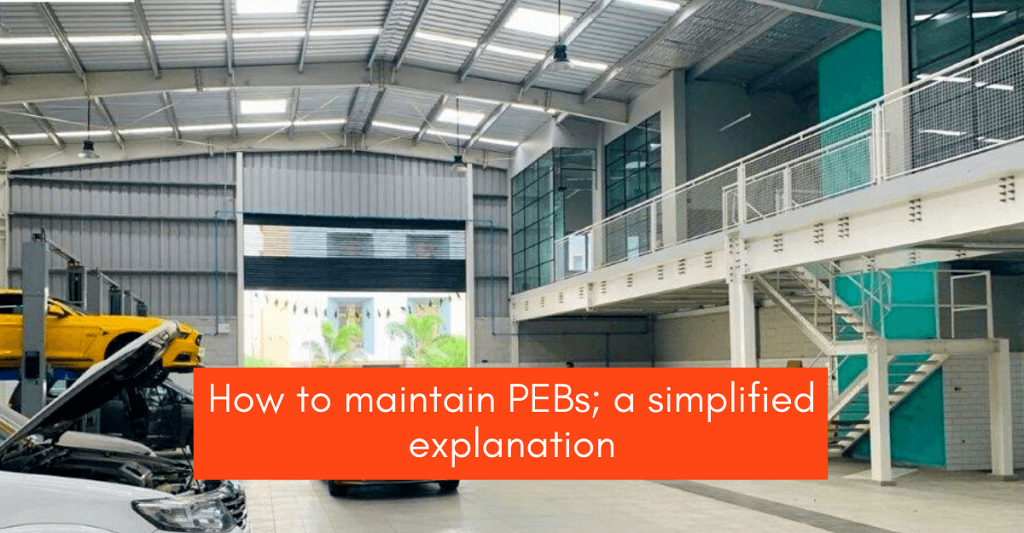
Pre-Engineered Buildings are buildings with a metal enclosure that includes a structural frame and standard roof along with wall support which is factory-made and is assembled at the site. Pre Engineered Buildings are the new manufacturing concept replacing traditional manufacturing and are seen as a breakthrough in the construction industry, resulting in more efficiency of construction with lesser time, cost-effectiveness, low maintenance and high quality. Pre-Engineered buildings meet the wide column-free area requirement of the construction industry. According to Bansal Roofing, pre-engineered buildings are a revolutionary approach to pace the process of construction and these buildings are made according to the precise size of a building which gives them enough time for construction as well. Pre-Engineered Buildings are known to be strong and versatile while also being in high demand owing to their quality of being mobile. While these durable buildings sustain harsh weather, they require timely maintenance to stay long-lasting and strong. Here are a few tips on how to maintain PEBs for longer sustainability: Effective Tips To Maintain PEBs: #1 – Regular Cleaning: Debris and other undesired dust particles that accumulate in the building area can cause damage to the PEB structure. Moreover, the accumulation of dirt in tight spaces can cause moulds and trap moisture as well causing the material to undergo corrosion at a premature stage. And for these reasons, roof sheets to gutters must be subject to regular cleaning which can be done with a low-pressure water hose and a good cleaning solution. Apart from preventing damage, cleaning the building also helps in sustaining its visual appeal for a longer amount of time. Also Read: Pre-Engineered Construction vs Conventional Construction #2 – Maintenance of Fasteners: Fasteners are known to hold the elements of the building together and can also become the reason for a fast decline of the building! If these fasteners are left loose and not tightened properly, it will leave space for water to seep into the frame of the building causing the structure to corrode and rust even more quickly. Fasteners that have been subject to damage in any manner must be repaired or rather changed right away to avoid jeopardizing the structural strength of the building. Moreover, this can also have an effect on the load distribution which could result in an unanticipated PEB structure damage. #3 – Regular Paint Jobs: The exterior of Pre-Engineered Buildings is extremely resistant to harsh weather, UV radiation as well corrosion. However, if the building isn’t cleaned properly or is located close to a water body, there are increased chances of corrosion. Small patches can become the starting point of corrosion which can subsequently spread throughout the building. Hence to prevent this from happening it is important to protect the structure by regularly painting these patch areas. Also Read: 5 Tips for Pre Monsoon Maintenance Of The Roof #4 – Accessory Maintenance: With the regular maintenance of the PEB, all the building’s accessories like doors, vents, rolling shutters and the like must also be maintained. The frequent impact of the doors on the walls can lead to structural deterioration. In order to prevent this, one must lubricate the hinges of doors and locks on a regular basis as well as to ensure they don’t swing all the way back to the door. Similarly, if there are sliding doors in that case the guiding channels must be cleaned on a regular basis to ensure they run smoothly. Moreover, regularly lubricating the moving shutters and applying grease to the vertical guides can lead to increasing the soundness of the structure. The excellence of durability is one of the prime reasons for the popularity of PEBs. This durability can be enhanced further by taking excellent care of the building as well as proper maintenance. When maintain PEBs efficiently and regularly, they can ensure saving money on repairs as well as enjoy the long durability of their structure. Bansal Roofing Products Ltd. is the leading manufacturer of PEBs with in-depth knowledge and experience in manufacturing and installing PEBs in various regions. We make 95% of PEB components in-house which allows for the best quality products and on-time delivery. For high-quality PEBs contact Bansal Roofing today.
Pre-Engineered ConstructionvsConventional Construction

With every passing day, we are witnessing the future of construction and it is sustainable, more durable and more efficient than what we have been working with. Pre-Engineered Buildings are one such boon that has now occurred in the construction industry. What are Pre-Engineered Buildings? A Pre-Engineered Building is metal construction that consists of light gauge metal standing seam roof panels on steel purlins between rigid frames along with light gauge metal wall cladding. These buildings reduce construction time and are extremely low in maintenance. One can think of Pre-Engineered Buildings as a puzzle, the pieces of which are not made on-site unlike conventional construction but are delivered from the manufacturer and assembled by the workers to construct a building. Bansal Roofing makes 95% of components of PEB in-house, having very less dependency on others hence completing 100% projects in time. Bansal Roofing is well equipped to produce Pre-Engineered Buildings (PEB structures) as per the client’s requirements. The company has all the latest machinery to support this segment. The entire design of Columns, Rafters and other Accessories is based on international structural standards and invoices, high technical welding and quality production. There is a lot of difference between PEB and Conventional buildings; however they both are constructed on the principles of foundation, design, framing and finishes. Also Read: Why are Steel Structure Buildings Recommended? Conventional Construction: Conventional construction is a step-by-step process which ranges from excavation to ultimate finishes. Every step has to be completed before moving to the other and complex designs often result in the delay of schedule. Since there are many steps involved, the cost of labour is more as well and the production waste involved is toxic for the environment. However, the fact that conventional constructions offer design flexibility cannot be ignored. While design flexibility requires careful maintenance, the foundation of a conventional construction depends heavily on the material used. When it comes to pre-engineered buildings, every component is fabricated separately to suit the design and the design creates a standard connection between all the parts. When they are delivered on-site it becomes easy and efficient for the laborers to put together a structure. Moreover, pre-engineered buildings have a quick turnaround and Bansal roofing holds the proud accomplishment of completing PEB projects on time. Conventional buildings take a maximum of 6 to 9 months in terms of construction. This is one of the major reasons for a drastic shift towards pre-engineered buildings. Also Read: Most Common Differences Between Commercial and Residential Roofing While conventional constructions have been in existence for a long time, pre-engineered buildings can be used for the same purposes at a more efficient effect on the environment, cost and time. From factories and airports to stadiums and community halls, PEB’s have made their mark in all areas of construction. Pre-engineered buildings lower the cost of construction, produce lesser waste and are known to be low maintenance along with high durability and ease of expansion. It is essential to check your project type and consult an efficient pre-engineered building manufacturer to meet your requirements. Bansal Roofing has years of experience with manufacturing PEB buildings catered precisely and timely according to the needs of the customers.
Roofing InstallationMistakes to Avoid

A roof is the crown of a construction structure, ultimate protection over construction that protects from extreme conditions. Thus, a roof must be selected, manufactured and installed with proper precaution and high standards ensuring that it not only provides protection but also adds to the aesthetics of construction. It is important that the roofing sheet you select checks off all the requirements of the ideal roofing for your construction. One of the materials that have been surpassing many for ages is metal both steel and aluminum. Metal roofing sheets have been in business for centuries and have gained immense popularity owing to the versatility and benefits they offer. However, the metal roofing installation is a crucial aspect. If not installed in an appropriate manner, it can result in several shortcomings like leakage and render the construction to be weak over time, outshining the benefits a metal roof provides. Bansal Roofing has been in the roofing business for a long time and has acquired enough expertise to give you some advice and tips on mistakes you can avoid when installing the metal roof of your choice. Common Mistakes To Avoid In Roofing Installation: #1 – Incorrect Screw Fasteners: It is important to inquire regarding the kind of screw fasteners your roofing manufacturer uses when installing your metal roof. Making use of non-standard screws for the metal roofing installation can result in water leakage and cause the roof to become weak in the long run. It is important to use the correct fasteners that are designed especially for metal roof panels. The objective of using fasteners is to seal the opening through a washer, keeping the water at bay. Quality is yet another factor that must be considered because compromising the quality of your metal roof will cost you in the long run. #2 – Overlapping the Panel in the Wrong Manner: Overlapping the metal roof panels is of key importance as it prevents the water to leak from areas where the panels meet. The overlapping required depends upon the slope of the roof. It is imperative to determine the pitch of the roof in accordance with the amount of overlap required and other requisites that must be suggested and executed by the roofing manufacturers. Also Read: Why are Steel Structure Buildings Recommended? #3 – Extension of Roof Panels Appropriately Over the Edge: Precision is important when leaving just the correct amount of roof overhanging. If the roof is altered too short, there will eventually be water leakage down to the sides and the gutters. On the other hand, if the metal roof is extended too long then the water will not enter the gutters and eventually result in falling directly to the ground. Hence, it is suggested by construction experts to keep the measurements of the overhang around an inch and a half and 2 inches. #4 – Using Few Screws for Pipe Flashing: Penetrations like PVC pipes are more prone to leakage and such penetrations must be flashed with utmost care and caution. It is crucial to make use of the right number of screws and avoid the use of caulk as an alternative. Also Read: Top 9 Advantages of Aluminium Roofing Sheets #5 – Too Much Reliability on Sealant: Sealants and caulks are not the primary options for waterproofing. It must be ensured that the application of caulk should be kept away from sunlight and weather. The best and safest position for its application is underneath a panel or trim. Metal is used for several purposes like roof decking, cladding and much more. Metal is a material preferred by many and metal roofs are the finest option for any construction. With Bansal roofing, one needn’t worry about the quality, durability and timely delivery of roofing sheets and roofing accessories. Bansal roofing is the pioneer of manufacturing premium quality roofing sheets, roofing accessories and PEB constructions. We believe in catering to our customers’ construction needs with utmost precision and offering them full value for their money. Bansal delivers roofing accessories, products and PEB Constructions PAN INDIA and is known for timely delivery and high quality of products. Having catered to the metal roofing needs of big industries and several private enterprises, Bansal roofing manufactures metal roofing sheets meeting every client’s construction requirements with top-notch quality.
5 Reasons To ConsiderColour Coated Roofing Sheets

Having a roof over our heads is the thing we are most grateful for! Even when we put the metaphors aside, and take construction into view, a roof is one of the most important parts of a construction structure. It is very important to have a roof that is strong and durable and protects everyone from any natural calamity or weight it has to bear. It is also equally necessary to choose the right kind of colour coated roofing sheet manufacturer for your project. A roof not only protects but also adds to the exterior aesthetics of the house. Of late there have been many changes in the types of construction accessories like a roof. Roofing sheet suppliers have introduced various types of roofs. Now one can choose them suiting the external aesthetics of their home. One such type of roof out of the many choices available are colour coated roofing sheets. Earlier, there existed traditional roofs made of metal that were used in construction but with changing time and development in construction technology, people started opting for more aesthetically pleasing roofs like the colour coated roofs. These roofing sheets have replaced the galvanized iron sheets for residential as well as commercial applications. Bansal Roofing offers roofing sheets in different colours, sizes, and shapes. We have successfully installed colour coated roofing sheets at various places like officers, car-parking areas, warehouses, manufacturing industries, etc. Apart from adding aesthetic value to a place, there are several other advantages of color coated roofing sheets. Advantages of Colour Coated Roofing Sheets: #1 – Weather Resistant: The quality of these sheets remains unaffected in extreme weather conditions. They are strong enough to withstand extreme weather as well as protect the establishment from heavy rainfall, hailstorms or strong winds. #2 – Environment Friendly: These roofing sheets are 100% recyclable and can be turned into new products after melting. This advantage makes them environment friendly and helps in saving natural resources. Also Read: Top 9 Advantages of Aluminum Roofing Sheets #3 – Durability: Color coated roof sheets by Bansal roofing have become a popular choice in the construction industry because of their durability. These roofing sheets can last for many years with an intact colour and also require low maintenance. Colour coated roofing sheets undergo a special chemical treatment during the manufacturing process owing to which they become water repellant and colour fade proof. #4 – Appealing to the Eye: Colour coated roofing sheets add to the aesthetic of a construction. Whatever the theme of the establishment may be, these sheets will add an appeal to it. People may customize them based on size, colour, and shape of the roof according to their needs. Also Read: How To Select Roofing Sheet #5 – Lightweight: One of the advantages of colour coated roofing sheets is that they are light in weight which makes them easily transportable to the construction site. Moreover, they do not put or add to the pressure on a construction establishment and are also easy to install. Bansal Roofing Products Ltd. is an experienced colour coated roofing sheet manufacturer and ensures high and premium quality color coated roofing sheets in addition to an array of PEB and roofing material and services. It is our mission to supply a wide range of components and services for Pre Engineered Steel Structures/Buildings and Roofing Sheets along with Accessories to meet Customers’ requirements; to ensure that the products are of excellent quality, value for money which will instil confidence in owners; and to create added value for customers with innovative ideas for products and solutions.
7 Day to Day Uses ofPolycarbonate Sheets

Polycarbonate is a transparent sheet made of thermoplastic material and is known to absorb moisture as well as be tough. It is also resistant to water and impact damage. Moreover, it is flame retardant, chemical resistant and scratch resistant as well making it one of the perfect choices for construction. Choose an experienced polycarbonate sheet manufacturer for high-quality polycarbonate sheets. It might just be the right thing to add to your construction if you are looking for a single material with multiple properties; all beneficial and long-lasting. These sheets are not of special application only and can be used as a part of normal constructions of houses and offices as well. Here are a few day to day uses of Polycarbonate sheets: #1 – As a Room Divider: Since polycarbonate sheets are lightweight it makes them easy to move around from place to place thus making them a good choice for room dividers. While some dividers are made in accordion style and can be opened and closed according to one’s needs, some are made with wheels to provide an easier movement. #2 – As Safety Glasses: One of the properties of polycarbonate sheets is their resistance to chemicals and impact damage as well as flames thus making it one of the top choices for safety glasses and goggles. Owing to its natural properties, polycarbonate sheets provide more protection in comparison to other materials while keeping these safety glasses thin along with the added advantage of not affecting one’s vision. Also Read: How To Choose The Best PEB Contractor For Your Steel Buildings Manufacturing #3 – Bullet Resistance Panel: Polycarbonate Sheet suppliers can even manufacture bullet-resistant panels using them. There are certain places or rather organizations where bullet-resistant panels are a necessity owing to the nature of the business or for the need for safety. Polycarbonate sheets can help provide the level of protection and security that is needed by placing these sheets between layers of glass thus providing protection in case of bullets hitting the said surface. Moreover, riot shields are also created using polycarbonate sheets as the material owing to their bullet-resistant property. #4 – In Electronics: Since polycarbonate sheets are light in weight and are known to be durable as well, they make for a great option to be used in the creation of mobile phones, laptops and other electronics as they survive impact damage and other damages that an electronic item is susceptible to. In certain cases, these sheets are also used to create DVDs and CDs. Polycarbonate’s make for one of the best choices in LED lights due to their resistance to different things as well as the ability to be shaped into various shapes, sturdiness and crystal-like clarity. #5 – In Auto Parts: Automotive parts require a material that is resistant to heat, flame and chemicals and what better than polycarbonate sheets ticking off all of these requirements. These sheets are also used in door handles, radiator grills and headlight bezels due to being lightweight and having properties of resistance for heat, chemicals and flame. #6 – Building Applications: One of the properties of polycarbonate sheets is that they are over 200 times stronger than glass which makes them a good replacement for glass. Moreover, polycarbonate sheets are easier to mould than other materials and are also durable thus making them the best option for skylights and glazing security lights in buildings. Polycarbonate sheets insulate better than glass and can help reduce energy costs when replaced as a material in place of glass for construction purposes. These sheets let natural light pass through easily and reduce interior heat providing a temperature-controlled environment. Also Read: Why is a PEB the Right Choice for Your Building Construction #7 – Application in Agriculture: One of the most beneficial features in polycarbonate sheets is UV protection which has made the application of these sheets very popular and sought after in the creation of greenhouses as it lets the sun rays in without any harm of UV rays. Thus, providing warmth, light and adequate protection to the plants inside. As it is stronger than glass and acrylic, it provides multiple safety features as well and is often used in place of glass when it comes to agricultural purposes. Polycarbonate sheets have been a commercial boon as well and have been widely used in cricket stadiums as it provides perfect weather protection and save energy for lights as well. These sheets are the upcoming yet widely used and accepted choice for construction in the present times. It is also important to purchase polycarbonate sheets through a reliable manufacturer of polycarbonate sheets like Bansal Roofing Products Limited. We are not only dealers but also make sure every client is given assurance for quality and timely delivery of products. Our polycarbonate sheets are available in various types suiting your needs like clear compact, corrugated, embossed and multiwall. Moreover, we also cater to your polycarbonate sheets by providing opaque polycarbonate sheets for places where you need them to block light.
Why are Steel Structure Buildings Recommended?

The results that steel can produce as a material in steel buildings in terms of structure and beauty are really inspiring and resourceful. While many architects have challenged the idea of using only steel to construct the skeleton of a building, modern architects are creating fluid and innovative designs using steel from its rust texture to polishing it for a high shine finish. Generally, steel structures are used owing to characteristics like: • Substantial elimination of delays due to weather• No need for form work• Termite and rot proof• Uniform quality• Economic in transportation and handling• High strength and stiffness per weight• Long Spans (i.e. large column-free area span)• Accurate detailing• Non-shrinking and non-creeping at ambient temperature• Ease of fabrication and mass production including production and hence better quality control Since steel structures have the following characteristics they are used extensively and have better chances of durability owing to high strength and uniform quality along with being termite and rot proof. Also Read: Why Pre-Engineered Buildings are better than onsite fabrication Let’s take a look at the advantages of using Steel in Steel Building Structures: Beauty: There is a sense of openness and liberation to the architects when using steel in building structures as it is subject to being made into stylish shapes and designs in order to create large open columns and interiors. Adaptability: Steel is a boon for architects as it can be adjusted and changed according to the whims and wishes of the architect. The frame which is made of steel can be adjusted, repositioned and can be altered as well. At the same time, steel also helps to extend the lifespan of the building structure For example, wall frames that are made from steel can be widened and a new interior layout of the building can also be created the same way! Cost-Effective: Steel is lightweight in comparison to tinder and RCC and is also easier to transport. Thus reducing the cost of transport, fuel cost, and also accelerates project schedules. Adding to these reasons is the fact that steel is energy efficient and creates minimum waste thus increasing the chances of being recycled. Ductility: Steel can be rolled, cut and shaped into the structure of the architect’s choice without any changes in composition or property. Durability: Steel is known to stand extreme weather conditions and forces like strong winds, earthquakes and the like. Steel also tends to remain unaffected by termites or fungi and bugs. When compared to wooden frames, steel structures prove to be more fire-resistant. Let’s have a look at what kind of building are steel structures used in: High Rise Buildings: Steel is used in High Rise Buildings due to its strength, lightweight, and speed of construction. Industrial Buildings: Steel is used in Industrial buildings owing to its ability to create a large span also known as column-free span spaces at a low cost Residential Buildings: Using steel in residential buildings is a practice since it is similar to wooden framed structures which in the case of steel is called the light gauge steel construction. Temporary Structures: Steel is used in temporary structures because it is easy to install and remove which serves the purpose of a temporary structure. Steel can be used in building structures owing to other reasons depending on its existing properties like the fact that a whole frame of steel can be erected in a matter of days where wooden frames may take weeks altogether hence reducing the corresponding construction time by 20-40%. Steel framing and floor systems also allow easy access and the ability to make alterations to existing electrical wiring, computer networking cables and communication systems. Steel built building structures are also more adaptable and have greater potential for alterations that can be made over time while extending the lifetime of the structure.
Benefits of Turbo Ventilators on Your Roof

You must have seen the rotating round equipment on industrial roofs. They are called turbo ventilators or eco ventilators whose purpose is to help to vent the hot air from inside the premises into the atmosphere. Turbo ventilators are self-driven equipment installed on the roofs to extract inside air. They don’t require additional energy as they are operated by the atmospheric wind and in doing so, inside air is exhausted through it and the natural inward flow of fresh air is boosted. Despite appearing a little complicated at the first glance, it is a piece of fairly simple equipment with minimum parts but provides a significant number of benefits. Let’s have a look at them. Provide effortless ventilation: As the name suggests, a turbo ventilator provides easy ventilation for all structures and help in moving damp, moist air outside the building which could otherwise cause damage to equipment used in the building. Accumulation of moisture and dampness can cause rusting in metal equipment and can provide a favourable environment for different kinds of bacteria and fungi. Turbo ventilators allow the circulation of fresh air in the premises and prevent damages caused by mould, fungi and moisture. Also Read: The Advantages of Installing Skylight in Building Use less space: Turbo ventilators on roofs consume lesser space compared to other methods of ventilation and they are much more effective. Comparatively, other ventilations like ridge vents require more space and are not as effective. Turbo ventilators are flexible and can be placed at almost any optimum place on the roof. Don’t require additional energy: Turbo ventilators are completely self-driven and don’t require any energy source like electricity. They are operated by the wind and can keep running endlessly without supplying any energy. Even slight wind on the rooftops is enough to operate it. This way they result in huge cost savings. No breaking down: The simple rounded design of turbo ventilators makes them modest equipment with the least amount of parts. Hence they don’t face failure much often and are only affected by large debris or huge storms. With minimal maintenance and oiling, they can keep going for years before you need to replace them. Turbo ventilators are very helpful ventilation equipment. However, it is important to note that they can be affected by frequent storms which can damage them and make them prone to rusting. Sometimes, a little friction may also make them noisier which can be solved by regular oiling. Otherwise, they are very reliable equipment that can keep working without supervision. Turbo ventilator installation is however a little tricky and requires precision cutting on roofs and additional layers of sealant to prevent leakages. So it is a job best left to professionals. Bansal Roofing Private Limited are a leading supplier of turbo ventilators and can help you with the design, manufacturing as well as installation of the product according to your application. For more information, get in touch today.