
How To Install Roofing Sheets
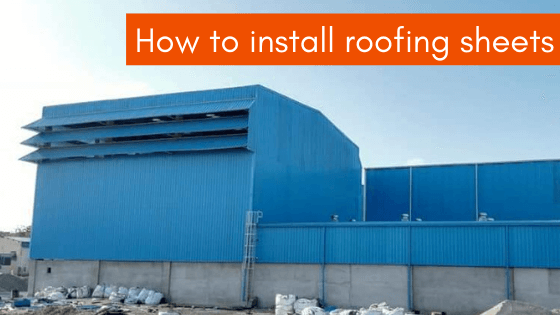
Roofing sheet installation, though sounds like a challenging task, can actually be done quite comfortably provided you have good guidance. Here, we will discuss the basic steps of how to install roofing sheets. Basic steps of how to install roofing sheets: Of course, roofing sheets come in a variety of sizes and shapes and there’s no one-size-fits-all design, so the selection of the size, shape and type of roofing sheet to suit your application is the first step that you should take before installation. #1 – Cutting The Roofing Sheet: While most of the roofing sheets are available in pre-cut sizes from the roofing sheet manufacturer, you don’t have to worry about this step as much. But in cases where you have to cut it yourself, it is important to do it carefully and be as precise as possible. All cutting must be done on the ground because if any such process is carried out on top of the structure during installation it will cause debris to accumulate in joints and corners which can degrade the life of the roofing sheet in the long run. Metal sheets should be cut while resting face down and on padded supports to prevent any damage to the roofing sheet. First, mark the layout using a marker. Only use appropriate tools for cutting like a circular saw or angle grinder. Try to keep the heat produced during the process to a minimum because this can cause damage to colour coated roofing sheets. #2 – Laying The Sheets: One of the trickiest parts in the process is laying the sheets properly so this must be done carefully. Make sure the sheets are perfectly aligned when laying them down or you might have to repeat the process all over again. It is a good idea not to secure the first few sheets as you’re laying them down because it will give you some room for adjustment and making corrections for alignment. Once the sheets are positioned correctly you may proceed with securing them down with the remaining fixings. Always use appropriate roof fasteners. Also Read: Types of Steel Deck used in Green Building Construction #3 – Weatherproofing The Sheets: Use mastic tape and stitching screws to achieve weather-resistant joints. Try to achieve a minimum overlap of 250 mm between sheet to sheet. Use sheet to sheet stitching screws spaced 600 mm apart along the overlap between the sheets to strengthen the bond created by the lapping tape. These laps should be supported by purlins underneath. Fixing hardware used in this process must also be weatherproof or they may spread damage to the roofing sheets under harsh weather conditions. #4 – Protrusions: If your application calls for vents, skylights or plumbing pipes to cause roof protrusions, these must be flashed and adequate framing must be installed to support the sheet around that area. The roofing sheet manufacturer should be able to provide appropriate flashing kits as per the protrusions. Bansal Roofing is a leading roofing sheet manufacturer in Vadodara and Gujarat and can carry out end to end activities from manufacturing to installation of roofing sheets. For more guidance and assistance, get in touch with Bansal Roofing right now.
Know The Components of PEBs Structure

Pre-Engineered buildings or PEBs structure are made up of various components that give them their unique properties and make them sturdy and durable. Pre-Engineered Buildings are known for their flexible design, high structural strength and ease of construction. But all this is made possible due to the various components that go into building a PEB. Just like any assembled structure, a PEB consists of components that can be categorized into 3 main types and a few accessories. A PEBs Structure (Pre-Engineered buildings) is made of: Primary Components Secondary Components Roofing or Cladding Other Accessories #1 – Primary Components: The Primary components include 3 main parts: Main Frame, Columns and Rafters. Main Frame: The main frame is the basic structure of the building which is made of rigid steel. It is built using tapered columns and rafters, sometimes also referred to as built-up members. There are spliced plates welded to the end of these tapered sections. The splice plates of connecting sections are bolted and the frame is erected. Columns: Columns are used to transfer the vertical load to the foundations. These are generally made up of I sections which give benefits in terms of strength while being economical to produce. Rafters: Rafters are sloped structural members or beams that extend from the ridge or up-to-the wall-plate.They are designed to support the roof deck and other loads associated with it. Also Read: Tips for Maintenance of Pre-Engineered Buildings (PEBs) #2 – Secondary Components: Purlins, Bracings, Tie rods, Angle bracings, High Tensile Bolts and washers etc. are classified as secondary components that are used in a PEB. These parts are used to support walls and roof panels. In addition to that, the secondary members also help the building withstand the longitudinal loads that the building may see during earthquakes and heavy winds. Purlins are mostly unique cold roll-formed sections used to fix roof and side claddings. They are available in different variations such as Z, C and Sigma purlins which are denoted by their cross-section. #3 – Roofing or Cladding: Roofing sheets, as their name suggests,provide protection to the building interior from the environment. They can be designed to either block sunlight or allow partial sunlight to illuminate the interiors, depending on the requirement. A Standard supply of material for Roof Sheets is 0.47 mm Bare Galvalume and for wall Claddings it is 0.50mm Colour coated Galvalume. Also Read: Fiber Reinforced Plastic Glass (FRP) – An Innovative Construction Material Other Accessories: Several accessories are available for Pre-Engineered Buildings or PEBs structure that can greatly increase the functionality of the building. Depending on the type of application, the accessories may be selected. Some of the many available accessories used in PEBs are Windows Turbo Ventilators Louvres Sliding Doors Roll-Up Shutters Skylight Sheets Ventilators Downspouts etc. It is through a combination of various small and large parts that a PEB gains its strength, durability and flexibility. For more details on how your PEB can be designed and optimized for your application get in touch with Bansal Roofing Products Ltd., the leading PEB manufacturer and supplier in Vadodara and Gujarat. Contact us now or Call us @ +91-9925050913 for more information about PEB components and parts.
5 Reasons WhyBansal Roofing is TheBest Choice For PEB Manufacturer

Bansal Roofing Products Ltd. is the best PEB manufacturer in Vadodara and all over Gujarat and has held this crown for a very long time. Bansal roofing has several years of experience in design, erection and commissioning of Pre-Engineered Buildings and is known for excellent quality and reliability. Rich experience in the field and commitment to deadlines and quality makes Bansal Roofing one of the leading and most reputed PEB manufacturers in Vadodara. Those familiar with Pre-Engineered Buildings will be aware of their numerous benefits, some of which include high structural strength, durability and flexibility in design. But it is also important to find the right pre-engineered building manufacturer for your project because of the precision work that goes into the design and construction of the structure. Usage of the right materials and quality craftsmanship decides the life of the structure and is something that should not be compromised. Taking care of all these details, from sourcing the materials to building the structure is the work of experienced suppliers which is why Bansal Roofing’s expertise in the field helps overcome all these challenges easily. Here are five reasons why you should choose Bansal Roofing as your desired PEB manufacturer: #1 – Plenty of experience in the field: Bansal Roofing Products Ltd. has been in the field for more than 10 years and holds a rich experience in the design and construction of pre-engineered buildings. Bansal Roofing has successfully completed numerous projects while delivering full customer satisfaction and has built trust with the customers. Also Read: Tips for Maintenance of Pre-Engineered Buildings (PEBs) #2 – Timely Delivery: Bansal Roofing is known for delivering on time and maintains a track record of finishing all projects on or before time. We have never failed any project deadlines and always put extra efforts to ensure all the processes are streamlined so that no delays are faced with material procurement and construction. It is through a solid past experience in handling such projects that we can anticipate the challenges and take necessary actions to prevent any difficulties while executing the project. We have completed 100% projects on time and have never been charged with a late penalty to date. #3 – Commitment to Quality: It is always our aim to furnish products and services that are of the highest quality at a reasonable cost to all our customers. We take extra care in understanding the customer’s requirements to the minute level of detail so that we can deliver products and services that entirely satisfy customers. This dedication to quality has helped Bansal Roofing build a brand name and good reputation in the market. #4 – Completely In-house Manufacturing: Bansal Roofing takes care of entire PEB buildings construction projects with completely in-house designing, calculations and manufacturing of materials. More than 95% of the parts required are manufactured in-house. The company is well equipped to produce construction materials with state of the art machinery. All the designs of columns, rafters and other accessories are based on international structural standards. Since all the materials are developed in-house, it is possible to maintain strict quality checks and deliver structures that have a longer life. Also Read: The Difference Between Prefabricated and Pre-Engineered Steel #5 – CRISIL RATING – MSE1 Rating: Bansal Roofing Products Ltd. is a CRISIL rated company having “MSE 1” rating which means highest financial strength and high operating performance. This has enabled us to cater to various global markets and build a solid global presence. This sets us apart from competitors and makes Bansal Roofing a renowned brand and a trustworthy company. Bansal Roofing Products Ltd. is a well-known name in the market when it comes to manufacturing of pre-engineered buildings and years of experience and knowledge in the field has helped us become a company the people trust and count on.
Tips for Maintenance of Pre-Engineered Buildings (PEBs)

Pre-Engineered Buildings or PEBs are known for their versatility and their ease of construction while providing many benefits at the same time. They are strong, durable and can be designed according to the site conditions which make them an ideal choice for construction. But after a pre-engineered building or PEB manufacturer has completed their work and commissioned the building there are some extra measures you can take to extend the life of the building which we are going to talk about further. Like any other construction structure, pre-engineered buildings also need their regular maintenance to be able to keep performing satisfactorily under various climate conditions. It is always better to conduct preventive maintenance than investing in repairs later due to any unforeseen damage. The Maintenance Period of PEBs: PEBs are designed for extreme climatic conditions and can withstand harsh weathers, but even PEBs can be vulnerable to damage if not maintained regularly. The frequency of maintenance of PEBs depends on the kind of locality it has been installed in. PEBs installed in areas with humid climate conditions and highly polluted areas require more frequent maintenance than areas with mild climates and dry regions. [wpdatatable id=2 table_view=regular] Also Read: Application of Pre-Engineered Buildings (PEBs)Regular inspections of the building structure should be scheduled to identify any potential problems which may lead to significant damage in the future. It is a good idea to fix the problems while they are minor so that they can be eliminated with minimum costs. You may also get in touch with your PEB supplier to notify them of any defects that you may find during the inspection. Cleaning Regularly: Building areas like gutters, downspouts and roof sheets should be cleaned regularly to prevent debris and unwanted materials from collecting on them which can cause damage to the building. Cleaning the building also helps it retain its aesthetic appeal for a longer period. Accumulation of dirt in narrow areas and the formation of mould can trap moisture and start to corrode the material prematurely. So keeping all parts of the building clean is a good measure to prevent damage to the building. It can be easily done with a low-pressure water hose and a suitable cleaning solution. Taking Care of Fasteners: Believe it or not, the very fasteners that secure all the parts of the building together can become the reason for its destruction. Fasteners, if left loose, may allow for seeping of water into the frame of the building which may begin to corrode the building faster. Fasteners which have been damaged in any way should be immediately replaced because it may compromise the strength of the structure in that area and can also affect the load distribution of the entire structure. This may lead to unexpected structural damage. A Fresh Coat of Paint: The exterior of a Pre-Engineered Building is highly resistant to harsh weather, UV rays and corrosion. But sometimes they may receive a dent or a scratch from heavy vehicles, cranes during handling of equipment or forklifts which can cause dents on the building material. These areas can become the starting point for corrosion which can then spread further. So it is a good idea to cover these areas with paint that will prevent their exposure to the atmosphere and keep them protected. Maintenance of Accessories: Along with regular maintenance of the PEB, it is equally important to pay attention to all the accessories fitted with the building like doors, rolling shutters and vents. Occasionally lubricate the hinges and locks of the doors and make sure they are not allowed to swing back fully against the wall. The repeated impact caused by the doors on the walls can damage the structure. Regularly clean the guide channels of sliding doors so they can run smoothly on the guide. Keep the rolling shutters regularly lubricated and apply grease to the vertical guides. Keeping all the accessories of a PEB in a healthy condition can save repair costs and keep the building strong for a longer time. Pre-Engineered Buildings or PEBs have excellent durability which can be further enhanced by taking proper care of the building and running periodic maintenance on the building. But when working on the building extra safety precautions must be taken like using correct ladders, turning off electrical circuits, using cranes wherever required. By following the above points, you can greatly increase the life of PEBs and keep them performing at optimal levels. For more details on maintenance of PEBs, Contact us or Call us @ +91-9925050913 or +91-265-2581082. Bansal Roofing Products Limited is a leading manufacturer of PEB in Vadodara, Gujarat and with years of experience in the field can take care of entire PEB projects from design to construction.
Everything You NeedTo Know About Perforated Sheets

Perforated sheets or perforated plates or screens are metal sheets made by a perforated sheet supplier through a metal punching process. These sheets have holes punched in them in a pattern of various shapes which make the metal sheets useful for different applications. Depending on the type of application these sheets may be available in different types of materials like stainless steel, galvanised steel, brass etc. The process of punching holes in different shapes or slots is known as perforation from which the perforated metal sheets derive their name. Remember to check with the perforated sheet manufacturer the kind of solutions that they can provide according to your requirement. According to the types of holes punched on the perforated sheet, their applications range from ventilation, heat dissipation or noise reduction in an environment. Due to their unique appearance, sometimes they also find their way into decorative equipment. Types of Perforated Sheets: Perforated Sheets differ in thickness, size and material which make them usable in a wide range of applications. They are also available in various hole patterns which could be round, slotted, capsule, hexagon etc. These patterns change the benefits tied to the perforated sheet which we will discuss further. Applications of Perforated Sheets: Perforated sheet manufacturers can also make sheets that are multipurpose, lightweight and robust at the same time which find usage in offices, houses, parks etc. Let’s have a look at how they are used. Also Read: 8 Benefits Of Using Colour Coated Roofing Sheets Sunlight Containment: Useful in architectural applications, perforated sheets can be used to limit the amount of sunlight passing through into an area without blocking the view outside. These sheets are used as sunshade panels for buildings such as shopping malls, office buildings and exhibition halls. Barrier: Perforated sheet can be profiled in a roll forming machine to increase the strength. In high rise buildings such perforated profiled sheets are installed vertically to protect workers/engineers working at height to fall down and to cut the vision while allowing air circulation. Bansal Roofing Products Limited has expertise in making such profile perforated sheets. Acoustic Performance: Perforated metal sheets that have a high open area can efficiently manage the noise in an environment and provide you with a comfortable experience. They can also be designed to allow sound to pass easily in which case they can be used as speaker grilles to protect speakers from damage while not compromising the sound they emit. Perforated metal noise barriers made of aluminium are also used on highways or near rail tracks to absorb and weaken the noise. Filtering: By designing perforated sheets with low clearance holes they can be used as filters in various applications such as chemicals, food, petroleum and sewage water filtration. By changing the design of the clearance holes the amount of filtration required can be regulated from coarse to fine. They can also be used as car silencers or granary ventilations. Heat Dissipation: Perforated sheets can easily allow for better air circulation in an area and consequently act as good ventilation by regulating the heat in an enclosed environment. This can significantly decrease air conditioning costs and save a lot of energy by using natural air cooling. Also Read: Green Industrial Buildings For A Better Tomorrow Anti Skid: In areas where there are higher risks of skidding like stairs or offices, specially embossed perforated sheets can be used to greatly reduce the chances of skidding and to prevent any casualties from occurring. They can be used in industrial plants on the walkways and workshop floor, transport places, stairs, elevators etc. Protective Function: They can be used to protect fragile equipment from mishandling and can also be used to protect people from critical heavy machinery by blocking unauthorised access to them. On the other hand, they can also be used as guard rails in balconies to protect small children and can also be used as barriers on train stations to prevent people from falling over. Decoration: Decorative perforated sheets available in various patterns of triangular, diamond, oblong, hexagonal or other custom made shapes are widely used in architectural applications to improve the aesthetics of a building or room. They can serve as a barrier as well as a decorative piece of equipment in specific areas. Also Read: How To Keep Industrial Factory Cool Without Air Conditioning? Benefits of Perforated Sheets: As evident from their applications mentioned above, there are several benefits associated with perforated sheets. The peculiar design of perforated sheets allows them to block excessive sunlight from entering the room while keeping a sufficient amount of natural light to not require any additional artificial lighting. They can also facilitate ventilation and provide cooling through natural air circulation. This efficient balance of natural light and air helps in greatly reducing energy consumption and results in enormous cost savings. Perforated sheets with intelligent designs can regulate the noise in the environment by absorbing unnecessary noise. This is especially useful in areas near high traffic and crowded public places. The unique design of perforated sheets which bring plenty of benefits has made them widely useful in mainstream construction of buildings, industries, automobiles, malls and public areas as extremely functional as well as eye-catching decorative equipment. It is important to choose the right size and shape of perforated sheets depending on your application and make sure to source it from the right kind of perforated sheet supplier. Contact Bansal Roofing who is one of the leading suppliers & manufacturers of perforated metal sheets in Vadodara, Gujarat. We can provide a wide range of standard as well as customised perforated sheets of the highest quality that combine strength, functionality and beauty and are suitable for all kinds of applications.
Fiber Reinforced Plastic Glass(FRP) – An Innovative Construction Material

When it comes to choosing a roof, you need a durable, long-lasting, and strong material. And, when it comes to choosing a transparent roof, many factors need to be considered. You want maximum light to enter your structure, but you also don’t want to burn off your skin with damaging exposure to sunlight. And the only option you think you have is the glass, but with industry development now we have a better alternative of glass. First and foremost, glass is the most transparent material that has been used for ages. But, glass allows all of the light from the sun, which includes visible light, heat and ultraviolet rays. While the visible light is amazingly beneficial, the ultraviolet rays are equally harmful and heat at floor needs cooling which costs extra. Realizing this, there has been an innovation in the material of glass. Glass fibers are now mixed with polyester resin to form glass-reinforced plastic (GRP), the new material for transparent roofs. Industrial glass fiber has been included in our life as the raw material of the first insulation materials. As an insulation material, the insulation panels, roof panels and roof plates have been produced on a large scale and have enabled the buildings to be healthy living areas. Industrial glass fiber was used as the raw material of the first insulating products in our lives. As an insulation material, the insulation panels, roof panels and roof plates have been produced on a large scale and have enabled the buildings to be healthy living areas. What is Fiber Glass (Plastic)? Widely known as Fiber Reinforced Plastic (FRP) is a type of plastic where the reinforced material is glass fiber. The fiber of glass is usually flattened into a sheet, arranged at random, or woven into a cloth. The glass fiber may be made of various types of glass, depending on the application. Fiber glass is lightweight, less-brittle and durable. The best feature of fiber glass is its ability to be reshaped into different, complicated structures. It explains pretty much why fiber glass is commonly used in Roofing, Insulation, Water Gutter, Skylight, Boats, bathtubs, vessels, aircraft, etc. How is Fiber glass made? Fiber glass is made of glass similar to that in windows or kitchen glassware. Glass is heated up to liquid, and squeezed through superfine holes to create fiberglass. It produces incredibly thin glass filaments — so thin really, that they are measured in microns. These flexible filament threads can be used in a variety of applications: they can be woven into larger material swatches or left in a much less formal form used for the more common puffy texture used for insulation or sound insulation. The final application depends on the conditions (longer or shorter) of the extruded strands and the consistency of the fiberglass. The name of fiberglass has frequently appeared in the last quarter of the century, the design and development market, contradictory to what is supposed to be used from long-standing history. Particularly from the time when fine glass decorations with goblets, vases, and various textile items have entered human life and history. It is interesting how vases and goblets were embellished with glass ropes also during the ancient period. Also Read: Application of Pre-Engineered Buildings Properties of Fiber Glass: Mechanical strength: The strength of fiberglass is higher than steel. It is also used to deliver high-efficiency work and can sustain the heavy load. Electrical characteristics: Even at low thickness fiberglass is a great electrical insulator. Incombustibility: This is naturally incombustible since fiberglass is a mineral material. When exposed to fire, it does not release smoke or harmful materials. Dimensional stability: Fiberglass has high resistance towards thermal and hygrometric variations. Has a low linear expansion coefficient. Compatibility with organic matrices: Fiberglass can be of different sizes and can be mixed with other synthetic resins and some mineral matrices such as cement. Non-rotting: Fiberglass itself does not rot and will not be harmed by rodent or insect activity. Thermal conductivity: The thermal conductivity of fiberglass is low and thus very useful in the building insulation industry. Fiber Glass – Plastic Material for Construction Industry: When one thinks of fiberglass in architecture, the first thing that comes to mind is insulation; but fiberglass has many other architectural uses, some unknown to most architects. Whether it’s used on the structure or as a complementary embellishment, this material can be surprising. Furthermore, this material has a wide list of positive properties: it withstands inclement weather, it behaves well in sub-zero temperatures, it doesn’t suffer from corrosion, it’s easy to maintain, it has low thermal conductivity, it’s sturdy, behaves well in tension and compression, it’s light, allows a smooth finish and it’s cheap compared to concrete or other traditional materials. Glass-reinforced plastics gave life to the new generation material of glass fiber, roof, wall, and surface coating. Glass fiber or fiberglass, GRP, glass-reinforced panels, as a semi-finished frame of this material, are much more durable chemically and mechanically and have developed and provide an interesting aesthetic. With the contribution of fiberglass, the FRPs industry is using this material more and more and this GRP is widely used material for the interior and exterior of buildings. In other words, glass-reinforced plastics are the name of the substance that is abbreviated as fiberglass. Fiber-reinforced Plastic materials are generally called abbreviated fiberglass, meaning the distinction between fiberglass and FRP has slowly vanished. GRP is made by mixing glass reinforced plastics, fiberglass and resin using several different process techniques. In the building industry, GRP is widely used for the design of panels used in roof, facade and wall coverings. Use of Fiber Glass in Construction Area: In the construction area, Fiberglass is preferred because of its strength and performance. Waterproof properties, Insulation Properties, corrosive resistance, Fire retardant are some of the properties of fiberglass. Fiberglass plastics are durable and versatile and due to fibers of glass it is used to secure the walls of cement, steel and wood. FRPs are used in roof panels
Application of Pre-Engineered Buildings (PEBs)

A Pre-engineered buildings is a form of building, designed by a PEB supplier or PEB manufacturer that involves pre-designed and prefabricated steel structures which can be customized according to the specifications and assembled at site. PEB buildings are one of the most sought after methods of construction all over the world due to their flexibility and ease of construction. Pre-engineered buildings or PEB buildings are built using prefabricated I-shaped members, also known as I-beams. These I-beams can be shaped according to the requirements and available space and can be assembled at the site which reduces the time spent in construction significantly. Due to such pre-engineering, there is less amount of engineering required during the actual construction of the building at the site. If designed efficiently, it is possible to make a pre-engineered building 30% lighter than any conventional steel building. Also Read: The Difference Between Prefabricated and Pre-Engineered Steel PEB (Pre-engineered buildings) comprises of: Primary Members: Columns, Rafters, Crane Beams etc. Secondary Members: Bracings, Tie rods, Angle bracings, High Tensile Bolts and washers etc. Roofing, Cladding & Accessories: Top Roof Sheets/Panels, Side Cladding (Vertical) Sheets/Panels, Skylights Sheets, Ventilators, Louvers, Downspouts, etc. PEBs are extremely useful in industrial applications. The flexibility that PEBs can provide makes the process of setting up a factory much easier. Because the PEB can be designed according to the conditions at the site where the factory is planned to be set up, it becomes the ideal choice for hugely reducing the construction time. Heavy industries like ceramic factories, cement plants, iron and steel plants often use Pre-Engineered Buildings as their choice of construction. Another advantage of PEBs is that they can be easily transported to the site and erected within a short period. This helps with the construction of malls, offices, showrooms, distribution centres as well as supermarkets. The construction of these structures should require as little time as possible because of the commercial implications that can be caused by a delay in the completion of the project. In such cases, PEBs due to their short construction time, easy transportation of pre-fabricated components and comfortable assembly process reduce the time spent during the actual construction at the site. The numerous advantages of Pre-Engineered Buildings have extended their reach beyond industrial and commercial applications. PEBs can also be used in the construction of schools, auditoriums, theatres, and exhibition centres. These days PEBs are being used in the construction of hospitals as well. PEBs can also be used to provide the structures for dairy farms, animal shelters, poultry farms, greenhouses and grain-storage centres. Apart from all that PEBs have also made their way to structures meant for recreational activities and sports. Several famous stadiums in the world have been entirely made through PEBs. Additionally, PEBs can also be used in making indoor stadiums, tennis courts, gymnasiums and closed structures of swimming pools as well. The durability and ease of construction of Pre-Engineered Buildings have enabled them to become the ideal choice for the construction of most industrial structures over the years. But PEBs are also gradually making their way into commercial and agricultural constructions and many other sectors where robust structures are required which can be erected in a short period with minimum labour. PEBs are durable, strong and easy to construct. Bansal Roofing is equipped to handle complete requirements for Pre-engineering buildings which includes Factory sheds, Show rooms, Warehouses, Cold Storage, Community centers and many more . We design entire columns, rafters and all other accessories in-house based on international structural standards, with all the fabrication done at our factory using high tensile steel material. All the design and manufacturing is done after doing a detailed analysis of the site and collecting all the dimensional data.
Polycarbonate SKY LIGHTING SheetsUsed as a Sustainable Building Design
As the world seeks solutions to reduce energy and resource consumption, the demand for innovative building materials that contribute to more energy-efficient building design continues to increase. More and more, designers and builders are seeking materials solutions that satisfy customer requests for green structures, meet evolving regulatory requirements. Polycarbonate sheets are one of the most popular materials in the construction industry. Polycarbonate has several unique advantages along with sustainability and cost-effectiveness, making it a favourite among architects, builders and contractors. In recent years, polycarbonate sheets have become important to environmentalists, architects and designers with the rise in more environmentally friendly building structures. Any builder always looks for PC sheets when they focus on making Sustainable buildings or green buildings. Some of the advantages are – a future increase in energy efficiency, a reduction in greenhouse gas emissions and a lower carbon footprint. What is a Polycarbonate Sheets? Polycarbonate is a high performance, durable, amorphous, and transparent thermoplastic polymer and offers a unique combination of properties, with organic functional groups bound together by carbonate groups ( – O–(C = O)–O –). PC’s key properties, such as high impact strength, high dimension stability and good ionic conductivity, make it a popular plastic engineering. Polycarbonate Sheets are made of polycarbonate polymer as mentioned above where this thermoplastic is manufactured and moulded/extruded in transparent long sheets to make it in a more usable form. PCs are incredibly tough and absorb minimal moisture, making it corrosion resistant to impact damage as well as water damage. It’s also flame-retardant and chemical resistant. Main Properties of Polycarbonate: The PC is an ideal material well known and commonly used in the construction industry due to its flexible features, eco-friendly manufacturing and recycling capacity. Polycarbonate sheets are a perfect substitute for glass, PMMA and PE because the combination of a unique set of chemical and physical properties makes it more durable. Let’s discuss a few other characteristics of the Polycarbonate sheet in detail. #1 – Toughness and Strength: Polycarbonates are highly resistant and impact resistant, as well as provide safety and comfort for highly reliable and performing applications. The density of the polymer 1.2-1.22 g / cm3 is maintained at up to 140 ° C and down to -20 ° C. PCs are also almost unbreakable. #2 – Transmittance: PC is an extremely transparent material capable of transmitting about 90% of the light as much as glass, and PCs are lighter than glass. Depending on the customer choice, these PCs can be customized as all these polycarbonate sheets are available in a wide range of colours and shades. #3 – Lightweight: Polycarbonate sheets are considered to be a great alternative to glass, as they provide the same features under lighter weights. Lightweight allows OEMs to effectively limitless design options compared to glass. The property also improves efficiency, facilitates the installation process and reduces overall transport and handling costs. #4 – Protection from UV Radiations: Polycarbonates provide 100% protection against harmful Uv rays and are designed to block Ultraviolet radiation making it ideal for using it in the greenhouse. Additional U.V. protection coatings are applied over and above addition of U.V. stabilizer during/before extrusion. Also Read: Green Industrial Buildings For A Better Tomorrow #5 – Chemical Resistance: Polycarbonate has excellent tolerance to diluted acids, aliphatic carbohydrates and alcohols, medium protection against oils and greases. Diluted alkalines, aromatic and halogenated hydrocarbons can quickly damage the PC. You need to be extra careful while cleaning the PCs because the chemical nature can be altered. Manufacturers advise the cleaning of PC sheets with certain cleaning agents that do not affect the chemical composition of the polycarbonate. #6 – Heat Resistance: The polycarbonates are thermally stable up to 135 ° C with excellent heat resistance. Further tolerance to heat may be increased without altering the structural properties by introducing flame retardants. Flexibility of Polycarbonate: It can be cold-formed and thermoformed without losing impact or weathering properties. From opaque cladding panels to roof domes to louvres, monolithic PC sheet products are designed and manufactured in a diverse range of shapes using thermoforming, a heat-based thermoplastic shaping technique. Some monolithic and multiwall materials can be cold curved over curved support glazing profiles to suit many glazing applications such as roof domes, walkways, skylights, and architectural roofing projects. Polycarbonate is heated, cooled and heated again until the desired structure is obtained without any degrading effect because it is thermoplastic. And due to the same non-degrading property, it is 100 % recyclable. Aesthetic looks and Energy Efficiency with Polycarbonate sheets: Beyond its strength and shape flexibility, a polycarbonate sheet can also enhance the visual aesthetic needs of a design requiring colouring options. However, the colour options are not for visual benefits alone. The colour options for the PC sheet contribute to light management. For buildings in hot climates or with south-facing features, polycarbonate sheet in white significantly reduces solar heat buildup, helping to maintain comfortable interior temperatures. The specially tinted sheet reduces the brightness of sunlight to a pleasing level, which can help minimize cooling costs in the summer. Regarding a solar control, the advantage of the material is that it allows in as much natural light as possible while blocking the infrared (IR) spectrum that carries heat. PC sheets can selectively absorb a large part of the near-IR spectrum of sunlight and significantly reduce heat buildup while transmitting diffused daylight. Either in monolithic or multiwall form, solar control IR sheet grades can help maintain comfortable interior temperatures and potentially reduce air-cooling costs in the summer. Also Read: Pre Engineered Buildings – Know More About PEBs Structure Durability and Long-Lasting Qualities Of Polycarbonate sheets: Another important aspect of selecting a material is durability. Reinstallations are costly, time-consuming, and, most importantly, avoidable. Polycarbonate sheet has an excellent reputation for maintaining colouring and strength over time, even in stressful conditions. To build a truly sustainable building, the materials and building design combine to minimize the overall cradle-to-cradle environmental impact across the life cycle. A multiwall polycarbonate sheet with IR
Types of Steel Deck used in Green Building Construction

If you were in the construction industry and would like to build a large building structure, then you must have heard the word Metal Deck. And with major heavy documents on the internet, you must have been confused about what it is and how it can be used in construction to make it more cost-effective and to increase the life cycle of the building. Well, this blog will help you break down a few forms and types of steel deck material that will suit your needs. What is Steel Deck? Steel Deck is a cold formed sheet of corrugated steel supported by joists or beams of steel. It is used for supporting a roof’s concrete or insulating membrane. It was developed to provide the roof and floor systems with a structurally efficient product. The design and manufacturing optimize the steel ‘s properties to produce a high strength-to-weight ratio that decreases material handling and erection costs and retains durability. Bansal Metal decks have established over 10 years of satisfactory performance. Even after being a structural component and with its uniform quality these metal decks can provide an attractive appearance, especially when using the properly defined shop and field-applied coatings. Steel deck is also an integral component of several fire-rated assemblies licensed. There is a broad range of metal deck products available in the market today, but it is divided broadly into two categories: roof deck and composite floor deck. The metal deck is an element of the structural panel which acts as a floor or roof surface. The deck is roll-shaped from sheet steel of solid consistency and is designed to stretch over joist or purlins. Variations in a deck like thickness, shape, and depth can be used to fulfill a number of loading conditions and ranges. The supporting structure is fastened to allow it to act as a diaphragm and to provide the lateral bracing for the framework. Types of Steel Deck Sheets: Types of Metal Deck Assemblies: Four types of steel decking are commonly installed in the non-residential steel construction industry throughout the world. These are roof deck, deck form, composite deck, and deck specialty. #1 – Roof Deck: The steel roof deck is the primary part of the framework used in almost all flat roofs. The deck is a structural panel that extends over roof joist or purlins to provide a flat surface where the weatherproof roofing can be applied. For most roofing materials, such as built-up roofing, membrane roofs, or insulated sheet steel roof assemblies, steel deck is the point of convergence. The roof deck has also been used in more rare sloping or curvy structures. A steel roof deck is more than just a roof, a foundation upon which the roofing system depends. The design-engineering purpose is to support the necessary loads structurally as well as the designer-specified roofing membrane system while maintaining the building owner’s and appointed architect’s architectural goals the cost control interests can be calculated. #2 – Form Deck: Steel form deck is used as a framework for holding poured concrete. The structure is a permanent steel foundation for the slabs of the cured concrete floor and needs no cost of removal of the material. This types of steel deck is quick, easy and affordable to install, unlike composite deck. However, the form deck does not add to any strength of the concrete slab. Deck form steel structures are available in different depths. All are widely used as an affordable way in floor and roof construction to protect concrete slabs during building. This different form deck helps eliminate the need for expensive temporary shoring. However, the spacing of structural members directly affects related cost consideration – the deeper the decking higher the cost, the wider the spacing again higher the cost of the structural members. #3 – Composite Floor Deck: When the steel floor deck was first installed, it was mainly used as a fixed, or “stay-in-place” modified version of Traditional Roof Deck Profiles for a reinforced concrete poured into place slab. There were some benefits over conventional removable form-work in cost and shorter construction time for this kind of concrete form-work. However, there were some situations in which the deck had no concrete cover and was the sole load-carrying element. The term for these deck forms is floor deck or non-composite deck. The Deck was the positive moment support in the reinforced concrete slab by interlocking the steel sheet and the concrete slab. Additionally, the deck even acted as the concrete formwork. The resulting combined component was now recognized as a composite slab and the steel plate are known as a composite. The simple steel floor deck in place of the more powerful composite deck is no longer manufactured in any substantial quantity. #4 – Specialty Deck: Specialty decks include a broad variety of styles, levels, depths and combinations of decks. These styles of decks were designed to provide owners and architects with a larger pallet with more choices with decorative, architectural roofing and floor construction. It is the best way to give your building a modern look. But not all manufacturers of decks bear such profiles and others are specialists in this line of items. Contact the nearest metal deck manufacturer or supplier, as it is better to test whether they are holding the type you want. If you are looking for a metal deck also contact Bansal as they provide a wide variety of specialty decks and can customize according to your need. Also Read: Why Does A Metal Building Cost Less In The Long Run? Types of Metal Decking Material: #1 – Steel Deck: The steel decking can provide additional stability to a structural frame when used as flooring. To maximize strength and support the roofing materials, a narrower rib pattern must be created when used as roof decking. Steel decking is a cost-effective, durable and simple to install alternative for builders. It offers high quality as cold-rolled steel material, with little maintenance. Carbon decking that is exposed
Types of Purlins & ThingsYou Must Know Before Buying Purlin
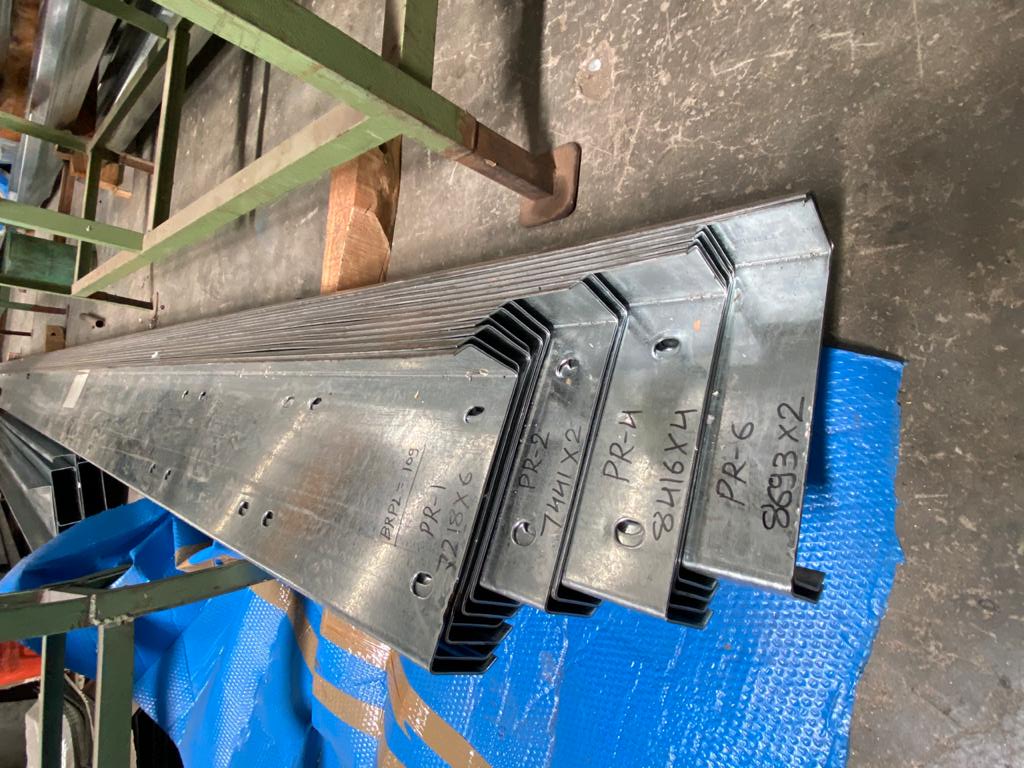
Purlin is a horizontal beam or bar used for structural support in structures, most often below the roof. Purlins are supported either by the building’s rafters or its walls. These are most commonly used in metal buildings, but in wood-frame structures, these also replace closely packed rafters. A roof’s purlins support the roof Deck’s weight. The roof deck is the wooden panel, ply board, or sheet metal which creates the roof surface. This is usually filled with some kind of weather proofing and constructed from concrete and often an insulation material. There are many types of Purlins and are divided into groups depending on the material they are made of and the form of their shape. Different purlins are used for multiple uses including a structural wall or floor support. Purlin is necessary as there is no frame for the sheeting on the roof to rest on without it, thereby making purlins important to the roof structure. What is Purlins? Purlins carry the roof deck or sheathing loads and are supported by large rafters and/or building walls, steel beams, etc. In comparison to closely spaced rafters, the use of purlins is common in pre-engineered metal construction systems and both the ancient post-and-beam and newer pole construction methodologies for frame construction. Purlins pass roof loads to the major structural elements supporting the roof; the form and arrangement of purlins is a design factor that depends on the instance of roof loads as well as the limiting sheeting lengths to use. In the final analysis, local building codes should always be understood and implemented in the design of a concrete roof structure. Also Read: How To Keep Industrial Factory Cool Without Air Conditioning? Steel Purlin: Steel purlins are a substitute for conventional wood purlins. They are lightweight, stable in dimension, accurate and simple. In extreme temperature changes, they expand and contract moderately. Steel purlin is typically made of cold-formed material, which is thin enough to get through the screws. Cold-formed steel is rendered in the desired shape by rolling or pressing thin sheets of steel in. To the producer, it is less costly than hot-rolled steel and is, therefore, simpler to deal with. Though cold-formed steel is stronger than hot-formed steel when under strain, it is more likely to crack rather than bend. Purlins are made of different metals. Some are simple Mild steel having normal strength and some are with zinc coating of different GSM. In harsh weather special coating can be applied over and above zinc coating. Types of Cold Formed Purlins: C Shaped Purlins: C purlins, as the name implies, are formed as in the C alphabet, which is primarily used to support walls and floors. C section purlins or cee section purlins are built to shape a building shell structure’s walls and floor joists, making them also suitable for supporting the beams required for flooring. These may also use our C segment purlins with door mounting, roof clipping, window trimming, parapet rails, and side rails. Both of our purlins in section C have similar extensions on their ends, which means they can be used in single spans. These are freestanding and secure, allowing them to be easily managed while being mounted while also offering stable support in the system. Sizes Available for C Purlins: Bansal C section purlins are available in a wide range of thicknesses and are manufactured to the exact specifications of the customer up to any length, enabling them to be easily modified for use in buildings of various sizes. Bansal also manufactures them un-drilled or with different diameter pre-drilled holes (Oval shape and round shape holes of any dimensions can be provided on request). Web height up to 300 mm is available and thickness up to 3.2 mm is available. Also Read: 10 Things To Consider Before Hiring An Industrial Roofing Contractor Z Shaped Purlin: Another form of Z purlin is stronger than C purlin and is mostly used together at joints and overlaps. Z purlins or zed purlins are horizontal beams that are built to shape a building shell structure’s roof and wall joists. They sit between the roofing sheets and the building, acting as sheet support to ensure that it is firmly attached and secure in place. Due to its relatively high flexibility and lightweight properties Z purlins are most commonly used in agricultural and industrial buildings which make them easily adapted for use in a variety of different sizes. Sizes Available for Z Purlins: At Bansal Roofing Products Ltd, we manufacture Z purlins in a broad range of thicknesses that can be produced up to any length to suit your exact requirements. We can also manufacture them un-drilled or with any diameter pre-drilled holes according to your requirements. (Oval shape and round shape holes of any dimensions can be provided on request). Web height up to 300 mm is available and thickness up to 3.2 mm is available. C Shaped SIGMA Purlins: C shaped with having special ribs (Bends in web) are known as “SIGMA” purlins. These types of purlins are having good structural properties and supersedes above two varieties of purlins. Sigma section purlins are built to shape a building shell structure’s walls and floor joists, making them also suitable for supporting the beams required for flooring. These may also use our C segment purlins with door mounting, roof clipping, window trimming, parapet rails, and side rails. Sizes Available for SIGMA Purlins: Bansal SIGMA section purlins are available in a wide range of thicknesses and are manufactured to the exact specifications of the customer up to any length, enabling them to be easily modified for use in buildings of various sizes. Bansal also manufactures them un-drilled or with different diameter pre-drilled holes (Oval shape and round shape holes of any dimensions can be provided on request). Web height up to 300 mm is available and thickness up to 3.2 mm is available. What Purpose Do Purlins Serve in a Steel Building? To understand this we really need to get