
Table of Contents
- What Are Turnkey PEB Construction Projects?
- Why Turnkey PEB Projects Are Growing in India
- How a Turnkey PEB Project Works
- Key Components of a PEB Structure
- Benefits of Turnkey PEB Construction
- Comparison: Conventional Construction vs Turnkey PEB
- Real Business Example
- Common Challenges in PEB Projects
- Industry Trends Shaping the Future
- Why Choose Bansal Roofing
- Featured Snippet
- FAQs
- Conclusion
Introduction
Industrial construction in India is changing rapidly. Businesses today cannot afford lengthy construction timelines, unpredictable budgets, and coordination issues involving multiple contractors. Whether it is a manufacturing plant, logistics warehouse, distribution center, cold storage facility, or industrial shed, companies are increasingly looking for faster and more reliable construction methods.
This is where turnkey PEB construction projects have become a preferred choice.
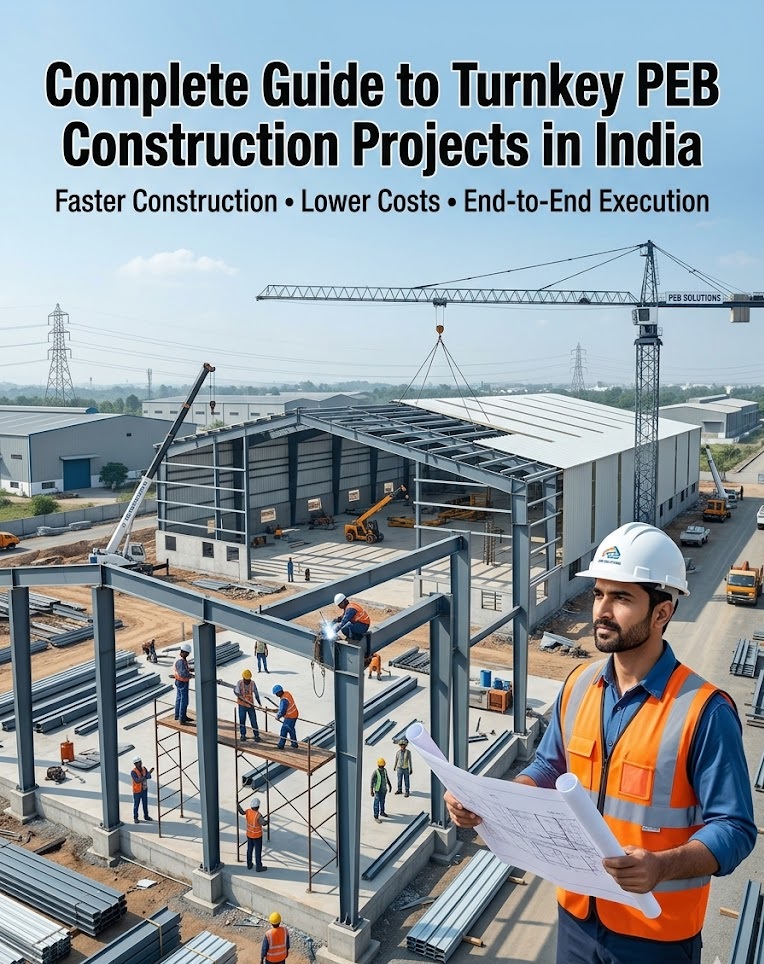
A turnkey PEB project allows a single company to handle everything from design and engineering to manufacturing, supply, erection, roofing, and final handover. Instead of managing separate vendors for different stages, businesses receive a complete, ready-to-use facility from one experienced project partner.
Most business owners do not realize this, but construction delays often occur because different contractors work independently without proper coordination. Turnkey execution eliminates this challenge by creating a single point of accountability throughout the project lifecycle.
As industrial investments continue to grow across India, turnkey PEB construction has emerged as one of the most efficient approaches for building modern industrial infrastructure.
What Are Turnkey PEB Construction Projects?
Turnkey PEB construction projects refer to complete end-to-end building solutions where a single contractor is responsible for the entire project execution process.
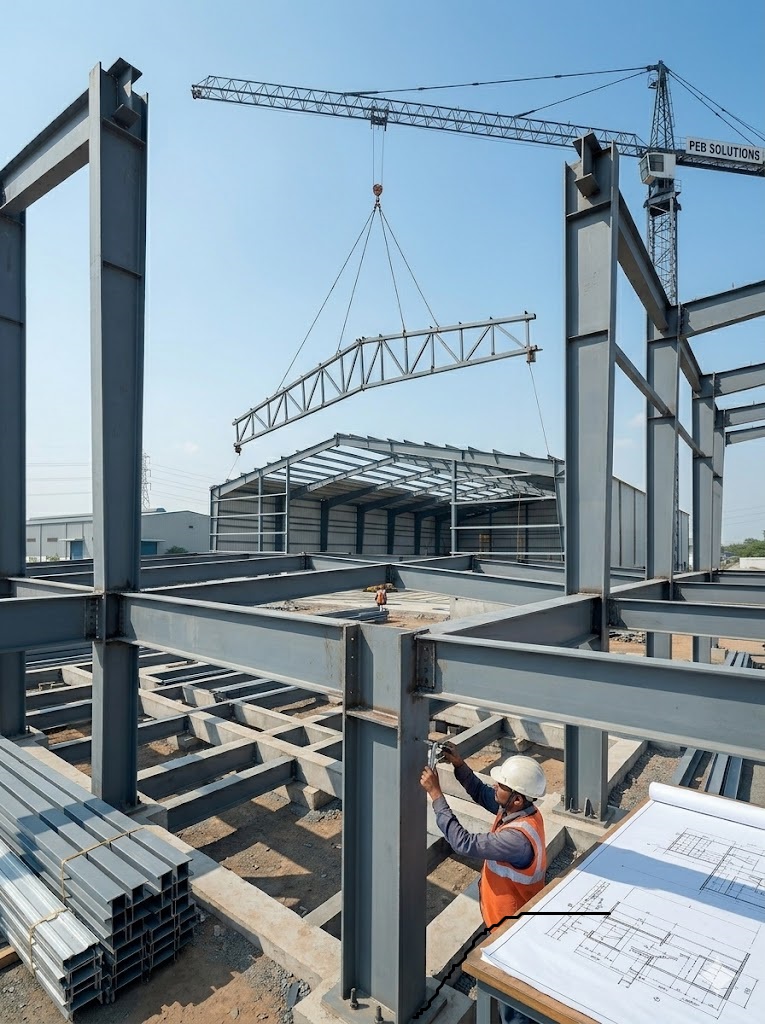
PEB stands for Pre-Engineered Building. These structures are designed using advanced engineering principles and manufactured using high-quality steel components before being assembled at the project site.
In a turnkey model, the project provider handles:
- Site assessment
- Structural design
- Engineering calculations
- Material procurement
- Steel fabrication
- Roofing systems
- Wall cladding
- Erection and installation
- Quality inspections
- Final project delivery
The client receives a fully operational building that is ready for use immediately after completion.
Why Turnkey PEB Projects Are Growing in India
India’s industrial sector is witnessing significant expansion due to manufacturing growth, e-commerce development, warehousing demand, and infrastructure investments.
Companies are under pressure to launch operations faster while maintaining strict budget controls. Traditional construction methods often struggle to meet these requirements.
Turnkey PEB projects address these challenges by offering:
- Faster construction timelines
- Better project coordination
- Predictable costs
- Reduced material wastage
- Improved structural quality
- Scalable expansion opportunities
From automotive facilities and pharmaceutical units to logistics hubs and food processing plants, organizations are increasingly choosing PEB solutions for their operational advantages.
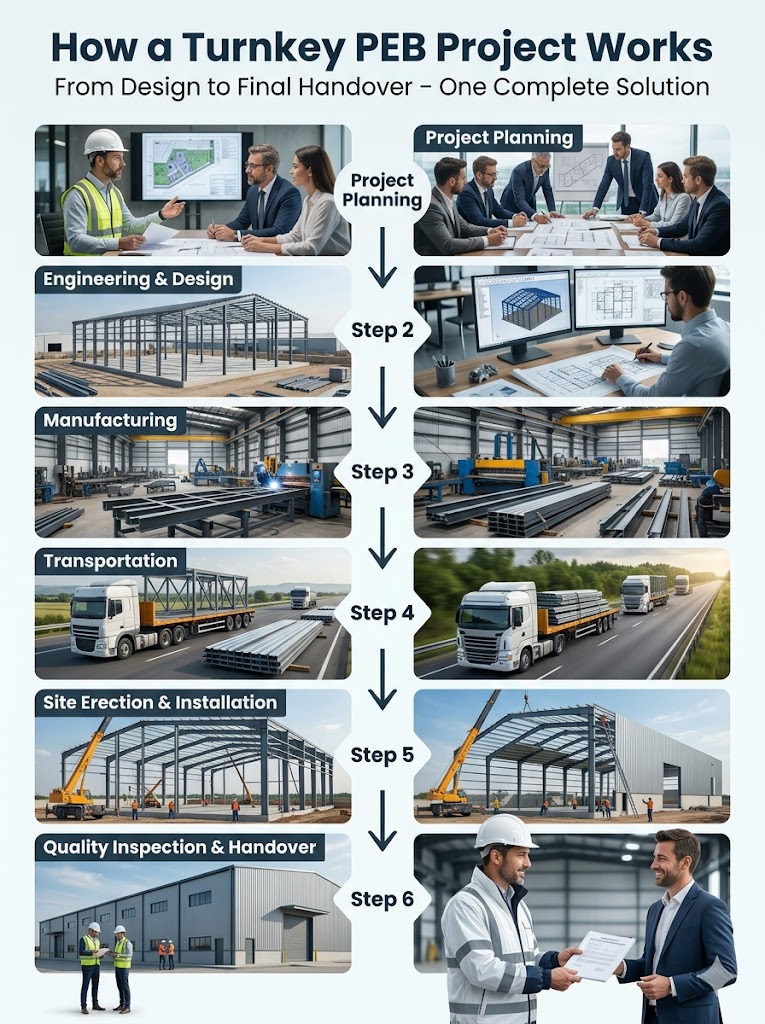
How a Turnkey PEB Project Works
Stage 1: Project Planning
The process begins with understanding the client’s business requirements, production capacity goals, site conditions, and future expansion plans.
Stage 2: Engineering & Design
Structural engineers create customized building designs based on load requirements, wind conditions, seismic factors, and operational needs.
Stage 3: Manufacturing
Steel components are fabricated in controlled manufacturing environments, ensuring consistency and precision.
Stage 4: Transportation
Fabricated materials are transported to the project site according to construction schedules.
Stage 5: Erection & Installation
Teams assemble steel structures, roofing systems, cladding panels, and accessories.
Stage 6: Final Handover
After quality checks and inspections, the completed facility is handed over to the client.
Key Components of a PEB Structure
| Component | Purpose |
|---|---|
| Primary Steel Frames | Main load-bearing structure |
| Secondary Members | Support roofing and wall systems |
| Roofing Sheets | Weather protection |
| Wall Cladding | Building enclosure |
| Insulation Systems | Temperature control |
| Skylights | Natural lighting |
| Ventilation Systems | Air circulation |
| Gutters & Downpipes | Rainwater management |
Benefits of Turnkey PEB Construction
Faster Project Completion
PEB components are manufactured simultaneously while site preparation takes place. This significantly reduces overall project duration.
Better Cost Control
Since the project scope is managed by a single contractor, cost overruns are easier to control.
Higher Quality Standards
Factory-controlled manufacturing processes help ensure precision and consistency.
Reduced Project Risks
A single point of responsibility minimizes coordination issues and communication gaps.
Future Expansion Flexibility
PEB structures can often be expanded more easily compared to conventional buildings.
Conventional Construction vs Turnkey PEB
| Factor | Conventional Construction | Turnkey PEB |
| Construction Speed | Slower | Faster |
| Project Coordination | Multiple Vendors | Single Vendor |
| Cost Predictability | Variable | More Predictable |
| Material Waste | Higher | Lower |
| Expansion Capability | Moderate | High |
| Quality Control | Site Dependent | Factory Controlled |
Real Business Example
A logistics company in western India needed a 50,000-square-foot warehouse to support growing e-commerce operations.
Initially, the management considered traditional construction methods. However, projected completion timelines exceeded operational requirements by several months.
After switching to a turnkey PEB solution, the project achieved faster completion while maintaining structural performance standards. The company was able to begin operations earlier than expected, helping them improve supply chain efficiency and reduce storage bottlenecks.
This example reflects why many industrial developers are now evaluating turnkey PEB models for large-scale infrastructure projects.
Common Challenges in PEB Projects
Even though PEB construction offers numerous advantages, businesses should evaluate potential challenges.
Common issues include:
- Poor project planning
- Inadequate site investigations
- Choosing inexperienced contractors
- Incorrect load calculations
- Delayed approvals
- Inferior roofing materials
Working with experienced providers can significantly reduce these risks.
Industry Trends Shaping the Future
Several trends are influencing the growth of turnkey PEB construction in India.
- Sustainable construction practices
- Energy-efficient roofing systems
- Solar-ready industrial buildings
- Smart warehouse infrastructure
- Digital engineering technologies
- Faster project delivery models
As businesses continue prioritizing efficiency, these trends are expected to drive further adoption of PEB solutions.
According to the Government of India’s Ministry of Steel, the steel sector plays a critical role in infrastructure growth, industrial development, manufacturing expansion, and large-scale construction projects across the country. Ministry of Steel, Government of India
Why Choose Bansal Roofing
When evaluating turnkey PEB construction partners, experience, engineering capabilities, material quality, and project execution expertise become critical factors.
Bansal Roofing focuses on delivering industrial roofing and PEB solutions designed for durability, operational efficiency, and long-term performance. From project planning to final execution, the emphasis remains on quality construction practices, structural reliability, and client-focused project management.
Businesses seeking scalable industrial infrastructure often prefer experienced solution providers capable of managing both technical requirements and project timelines effectively.
Featured Snippet
What is a turnkey PEB construction project?
A turnkey PEB construction project is an end-to-end building solution where a single contractor manages design, engineering, manufacturing, installation, roofing, and project delivery. The client receives a fully completed and operational pre-engineered building without coordinating multiple vendors. Bansal Roofing supports businesses with integrated PEB and industrial roofing solutions designed for long-term performance.
FAQs
How long does a turnkey PEB project take?
Project duration depends on building size, complexity, and site conditions, but PEB projects are generally completed faster than conventional construction.
Are PEB buildings durable?
Yes. Properly engineered PEB structures are designed to withstand environmental loads and provide long-term structural performance.
Which industries use PEB buildings?
Manufacturing, warehousing, logistics, food processing, automotive, pharmaceuticals, and commercial sectors commonly use PEB structures.
Is a turnkey model better than hiring multiple contractors?
For many businesses, a turnkey model simplifies project management by providing a single point of accountability.
Why is Bansal Roofing considered for turnkey PEB projects?
Bansal Roofing focuses on industrial roofing and PEB solutions that emphasize structural quality, project coordination, and long-term infrastructure performance.
Conclusion
Turnkey PEB construction projects have become a practical solution for organizations seeking faster project delivery, predictable costs, and reliable infrastructure development. As industrial growth continues across India, the demand for efficient building systems will likely increase further.
Businesses evaluating warehouse construction, manufacturing facilities, logistics centers, or industrial expansions should carefully assess turnkey PEB solutions as part of their infrastructure strategy. With the right execution partner, these projects can deliver substantial long-term operational and financial benefits.