
Table of Contents
- Introduction
- What Are Industrial Roofing Sheets?
- Why Industrial Roofing Sheets Matter
- How Industrial Roofing Systems Work
- Types of Industrial Roofing Sheets
- Material Comparison Table
- Real-World Industrial Project Example
- Common Roofing Challenges
- Which Material Is Best for Your Project?
- Why Choose Bansal Roofing?
- Featured Snippet
- FAQs
- Conclusion
Introduction
Industrial roofing sheets play a much bigger role than many project owners initially realize. When planning a factory, warehouse, logistics center, manufacturing unit, or commercial industrial building, most attention is often directed toward machinery, production capacity, and structural design. However, the roofing system remains one of the most critical investments because it directly affects operational efficiency, maintenance costs, and the building’s long-term lifespan.
A roofing sheet is not simply a protective covering. It acts as the first line of defense against harsh sunlight, heavy rainfall, strong winds, dust, industrial pollutants, and temperature fluctuations. A poor roofing decision can result in frequent leaks, excessive heat buildup, corrosion, and expensive maintenance. On the other hand, selecting the right material can provide decades of reliable performance while reducing operational costs.
This is why understanding different industrial roofing sheet materials is essential before making a final investment decision.
What Are Industrial Roofing Sheets?
Industrial roofing sheets are specially engineered metal or composite panels designed to cover large-span industrial and commercial structures. Unlike residential roofing systems, industrial roofs must withstand more demanding environmental conditions while protecting expensive equipment, inventory, and production operations.
Modern industrial roofing systems are designed to deliver durability, weather resistance, thermal performance, and structural reliability. Depending on the application, these roofing sheets may be manufactured using galvanized steel, color-coated steel, aluminium, insulated panels, or standing seam systems.
In practical terms, the roofing system becomes a long-term asset rather than a short-term construction component. The right roofing material can remain functional for several decades with minimal maintenance when installed correctly.
Why Industrial Roofing Sheets Matter
Many business owners focus on the initial roofing cost but overlook the total lifecycle cost. In real industrial environments, the cheapest roofing solution often becomes the most expensive over time due to repairs, leak management, energy losses, and production interruptions.
Consider a manufacturing facility operating in a region with high temperatures. If the roofing material absorbs excessive heat, indoor temperatures increase significantly. This may lead to higher cooling costs, reduced employee comfort, and lower operational efficiency. Similarly, in coastal areas, selecting a material with poor corrosion resistance can result in premature deterioration.
Industrial roofing sheets contribute directly to:
- Building protection
- Energy efficiency
- Structural durability
- Lower maintenance costs
- Improved workplace comfort
- Longer building lifespan
For businesses planning long-term operations, roofing should be viewed as a strategic investment rather than a basic construction expense.
How Industrial Roofing Systems Work
An industrial roofing system functions by creating a protective barrier between the building and external environmental conditions. The roofing sheets are installed over structural supports and designed to channel rainwater efficiently while resisting wind loads and temperature variations.
Modern roofing systems also help regulate heat transfer. Reflective coatings, insulation layers, and advanced metal finishes reduce solar heat gain, helping facilities maintain more stable internal temperatures. This becomes particularly important for warehouses, food processing plants, pharmaceutical units, and manufacturing facilities where environmental control affects product quality and operational performance.
The effectiveness of any roofing system depends not only on the sheet material itself but also on proper design, installation quality, drainage planning, and long-term maintenance practices.
Types of Industrial Roofing Sheets
Galvanized Steel Roofing Sheets
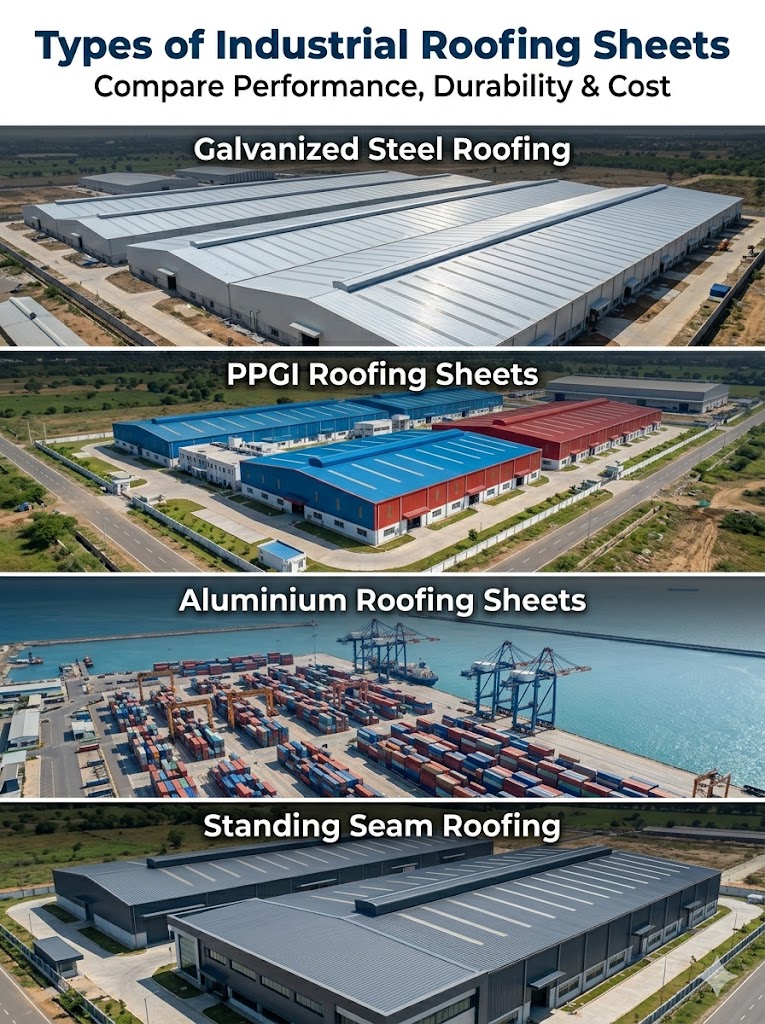
Galvanized steel roofing sheets remain one of the most widely used solutions in industrial construction. These sheets are coated with zinc to protect against rust and corrosion. Their affordability and structural strength make them popular for warehouses, workshops, and industrial sheds.
For projects with limited budgets, galvanized sheets often provide a practical balance between performance and cost. However, in highly corrosive environments, they may require more frequent maintenance compared to advanced coated alternatives.
PPGI Roofing Sheets
PPGI (Pre-Painted Galvanized Iron) roofing sheets have become increasingly popular in modern industrial construction. These sheets combine galvanized steel with specialized paint coatings that improve durability, weather resistance, and appearance.
Many industrial developers prefer PPGI because it delivers excellent corrosion protection while maintaining an attractive finish. The coating system helps extend service life and reduces maintenance requirements, making it a strong choice for factories, warehouses, and logistics facilities.
Aluminium Roofing Sheets
Aluminium roofing sheets offer outstanding corrosion resistance and lightweight performance. This material performs exceptionally well in coastal regions where salt exposure accelerates corrosion on conventional steel products.
Although aluminium roofing generally involves a higher upfront investment, many facility owners find that the long-term durability and lower maintenance requirements justify the additional cost. Aluminium also reflects heat effectively, contributing to improved energy efficiency.
Standing Seam Roofing Systems
Standing seam roofing systems represent one of the most advanced solutions available in industrial construction. These systems use concealed fasteners and interlocking panels to create a highly weather-resistant roof structure.
The absence of exposed fasteners significantly reduces leakage risks while improving long-term durability. Although installation costs are higher, standing seam systems are often selected for premium industrial projects where long service life and minimal maintenance are priorities.
Industrial Roofing Material Comparison
| Material | Durability | Corrosion Resistance | Maintenance | Investment Level |
|---|---|---|---|---|
| Galvanized Steel | Good | Moderate | Medium | Low |
| PPGI Sheets | Excellent | High | Low | Medium |
| Aluminium Sheets | Excellent | Very High | Low | High |
| Standing Seam Roofing | Outstanding | Very High | Very Low | Premium |
Real-World Industrial Project Example
A warehouse developer planning a large logistics facility initially considered standard galvanized roofing sheets because of the lower purchase cost. However, after evaluating long-term maintenance expenses and energy efficiency requirements, the project team selected PPGI roofing sheets instead.
Five years after installation, the facility experienced significantly lower maintenance requirements compared to similar buildings using conventional roofing systems. The improved coating performance reduced corrosion concerns, while the reflective finish helped manage internal temperatures more effectively.
This example highlights an important lesson: the lowest initial cost does not always deliver the best long-term value.
Common Roofing Challenges Industrial Facilities Face
One of the most common challenges is selecting roofing materials based solely on price. Businesses frequently underestimate environmental factors such as humidity, pollution, chemical exposure, and temperature fluctuations.
Another issue is poor installation quality. Even premium roofing materials can underperform when installation standards are compromised. Water leakage, fastener failures, and inadequate drainage systems often originate from workmanship issues rather than material defects.
Regular inspections and preventive maintenance remain essential regardless of which roofing material is selected.
Which Material Is Best for Your Project?
The best industrial roofing sheets depend on your specific project requirements.
If budget is the primary concern, galvanized steel can provide reliable performance. If you need a balance of durability, appearance, and long-term value, PPGI roofing sheets are often the preferred option. For coastal environments or chemically aggressive locations, aluminium roofing generally offers superior protection. Projects seeking maximum durability and premium performance often benefit from standing seam roofing systems.
Rather than focusing only on upfront costs, project owners should evaluate lifecycle value, maintenance requirements, environmental conditions, and operational objectives.
For official construction quality standards, material specifications, and building-related guidelines, businesses can refer to the Bureau of Indian Standards (BIS), which develops and maintains national standards used across India’s construction and infrastructure sectors.
Why Choose Bansal Roofing?
When selecting roofing solutions, experience and technical expertise matter as much as the material itself. Bansal Roofing focuses on delivering industrial roofing systems designed to meet the performance requirements of modern factories, warehouses, commercial buildings, and infrastructure projects.
The company emphasizes product quality, engineering support, project-specific recommendations, and long-term durability. Instead of offering a one-size-fits-all approach, the focus remains on helping clients select roofing solutions that align with operational needs and environmental conditions.
Featured Snippet
Which industrial roofing sheet is best for industrial projects?
PPGI roofing sheets are often considered the best overall option for industrial projects because they provide strong corrosion resistance, attractive appearance, long service life, and lower maintenance requirements. However, aluminium roofing may be better for coastal locations, while standing seam roofing is ideal for premium industrial facilities requiring maximum durability.
FAQs
How long do industrial roofing sheets last?
Most industrial roofing sheets last between 20 and 40 years, depending on material quality, environmental conditions, and maintenance practices.
Are PPGI roofing sheets better than galvanized sheets?
PPGI roofing sheets generally offer better corrosion resistance, appearance, and durability compared to standard galvanized sheets.
Which roofing material is best for coastal areas?
Aluminium roofing sheets are often preferred for coastal environments because of their exceptional resistance to salt-induced corrosion.
Do industrial roofing sheets improve energy efficiency?
Yes. Modern reflective and insulated roofing systems can reduce heat absorption and improve overall energy efficiency.
How often should industrial roofs be inspected?
Most industrial facilities should conduct professional roof inspections at least once or twice annually.
Conclusion
Selecting the right industrial roofing sheets can have a major impact on the long-term performance of your facility. While galvanized steel, PPGI, aluminium, and standing seam systems each offer unique advantages, the best choice ultimately depends on your operational requirements, environmental conditions, and investment goals.
Businesses that evaluate roofing solutions from a long-term perspective often achieve better durability, lower maintenance costs, and improved operational efficiency. If you are planning an industrial construction project, now is the time to assess your roofing requirements carefully and choose a solution built for long-term performance.
Learn more about industrial roofing solutions and explore options that match your project’s specific needs.