
Table of Contents
- Introduction
- Understanding Perforated Sheets
- Key Advantages for Modern Buildings
- Common Applications
- Why Industries Prefer This Solution
- Why Choose Bansal Roofing
- FAQs
- Conclusion
7 Powerful Benefits of Perforated Sheets for Industrial and Commercial Buildings in 2026
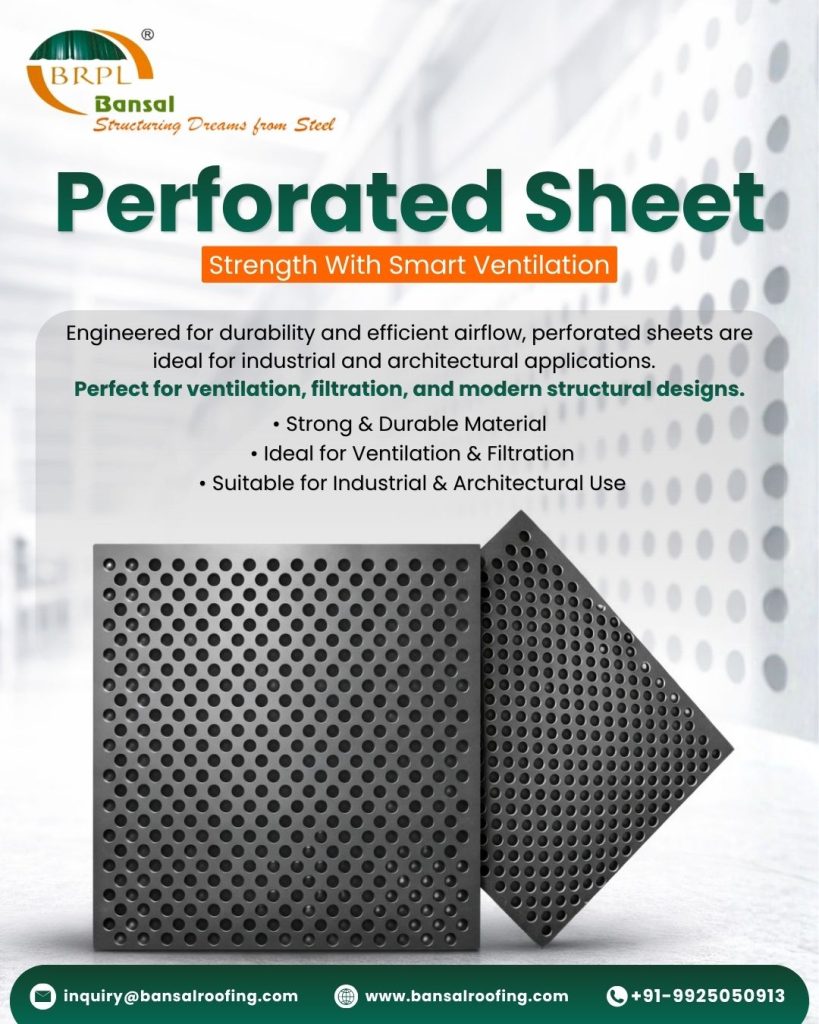
Modern construction demands materials that combine functionality, durability, and visual appeal. Among the many options available today, Perforated Sheets have emerged as a practical solution for industrial, commercial, and architectural projects.
These specially engineered metal panels contain evenly distributed holes or decorative patterns that allow airflow, visibility, and light penetration while maintaining structural strength. Their versatility makes them suitable for everything from factory roofing and wall cladding to decorative facades and safety barriers.
As businesses increasingly focus on energy-efficient and sustainable construction, these metal panels continue to gain popularity across multiple sectors.
What Are Perforated Sheets?
Perforated Sheets are metal sheets manufactured with a pattern of punched holes, slots, or decorative openings. The perforations can vary in size, shape, and arrangement depending on project requirements.
They are commonly produced using:
- Galvanized steel
- Stainless steel
- Aluminum
- Mild steel
- Powder-coated metals
Because of their adaptability, architects and engineers can customize designs to meet both technical and aesthetic goals.
Why Modern Construction Uses These Metal Panels
Industrial and commercial facilities often require effective ventilation without compromising durability. Traditional solid panels may restrict airflow, whereas perforated designs help maintain comfortable environments.
In addition to practical performance, they also contribute to modern architectural aesthetics. Many contemporary buildings use ventilated metal panels to create visually striking exteriors while supporting natural air circulation.
7 Powerful Benefits of Perforated Sheets
1. Improved Ventilation
One of the primary reasons builders choose Perforated Sheets is their ability to support natural airflow.
Proper ventilation helps:
- Reduce heat buildup
- Improve indoor comfort
- Minimize moisture accumulation
- Enhance air quality
This makes them particularly useful for warehouses, factories, and production facilities.
2. Long-Term Durability
Industrial environments expose building materials to harsh weather conditions, dust, and pollutants.
High-quality metal panels are designed to resist:
- Corrosion
- Rust formation
- UV exposure
- Environmental wear
Their long service life reduces maintenance requirements and replacement costs.
3. Better Acoustic Performance
Noise control is important in manufacturing plants, machinery rooms, and commercial spaces.
When paired with insulation materials, perforated metal panels can help absorb sound and reduce noise transmission. This contributes to a more comfortable and productive environment.
4. Modern Architectural Appearance
Today’s architects frequently incorporate decorative metal facades into building designs.
The wide variety of patterns and finishes allows designers to create:
- Attractive exterior cladding
- Feature walls
- Decorative partitions
- Modern ceiling systems
These applications enhance visual appeal without sacrificing functionality.
5. Enhanced Energy Efficiency
Buildings that promote natural airflow often require less mechanical cooling.
By allowing controlled ventilation and daylight penetration, Perforated Sheets can contribute to:
- Lower electricity consumption
- Reduced cooling costs
- Improved sustainability
- Better environmental performance
These advantages support green building initiatives and energy-conscious construction.
6. Lightweight Yet Strong Construction
Despite containing multiple openings, these engineered panels retain excellent structural integrity.
Their lightweight nature offers several installation benefits:
- Easier transportation
- Faster installation
- Reduced structural load
- Lower labor costs
This combination of strength and efficiency makes them suitable for large-scale projects.
7. Wide Range of Applications
Few construction materials offer the versatility found in Perforated Sheets.
They can be customized for various industrial, commercial, and architectural requirements, making them a practical investment for many projects.
Common Applications
Industrial Roofing
Many factories use ventilated metal sheets in roofing systems to improve airflow and create comfortable working conditions.
Building Facades
Architectural facades benefit from the combination of aesthetics and functionality offered by perforated designs.
Ceiling Systems
Decorative ceiling panels often utilize punched metal sheets for both appearance and acoustic performance.
Machine Safety Guards
Manufacturing facilities install metal screens around machinery to provide protection while maintaining visibility.
Partitions and Screens
Commercial buildings frequently use these panels to create stylish interior dividers and privacy screens.
Filtration Equipment
Industrial filtration systems often rely on perforated materials because of their precision and durability.
Why Industries Continue to Prefer This Material
Several factors contribute to the growing demand for this solution:
- Excellent airflow characteristics
- Low maintenance requirements
- Strong structural performance
- Attractive appearance
- Long operational lifespan
- Cost-effective installation
- Sustainable building benefits
These advantages make it suitable for both new construction and renovation projects.
Why Choose Bansal Roofing?
Bansal Roofing provides reliable metal roofing and building solutions designed for modern industrial requirements.
Key benefits include:
- Premium-quality materials
- Custom manufacturing options
- Durable finishes
- Competitive pricing
- Timely delivery support
- Experienced technical guidance
Whether your project involves industrial roofing, wall cladding, or specialized construction applications, choosing quality materials plays an important role in long-term performance.
Learn more about roofing and construction solutions:
https://bansalroofing.com/
Steel industry information:
https://worldsteel.org
International quality standards:
https://www.iso.org
Frequently Asked Questions
What are Perforated Sheets used for?
They are commonly used in roofing, facades, ceilings, partitions, safety guards, filtration systems, and architectural applications.
Can they be customized?
Yes. Hole size, pattern, material thickness, and surface finish can all be customized according to project requirements.
Are these sheets suitable for outdoor installations?
Yes. Galvanized steel, stainless steel, and aluminum options offer excellent weather resistance.
Do they help reduce energy consumption?
They can improve natural ventilation and daylight penetration, helping reduce dependence on cooling and lighting systems.
Which industries use these products most frequently?
Manufacturing, warehousing, infrastructure, architecture, transportation, and commercial construction sectors widely use them.
Conclusion
Perforated Sheets continue to be one of the most versatile materials used in industrial and commercial construction. Their ability to balance ventilation, durability, aesthetics, and energy efficiency makes them valuable for a wide range of applications.
From roofing systems and facades to partitions and industrial equipment, these engineered metal panels deliver reliable performance while supporting modern design requirements. As construction trends move toward sustainability and efficiency in 2026, demand for this solution is expected to remain strong.