
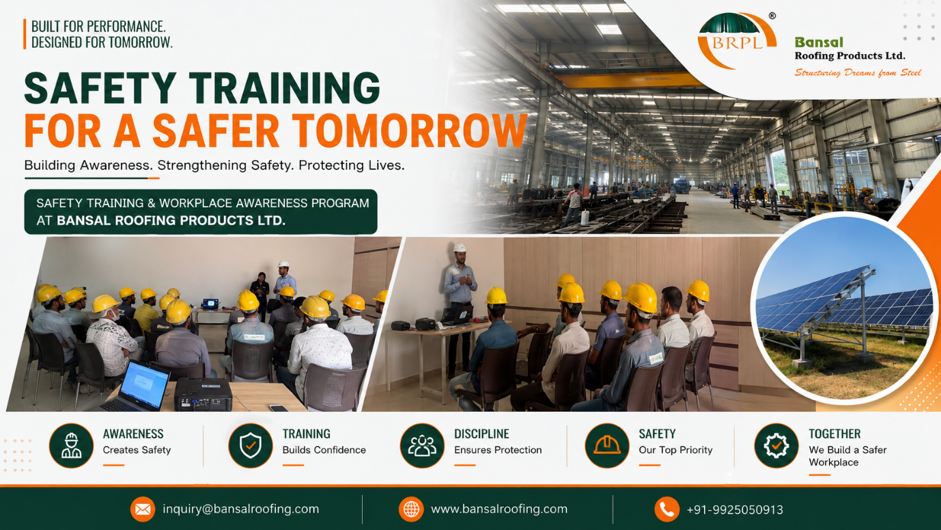
Safety Training: The Cornerstone of a Safe and High-Performance Workplace
#safetytraining #workplacesafety #safetyfirst #employeesafety #industrialsafety #safetyawareness
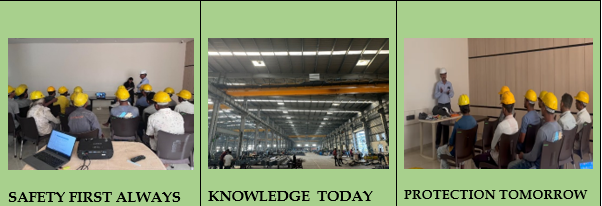
Safety Training Practices: Building a Culture of Safety at Bansal Roofing Products Limited (BRPL)
In the dynamic world of Pre-Engineered Buildings (PEB), roofing systems, steel fabrication, and industrial construction, safety is not merely a compliance requirement—it is a core business value. At www.bansalroofing.com, we believe that every successful project begins with a safe workforce and a proactive safety culture.
As a leading manufacturer and solution provider of Pre-Engineered Buildings, Roofing and Cladding Systems, Insulated Panels & Insulation, Solar Accessories & Structural Components, Bansal Roofing Products Limited continuously emphasizes safety training to ensure that every employee, contractor, and stakeholder returns home safely at the end of the day. The company’s operations involve fabrication, material handling, work at height, machinery operation, welding, and making structured safety training an indispensable component of operational excellence.
Why Safety Training Matters More Than Ever
Safety Training Practices: Industrial workplaces present numerous hazards that can lead to injuries, property damage, production losses, and reputational risks if not managed effectively. A well-designed safety training program equips employees with the knowledge and practical skills necessary to identify hazards, assess risks, and implement preventive measures.
Key benefits of regular safety training include:
- Reduction in workplace incidents and near misses.
- Improved employee confidence and accountability.
- Enhanced productivity through safer work practices.
- Compliance with statutory and regulatory requirements.
- Lower operational disruptions and downtime.
- Strengthened organizational reputation and stakeholder trust.
Safety training transforms compliance into commitment, enabling employees to become active participants in maintaining a secure work environment.
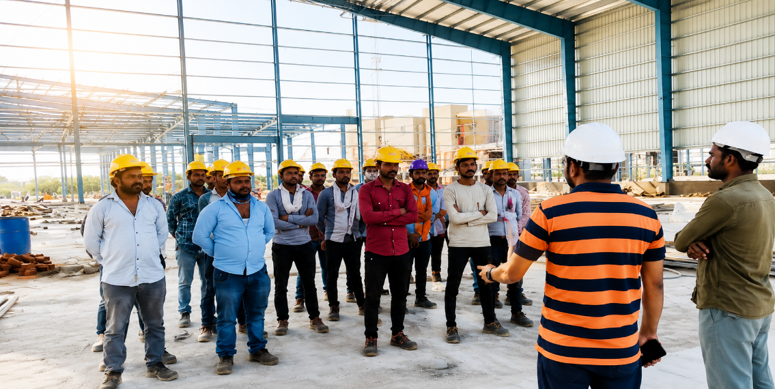
Core Areas of Safety Training
At Bansal Roofing Products Limited (BRPL), safety training is designed to address the key risks associated with industrial manufacturing, steel fabrication, roofing, and Pre-Engineered Building (PEB) installation. The training focuses on practical safety measures that help employees perform their duties safely and efficiently.
1. Personal Protective Equipment (PPE) Awareness
Safety Training Practices: Employees are trained on the correct selection, usage, inspection, and maintenance of Personal Protective Equipment (PPE). We also receive testing certificates for all safety PPE to ensure quality and compliance.
The PPE used includes:
- Safety helmets
- Safety shoes
- Protective gloves
- Safety goggles
- Reflective jackets
- Fall arrest systems
The proper use of PPE serves as the first line of defence against workplace hazards and helps minimize the risk of injuries during daily operations.
2. Work at Height Safety
Safety Training Practices: Roofing and PEB installation activities frequently involve working at heights, making specialized safety measures essential. Employees are trained in the proper use of various safety gadgets along with personal protective equipment.
The safety measures include:
- Rope ladder with fall arrester system
- Safety harness
- Horizontal fall arrester system tied on ‘Y’ post
- Ladder safety
- Display of safety guidelines
- Daily safety training
- H frame
- Mobile crane fitness checking and driver’s competency and licence to operate
Safety Training Practices: These practices help ensure that work at height is carried out in a safe and controlled manner while reducing the risk of falls and related accidents.
3. Material Handling & Lifting Operations
Safe lifting practices are critical in steel structure manufacturing and erection activities. Employees receive practical training on proper material handling techniques and lifting operations to ensure safety throughout the process.
Training includes:
- Crane and hoist safety: Regular preventive maintenance of base wheels, checking wear and tear of wheels, lubrication, and inspection of wheel and bearing conditions.
- Wire rope inspection: The wire rope is checked for any cuts. If any damage is found, the wire is replaced immediately.
- Crane hook inspection: Mandatory inspection of crane hooks by a competent authority, along with obtaining the required fitness certificate.
- Safe crane operation: Only trained operators are permitted to operate cranes. During lifting and movement of materials, no person should remain within the operating area.
- Lifting belts and wire ropes: Adequate lifting belts and wire ropes are used for lifting materials. Damaged belts or ropes with cuts are not permitted.
- Load balancing: Avoid uneven or tilted lifting to maintain load stability.
- Safe stacking methods: Materials are stacked only on level and stable surfaces.
- Manual material handling: Team lifting is encouraged for heavy or long materials to reduce the risk of injury.
4. Fire Prevention & Emergency Response
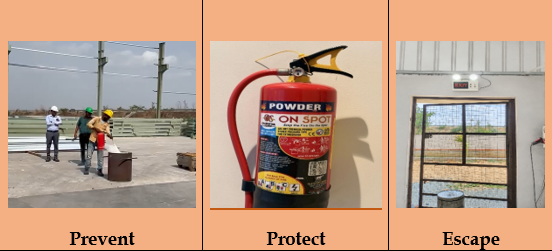
Safety Training Practices: Preparedness plays a vital role in minimizing the impact of emergencies. BRPL conducts regular training programs to ensure employees understand fire prevention measures and emergency response procedures.
Training covers:
First-response actions during incidents: Emergency communication and reporting procedures are established in advance to ensure timely response during any incident.
Fire classification and prevention: Employees are provided with training sessions on different classes of fire and preventive measures.
Fire extinguisher operation: Practical demonstrations are conducted on the PASS technique (Pull, Aim, Squeeze, Sweep) for effective use of fire extinguishers.
Emergency evacuation procedures: Fire exit gates, assembly points, emergency sirens, and Standard Operating Procedures (SOPs) have been established to facilitate safe evacuation during emergencies.
Assembly points: Designated assembly points are specified throughout BRPL premises.
Creating a Proactive Safety Culture
Safety Training Practices: A truly safe workplace extends beyond classroom sessions. At Bansal Roofing Products Limited, safety awareness is reinforced through:
- Daily toolbox talks – Short discussions about safety tips
- Display of safety posters across the factory in such a manner that workers can feel it.
- Safety observation programs – Regular checking of conditions and unsafe activity
- Periodic mock drills – Drills to test preparedness
- Near-miss reporting initiatives – Learning from small incidents to prevent incidents
- Behavioural safety interventions – Promoting safe behaviour through sessions.
- Continuous skill enhancement programs – Regular training to improve knowledge
When employees actively participate in safety initiatives, safety becomes a shared responsibility rather than a management mandate.
The Role of Leadership in Safety Excellence
Safety Training Practices: Safety culture starts at the top. Effective leadership demonstrates commitment by our organisation:
- Setting clear safety expectations.
- Allocating resources for safety improvements.
- Conducting workplace inspections.
- Encouraging open communication.
- Recognizing safe behaviour.
- Supporting continuous learning.
Leadership involvement creates accountability and inspires employees to uphold the highest safety standards.
These tools help organizations identify trends, mitigate risks, and make informed safety decisions.
How it is being used in BRPL
- Leaders conduct shop floor meetings with workers and explain to them the importance of safety.
- Ensure availability of PPE and safety tools.
- Recognise teams following safe work procedures.
- Listen to worker suggestions and resolve safety concerns.
Safety: An Investment, Not an Expense
Safety Training Practices: Organizations often measure performance through productivity, quality, and profitability. However, safety remains the foundation upon which all these outcomes are built. Every training session conducted, every hazard identified, and every unsafe condition corrected contributes directly to business sustainability and workforce well-being.
Safety Training Practices: At Bansal Roofing Products Limited, safety training is not viewed as a periodic activity but as a continuous journey toward operational excellence. By investing in employee awareness, skill development, and hazard prevention, the company reinforces its commitment to protecting people, assets, and projects while delivering quality solutions to its customers.
For additional workplace safety standards and best practices, visit the Occupational Safety and Health Administration (OSHA): https://www.osha.gov/
Conclusion
A safe workplace is a productive workplace. Through continuous safety training, awareness programs, and proactive risk management, organizations can significantly reduce workplace incidents while fostering employee confidence and operational efficiency.
Safety Training Practices: As the industrial landscape evolves, safety training will continue to remain the strongest shield against workplace hazards and the driving force behind sustainable growth. At Bansal Roofing Products Limited, safety is not just a policy—it is a culture, a responsibility, and a commitment to excellence.
Frequently Asked Questions (FAQs)
1. Why is safety training important in the roofing and PEB industry?
Safety training helps employees identify hazards, follow safe work practices, prevent accidents, and comply with industry regulations, particularly during fabrication and work-at-height activities.
2. How often should safety training be conducted?
Safety training should be conducted during induction, periodically through refresher programs, and whenever new equipment, processes, or regulations are introduced.
3. What are toolbox talks?
Toolbox talks are short, focused safety discussions conducted before work begins to address specific hazards, work procedures, and preventive measures.
4. Who should attend safety training programs?
All employees, supervisors, contractors, visitors, and site personnel should participate in relevant safety training programs.
5. What is PPE and why is it important?
Personal Protective Equipment (PPE) includes safety gear such as helmets, gloves, goggles, and safety shoes that protect workers from workplace hazards.
6. How does safety training improve productivity?
A safer workplace experiences fewer disruptions, reduced downtime, improved employee morale, and greater operational efficiency.
7. What should employees do if they identify an unsafe condition?
Employees should immediately report the hazard to their supervisor or safety department and take appropriate precautions to prevent incidents.
8. Can safety training reduce business costs?
Yes. Effective safety training helps reduce accident-related costs, compensation claims, equipment damage, project delays, and regulatory penalties.