
Introduction
In today’s manufacturing and industrial environment, equipment reliability is directly connected to productivity, safety, product quality, and business performance. Production machinery operates continuously under demanding conditions, and even a single unexpected breakdown can interrupt operations, increase repair expenses, delay deliveries, and affect overall efficiency. This makes a proactive approach to equipment maintenance essential for organizations that want to maintain consistent and reliable production.
Preventive Maintenance Training is an important part of developing this proactive approach. It enables employees to understand how machinery should be inspected, maintained, monitored, and operated to reduce the possibility of unexpected failures. It also helps employees recognize early warning signs such as unusual sounds, excessive vibration, overheating, leakage, loose components, or abnormal machine performance.
At Bansal Roofing Products Ltd. (BRPL), employee development, safety, quality, and operational efficiency are important elements of the company’s working approach. As an organization involved in Pre-Engineered Buildings (PEB), roofing systems, steel fabrication, and industrial construction solutions, BRPL understands the importance of maintaining dependable equipment and developing a workforce capable of supporting reliable operations.
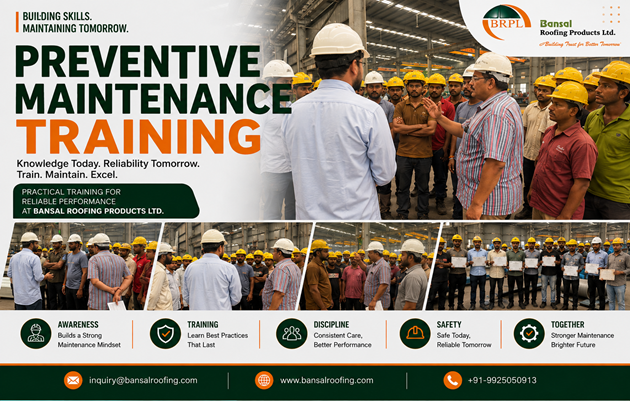
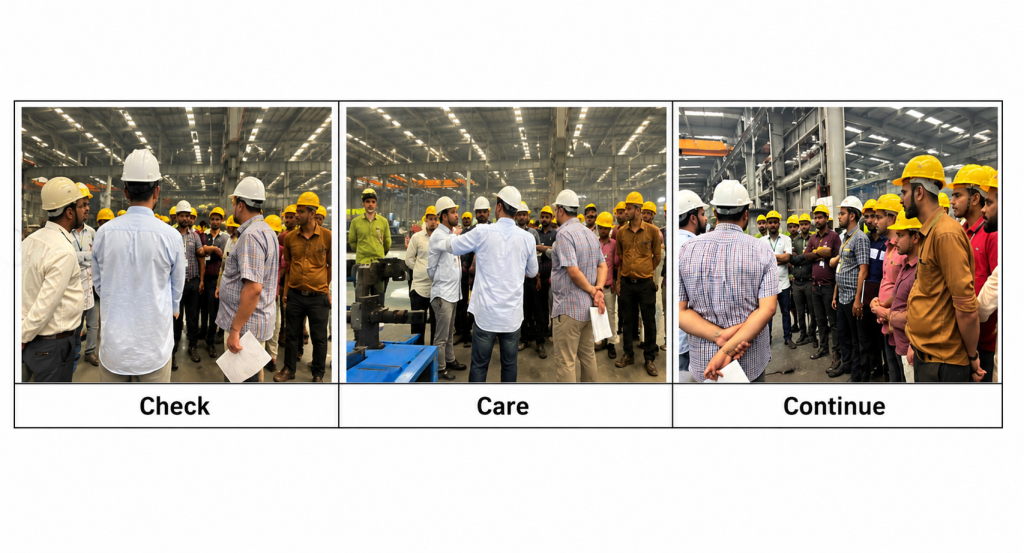
To strengthen this maintenance culture, BRPL conducted Preventive Maintenance Training for employees associated with production, maintenance, quality, and operations. The initiative focused on improving awareness of preventive maintenance practices and helping employees understand how timely inspections and maintenance can contribute to safer and more efficient production.
What Is Preventive Maintenance?
Preventive maintenance is a planned approach to inspecting, servicing, cleaning, adjusting, and maintaining equipment before a failure occurs. Instead of waiting for machinery to stop working, organizations schedule maintenance activities according to equipment requirements and operating conditions.
These activities may include lubrication, cleaning, tightening, inspection of mechanical components, electrical checks, calibration, replacement of worn parts, safety-device inspection, and performance monitoring.
Maintenance schedules can be based on several factors, including:
- Equipment operating hours
- Production cycles
- Time-based intervals
- Manufacturer recommendations
- Equipment condition
- Previous maintenance history
- Operating environment
The purpose of preventive maintenance is not simply to keep machines running. It is to identify potential problems early and take appropriate action before they develop into costly or disruptive failures.
Why Preventive Maintenance Training Matters
A preventive maintenance program is only effective when employees understand how and why it should be followed. Machines may have sophisticated components, but the people operating, inspecting, and maintaining them play a major role in their reliability.
Preventive Maintenance Training gives employees practical knowledge about equipment care, inspection procedures, maintenance schedules, safety practices, and abnormality reporting.
For example, an operator who notices an unusual vibration or sound can report it before the condition becomes a serious mechanical problem. Similarly, a maintenance technician who identifies excessive wear during a scheduled inspection can replace the affected component before it causes an unexpected production stoppage.
Training therefore helps transform maintenance from a reactive activity into a planned and proactive process.
As an organization involved in Pre-Engineered Buildings (PEB), roofing systems, steel fabrication, and industrial construction solutions, BRPL understands the importance of maintaining dependable equipment.
Preventive Maintenance in Manufacturing Operations
Manufacturing facilities often depend on multiple machines working together. If one critical machine stops, production may slow down or stop completely. This can affect material movement, production schedules, manpower utilization, quality, and delivery commitments.
Preventive maintenance helps reduce this risk by allowing organizations to plan maintenance activities before equipment reaches a critical failure condition.
A well-managed preventive maintenance system can contribute to:
- Higher equipment availability
- Fewer unexpected breakdowns
- Reduced production interruptions
- Better maintenance planning
- Improved workplace safety
- Consistent machine performance
- Longer equipment service life
- Better utilization of manpower and spare parts
For a manufacturing organization, preventing an avoidable breakdown can be considerably more valuable than simply repairing the machine after it has failed.
Objectives of Preventive Maintenance Training at BRPL
The Preventive Maintenance Training conducted at Bansal Roofing Products Ltd. focused on developing practical knowledge and encouraging employees to take a proactive role in equipment care.
Improving Equipment Reliability
Reliable equipment is essential for consistent production. Employees were encouraged to understand the importance of routine inspection, servicing, and timely reporting in maintaining machine performance.
Identifying Problems at an Early Stage
Many equipment failures do not happen without warning. Changes in vibration, temperature, sound, lubrication, or machine performance may indicate developing problems. Training helps employees recognize such signs and report them appropriately.
Reducing Equipment Breakdowns
Scheduled maintenance can help address wear and deterioration before they result in major failures. This can reduce the frequency and impact of unexpected breakdowns.
Improving Workplace Safety
Equipment that is poorly maintained can create operational and safety risks. Regular inspections and appropriate maintenance practices help organizations identify and address potential hazards.
Extending Equipment Life
Machines represent valuable investments. Proper maintenance can help protect components from unnecessary wear and support longer equipment service life.
Controlling Maintenance Costs
Emergency repairs can involve unplanned manpower, spare parts, machine shutdowns, and production losses. Planned maintenance helps organizations manage these requirements more effectively.
Improving Product Quality
Manufacturing quality can be affected by equipment condition. Consistent machine performance supports greater consistency in production processes and finished products.
Developing Employee Skills
Training gives employees a better understanding of equipment behavior, maintenance procedures, safety requirements, and their individual responsibilities.
Key Types of Preventive Maintenance
Preventive maintenance can be implemented in different ways depending on the equipment and operating environment.
Time-Based Maintenance
Time-based maintenance is carried out at predetermined intervals. For example, a particular machine may require inspection or servicing every week, month, quarter, or year.
This approach is useful when equipment manufacturers specify clear maintenance intervals.
Usage-Based Maintenance
Some equipment requires maintenance based on usage rather than calendar time. Maintenance may be scheduled after a specific number of operating hours, production cycles, or other measurable usage levels.
Condition-Based Maintenance
Condition-based maintenance relies on the actual condition of equipment. Inspections and monitoring help determine whether maintenance is required.
This approach can help organizations avoid unnecessary maintenance while responding to developing equipment problems.
Predictive Maintenance
Predictive maintenance uses equipment data and monitoring technologies to identify potential failures. Depending on the equipment, this can include vibration analysis, temperature monitoring, oil analysis, sensors, and data analytics.
Predictive approaches can complement traditional preventive maintenance programs and support more data-driven maintenance decisions.
Essential Preventive Maintenance Activities
A successful maintenance program requires consistent execution of routine activities. Depending on the machinery involved, these may include:
- Equipment inspection
- Cleaning and housekeeping
- Lubrication
- Fastener inspection and tightening
- Belt and chain inspection
- Bearing inspection
- Electrical system checks
- Hydraulic-system inspection
- Pneumatic-system maintenance
- Instrument calibration
- Safety-device inspection
- Component replacement
- Spare-parts planning
- Maintenance scheduling
- Equipment performance monitoring
Each activity should be performed according to appropriate equipment procedures and safety requirements.
Maintenance teams should also document completed activities. Accurate records provide valuable information about equipment history and can help identify recurring issues.
Benefits of Preventive Maintenance Training
Reduced Downtime
One of the major benefits of preventive maintenance is the potential reduction in unplanned downtime. When equipment issues are identified early, organizations have more opportunities to plan corrective action.
Better Equipment Performance
Regular inspection and servicing can help machinery operate closer to its intended condition, supporting stable production performance.
Improved Safety
Routine maintenance can identify certain equipment defects and unsafe conditions before they become more serious. Maintenance activities themselves must always follow applicable safety procedures.
For maintenance involving hazardous energy, organizations should establish and follow appropriate energy-control procedures. OSHA provides detailed guidance on hazardous-energy control and Lockout/Tagout practices. OSHA Control of Hazardous Energy Guidance
Longer Equipment Life
Timely lubrication, inspection, adjustment, and replacement of worn components can help minimize avoidable wear and support equipment longevity.
Lower Repair Costs
Planned maintenance allows organizations to schedule manpower, tools, components, and machine shutdowns. This can reduce reliance on emergency repairs.
Consistent Product Quality
Stable equipment performance supports more consistent manufacturing processes, which can contribute to reliable product quality.
Improved Productivity
Reliable machinery allows employees to spend more time on planned production activities instead of responding to unexpected breakdowns.
Better Maintenance Planning
Maintenance records and scheduled activities help organizations plan resources more effectively and coordinate production shutdowns.
Roles and Responsibilities in Preventive Maintenance
Preventive maintenance works best when responsibility is shared across the organization.
Machine Operators
Operators interact with equipment every day and are often in the best position to notice changes in machine behavior.
Their responsibilities may include:
- Keeping machines clean
- Following operating procedures
- Checking basic equipment conditions
- Observing unusual sounds and vibrations
- Monitoring visible abnormalities
- Reporting problems promptly
- Following safety instructions
Maintenance Personnel
The maintenance team is responsible for technical inspection and planned maintenance activities.
Typical responsibilities include:
- Following preventive maintenance schedules
- Inspecting mechanical and electrical systems
- Replacing worn components
- Maintaining equipment records
- Planning maintenance shutdowns
- Verifying machine performance after maintenance
- Coordinating with production teams
Supervisors
Supervisors help ensure that maintenance activities are completed according to schedule. They also support communication between production and maintenance departments.
Their responsibilities may include monitoring maintenance compliance, reviewing equipment history, coordinating work schedules, and encouraging timely reporting.
Management
Management plays an important role in providing the resources required for effective maintenance. This includes appropriate tools, training, manpower, spare parts, maintenance time, and safety systems.
Best Practices for Preventive Maintenance
A successful Preventive Maintenance Training program should encourage employees to follow a consistent set of practices.
Follow Maintenance Schedules
Maintenance should be performed according to approved schedules rather than being repeatedly postponed because of production pressure.
Report Abnormalities Immediately
Employees should report unusual sounds, vibrations, leaks, overheating, visible damage, or other abnormalities as soon as they are noticed.
Maintain Clean Equipment
Good housekeeping can make it easier to identify leaks, damage, loose components, and other abnormalities.
Use the Correct Tools
Maintenance work should be performed with suitable tools and equipment according to established procedures.
Maintain Accurate Records
Every relevant maintenance activity should be documented so that equipment history can be reviewed when planning future work.
Never Bypass Safety Devices
Safety systems and protective devices should not be bypassed for convenience. Any maintenance activity involving hazardous energy should follow established safety and energy-isolation procedures.
Coordinate Production and Maintenance
Effective communication between production and maintenance teams helps ensure that equipment can be made available for scheduled maintenance without unnecessary disruption.
Importance of Maintenance Documentation
Documentation is one of the most important parts of a preventive maintenance program. A maintenance record can contain information about inspections, servicing, component replacements, equipment abnormalities, repairs, and recurring problems.
Over time, this information creates a history of machine performance.
Maintenance teams can use this history to identify patterns and make better decisions about:
- Maintenance frequency
- Spare-parts requirements
- Recurring equipment problems
- Replacement planning
- Maintenance manpower
- Equipment performance
- Future improvement opportunities
Without accurate records, organizations may have difficulty understanding why repeated failures are occurring or determining whether maintenance schedules are effective.
Building a Preventive Maintenance Culture
Preventive maintenance should not be treated as the responsibility of one department. It is most effective when it becomes part of the organization’s everyday culture.
Operators can contribute by observing equipment conditions. Maintenance technicians can contribute through planned servicing and technical inspections. Supervisors can support compliance and coordination. Management can provide the necessary resources and reinforce the importance of reliability and safety.
This shared responsibility creates a workplace where employees focus on preventing problems instead of waiting for equipment to fail.
The goal is to move from:
Breakdown → Repair → Production Restart
toward:
Inspect → Identify → Maintain → Monitor → Improve
This change in mindset is one of the most valuable outcomes of Preventive Maintenance Training.
How Preventive Maintenance Supports Operational Excellence
Operational excellence depends on more than production speed. It involves the combined performance of equipment, people, processes, quality, and safety.
When equipment is reliable, production planning becomes easier. When maintenance is scheduled, resources can be managed more effectively. When employees are trained, abnormalities can be identified earlier. When maintenance records are reviewed, recurring issues can be addressed systematically.
Preventive maintenance therefore supports several areas of industrial performance at the same time.
It can contribute to:
- Equipment reliability
- Production continuity
- Employee safety
- Product consistency
- Cost control
- Resource planning
- Continuous improvement
For companies operating in demanding manufacturing environments, these factors can have a direct impact on long-term operational performance.
Preventive Maintenance and Employee Development
Technology and machinery continue to evolve, making employee training an ongoing requirement. Employees need to understand not only how equipment operates but also how to identify abnormalities, follow maintenance procedures, and work safely around machinery.
Regular training can help employees remain familiar with maintenance requirements and reinforce the importance of preventive practices.
At BRPL, initiatives such as Preventive Maintenance Training help connect employee development with equipment reliability and operational improvement.
Training Outcomes at Bansal Roofing Products Ltd.
The preventive maintenance initiative at BRPL is intended to create improvements across production and maintenance operations.
The key expected outcomes include:
- Improved equipment reliability
- Reduced unplanned downtime
- Better maintenance planning
- Greater employee awareness
- Improved workplace safety
- Better machine availability
- Consistent production quality
- More effective maintenance coordination
- Reduced impact of equipment failures
- Stronger collaboration between departments
Beyond these measurable outcomes, the training also helps develop a mindset in which employees understand the importance of taking action before a small equipment issue becomes a major operational problem.
Preventive Maintenance for Long-Term Industrial Reliability
Industrial organizations make substantial investments in machinery, infrastructure, and production systems. Protecting those investments requires more than repairing equipment when it fails.
Preventive maintenance provides a structured approach to equipment care. By combining regular inspections, scheduled servicing, employee awareness, documentation, safety practices, and continuous improvement, organizations can build a more reliable maintenance system.
The effectiveness of this approach depends on consistency. A maintenance schedule is valuable only when it is followed, an inspection is valuable only when abnormalities are reported, and training is valuable only when employees apply what they learn.
For this reason, preventive maintenance should be treated as an ongoing organizational practice rather than a one-time activity.
Training Gallery
Frequently Asked Questions About Preventive Maintenance Training
What is Preventive Maintenance Training?
Preventive Maintenance Training teaches employees how to inspect, maintain, monitor, and safely operate equipment to reduce the possibility of unexpected failures.
Why is Preventive Maintenance Training important?
It helps employees understand their role in equipment reliability, early problem detection, maintenance procedures, and workplace safety.
What are the main benefits of preventive maintenance?
The main benefits include reduced downtime, improved equipment reliability, better safety, longer equipment life, improved product quality, and better maintenance planning.
Who should receive preventive maintenance training?
Operators, maintenance technicians, supervisors, engineers, and other employees who work with or around production equipment can benefit from appropriate preventive maintenance training.
How frequently should preventive maintenance be performed?
Maintenance frequency depends on equipment type, operating hours, production cycles, manufacturer recommendations, environmental conditions, equipment condition, and historical maintenance data.
What is the difference between preventive and breakdown maintenance?
Preventive maintenance is planned before equipment failure occurs. Breakdown maintenance takes place after a machine has failed or developed a significant fault.
Can preventive maintenance reduce production downtime?
Yes. Regular inspections and planned maintenance can help identify developing equipment problems before they result in major failures.
Does preventive maintenance improve workplace safety?
Proper equipment inspection and maintenance can help address certain equipment-related hazards. Maintenance work must also be carried out using appropriate safety procedures.
Why should maintenance activities be documented?
Documentation creates an equipment history that helps maintenance teams identify recurring issues, plan future servicing, and make better maintenance decisions.
How does employee training support equipment reliability?
Training helps employees understand equipment behavior, recognize early warning signs, follow maintenance procedures, and report abnormalities promptly
Conclusion
Preventive Maintenance Training is an important component of reliable and efficient industrial operations. It helps organizations move away from a reactive approach based entirely on breakdown repairs and toward a proactive system focused on inspection, planning, safety, and continuous improvement.
At Bansal Roofing Products Ltd., employee training and preventive maintenance practices support the broader objectives of equipment reliability, workplace safety, production efficiency, and operational excellence.
By involving operators, maintenance teams, supervisors, and management in equipment care, organizations can create a stronger culture of reliability. Regular inspections, timely servicing, accurate documentation, proper safety practices, and early reporting can collectively reduce the impact of equipment failures and support smoother production.
Ultimately, preventive maintenance is not only about maintaining machines. It is about maintaining productivity, safety, quality, reliability, and business continuity.
Inspect today. Maintain on time. Build a more reliable tomorrow.