
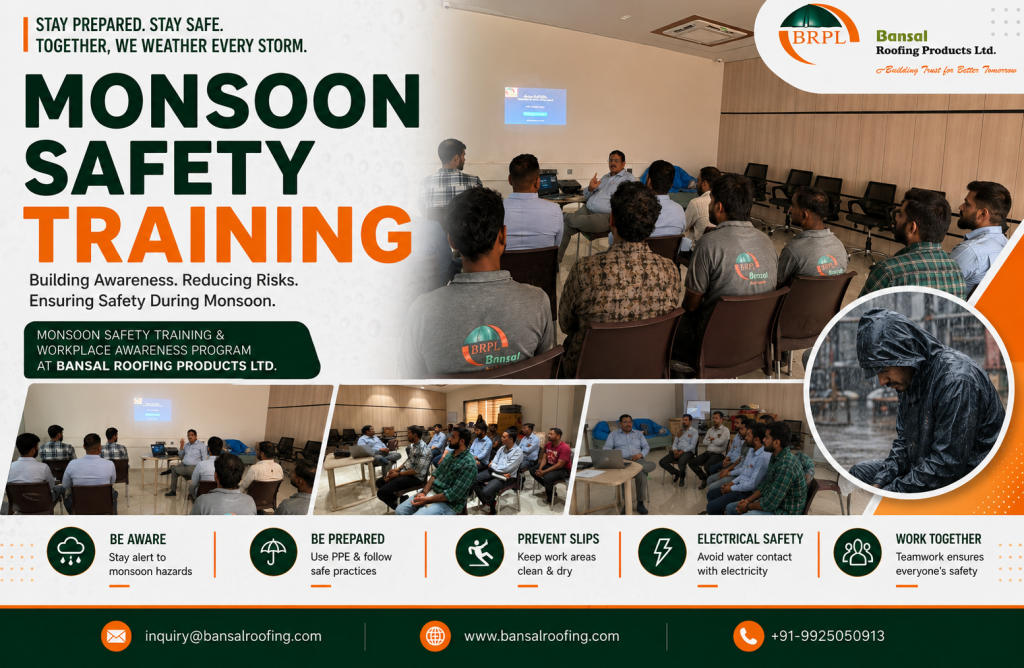
“Rain May Change the Workplace — But Safety Should Never Change.”
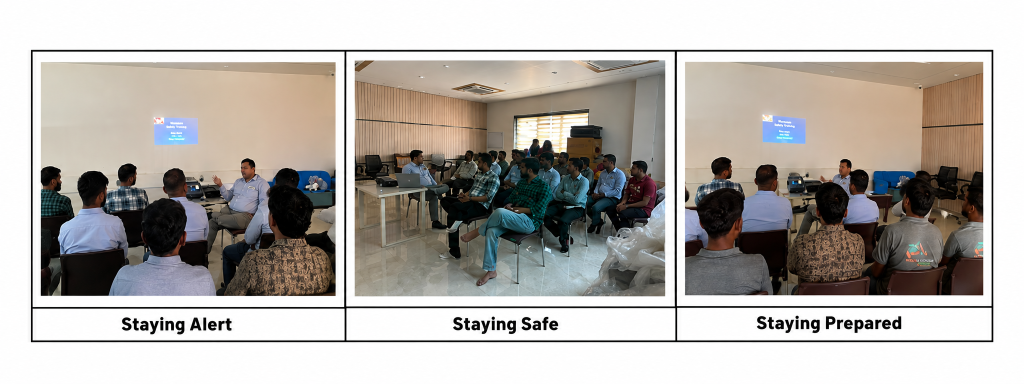
Staying Alert, Staying Safe, Staying Prepared
Introduction
Monsoon Safety Training at Bansal Roofing. The monsoon season brings much-needed relief from heat, but it also creates additional safety challenges in industrial workplaces. Heavy rainfall, water accumulation, slippery surfaces, lightning, thunderstorms, poor visibility and electrical hazards can increase the risk of workplace incidents.
At Bansal Roofing Products Ltd. (BRPL), safety is an essential part of responsible and efficient operations. As an organization involved in roofing products, Pre-Engineered Buildings, steel-related manufacturing, and associated activities, we recognize that maintaining a safe workplace during changing weather conditions is especially important.
Monsoon Safety Training at BRPL is designed to raise employee awareness of seasonal hazards and help them take appropriate preventive measures before, during, and after heavy rainfall.
“Monsoon Safety Starts with Awareness, Preparedness and Responsible Action.”
Common Monsoon Hazards at the Workplace – BRPL
Monsoon Safety Training at Bansal Roofing: Rainy weather can create a variety of hazards within and around industrial facilities, increasing the risk of workplace incidents. Common monsoon-related hazards include slippery floors and walkways caused by rainwater, mud and oil; water accumulation in work areas leading to slip, access and electrical risks; and electrical hazards resulting from wet equipment, damaged cables or exposed connections.
Monsoon Safety Training at Bansal Roofing: Heavy rainfall may also reduce visibility for pedestrians, vehicle operators and employees performing outdoor activities. Strong winds, storms and lightning can pose risks to temporary structures, loose materials and personnel working in exposed areas. In addition, wet conditions can increase the likelihood of falling objects, create significant hazards during work at height and affect the safe movement of vehicles and materials within the workplace.
Effective hazard identification, preventive measures and strict adherence to safety procedures are essential to maintaining a safe working environment during the monsoon season.
Importance of Monsoon Safety Training
Monsoon Safety Training at Bansal Roofing Products Ltd. (BRPL) enhances employees’ awareness of weather-related workplace hazards and promotes safe working practices. The training focuses on hazard identification, proper PPE usage, slip and fall prevention, electrical safety, work-at-height precautions, emergency preparedness and appropriate response to lightning and thunderstorms.
It also encourages employees to report unsafe conditions promptly and take responsible actions to protect themselves, their colleagues and workplace assets.
Training Objective
The primary objective is simple:
“Identify the Hazard – Assess the Risk – Take Preventive Action – Work Safely.”
BRPL’s existing approach to employee training emphasizes keeping employees knowledgeable and updated through workshops and training sessions.
- PPE Equipment During Monsoon
Personal Protective Equipment (PPE) becomes particularly important during wet and slippery conditions.
Depending on the nature of the work, employees may require:
Essential Monsoon PPE
- Safety helmet
- Safety shoes with good anti-slip soles
- High-visibility safety vest
- Suitable raincoat
- Waterproof or suitable protective gloves
- Eye protection where required
- Full-body harness for approved work-at-height activities
- Additional task-specific PPE as identified through risk assessment
Important PPE Practices
Employees should:
- Inspect PPE before use
- Keep PPE clean and dry where possible
- Replace damaged PPE
- Wear the required PPE throughout the activity
- Never modify or misuse PPE
- Report damaged PPE to the concerned supervisor
Electrical Safety During the Rainy Season
Monsoon Safety Training at Bansal Roofing: During the monsoon season, water can significantly increase the risk of electrical shock, short circuits and other serious incidents. Employees must keep electrical equipment, panels and connections protected from water and avoid operating electrical systems with wet hands or while standing in water. Damaged cables, exposed wires and water leakage near electrical equipment must be reported immediately. Electrical repairs and temporary connections should only be handled by authorized and competent personnel.
Golden Rule:
“If Water is Present, Think Electrical Hazard.”
Only authorized and competent personnel should carry out electrical inspection, repair or maintenance work.
Slip, Trip & Fall Prevention
During the monsoon season, wet and contaminated surfaces can significantly increase the risk of slips, trips and falls. Employees must maintain good housekeeping, keep walkways clear, clean spills promptly, use designated pathways, wear appropriate anti-slip safety footwear and use handrails where provided.
STOP → CHECK THE SURFACE → IDENTIFY THE HAZARD → WALK SAFELY
Monsoon Emergency Preparedness – Workplace Readiness
Preparedness should begin before heavy rainfall arrives.
Pre-Monsoon Workplace Checks
- Inspect drainage systems
- Check for water leakage
- Remove blockages from drains
- Inspect roof and shed areas
- Check electrical installations for water ingress
- Secure loose materials
- Inspect access roads and walkways
- Check emergency exits
- Ensure adequate lighting
- Inspect ladders, platforms and access systems
- Verify availability of first-aid facilities
- Communicate emergency procedures to employees
BRPL’s own roofing-related content emphasizes the importance of preparing roofs before the monsoon, including checking for leaks and protecting structures against rainwater.
Training Gallery:-
Frequently Asked Questions (FAQs)
Q1. Why is monsoon safety important in an industrial workplace?
Monsoon weather can increase the risk of slips, electrical incidents, falls, lightning exposure, vehicle accidents, and other workplace hazards. Proper precautions help reduce these risks.
Q2. What PPE should employees use during monsoon?
Depending on the task, employees may require safety helmets, anti-slip safety shoes, rain protection, gloves, high-visibility vests, eye protection and fall-protection equipment.
Q3. What should I do if the floor is slippery?
Avoid rushing, use designated walkways and report the condition so that appropriate housekeeping and corrective action can be taken.
Q4. Who is responsible for monsoon safety?
Everyone has a role. Management, the Safety Department, supervisors, and employees must work together to maintain a safe workplace.
Conclusion
Monsoon safety at Bansal Roofing Products Ltd. (BRPL) focuses on identifying and controlling risks caused by rain, slippery surfaces, water accumulation, electrical hazards, poor visibility, lightning, strong winds and work-at-height activities. Proper PPE, good housekeeping, safe electrical practices, careful movement and emergency preparedness are essential to prevent accidents.
Every employee must remain alert, follow safety procedures and report unsafe conditions immediately. With awareness, preparedness and responsible action, monsoon-related risks can be minimized, and a safer workplace can be maintained.
“Stay Alert. Stay Prepared. Stay Safe.”