
Mezzanine Floor
Mezzanine Floor Systems are an efficient and cost-effective way to increase floor space within an existing building. At Bansal Roofing Products Ltd., our mezzanine floors are custom-designed to suit your structural requirements and usage needs. These modular structures are made using high-quality steel and can be easily assembled or dismantled.
Types of Mezzanine Floor
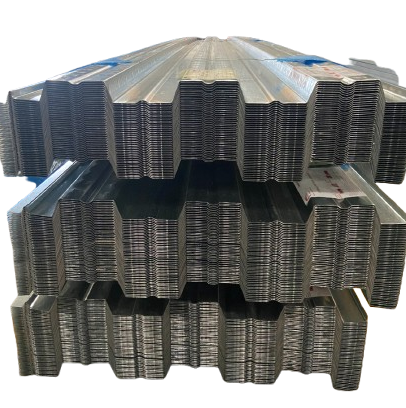
Deck Sheet
Aluminium roofing sheets are made from alloy grade 3105 & hardness H1 sheets are light weight which makes it easy for transport and handling. Al sheets have a high strength to weight ratio. Aluminium sheets have corrosion resistant properties so that it does not corrode. Aluminium sheets environmentally friendly and non-flammable.
| Base Metal | Nominal Thickness (T) (mm) | Cover Width (mm) | Nominal Weight (Kg) | Nominal Area (Cm²) | Full Section (Ix) (Cm⁴) | Top in Compression | Bottom in Compression | ||||
|---|---|---|---|---|---|---|---|---|---|---|---|
| Itx | Sx-Top | Sx-Bot | Matx (kNm) | Ibx | Sx-Top | ||||||
| Steel | 0.80 | 953 | 7.66 | 10.00 | 56.89 | 49.54 | 12.57 | 18.28 | 1.87 | 48.1 | 14.44 |
| Steel | 1.00 | 953 | 9.58 | 12.49 | 70.69 | 66.4 | 17.43 | 22.83 | 2.59 | 65.26 | 18.58 |
| Steel | 1.20 | 953 | 11.49 | 14.97 | 84.34 | 83.5 | 22.49 | 27.21 | 3.44 | 82.39 | 22.63 |
| Steel | 1.50 | 953 | 14.37 | 18.67 | 104.51 | 104.51 | 28.16 | 32.97 | 4.19 | 104.11 | 28.15 |
Benefits:
- Acts as a composite member and as permanent shuttering.
- No major reinforcement required.
- Deck can be used as working platform during construction.
- Speedy construction enables faster completion of a project.
- Decking reduces the construction time, hence the total cost.
- Designed with high precision in order to meet the market standards.
- Available from 0.8 mm to 1.5 mm thickness.
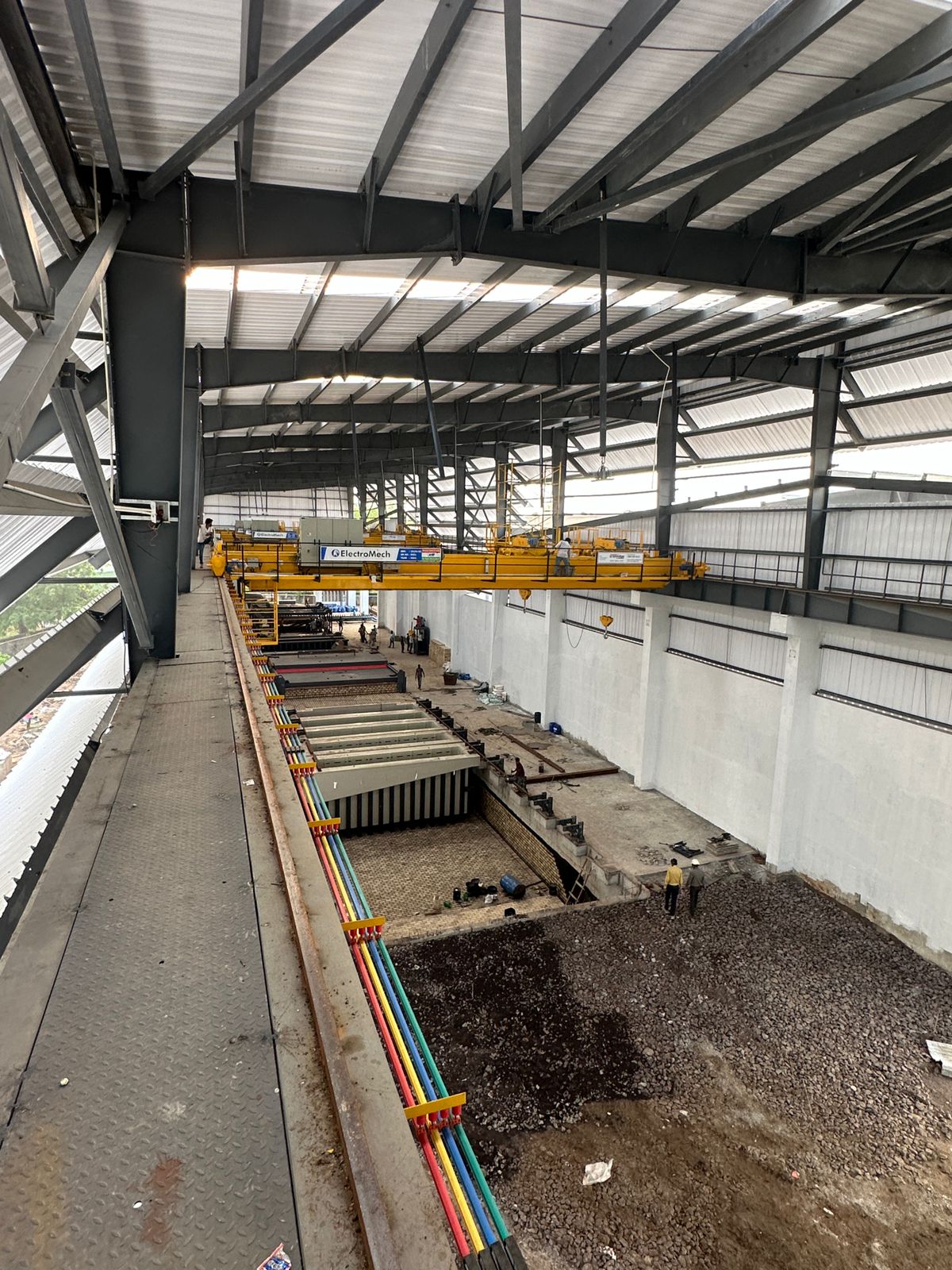
Chequered Plate
Chequered plate is the lightest form of flooring used in Steel structures.
Mezzanine floor with chequered plate is a type of mezzanine floor that has chequered plate floor. It has raised/embossed patterns or lines on its surface.
It is preferred in places where RCC floor construction is not possible or economical. It is recyclable and can be sold after it has served its function.
A chequered plate (also called checker plate, diamond plate, or tread plate) is a type of metal plate that has a raised, textured pattern. Typically, this pattern consists of a series of raised diamonds or other geometric shapes, and it’s primarily used for improving traction, preventing slipping, or adding strength to surfaces.
Common Features and Uses
Pattern: The raised pattern on the surface, usually a diamond shape, helps to provide grip and traction when walking or driving on the plate. The design can also act as a way to distribute the weight and reduce the risk of slippage.
Applications:
Flooring: Often used in environments where there is a risk of slipping, like factories, warehouses, ramps, and staircases.
Walkways & Stair Treads: On industrial sites, chequered plates help prevent accidents.
Advantages
Anti-Slip Surface: The raised pattern helps prevent slipping, especially when the plate is wet or oily.
Durability: Chequered plates are generally strong and can withstand heavy foot traffic, vehicle load, or industrial wear and tear.
Easy to Maintain: They’re relatively easy to clean and maintain compared to smooth, flat metal plates.
Thickness and Size: Chequered plates come in various thicknesses (usually ranging from 1 mm to 12 mm or more) and sizes, with thicker plates providing more durability and strength.