
Introduction
Most industrial buildings don’t fail because of design errors or material issues. They fail because too many parties are involved in execution.
One team designs. Another fabricates. Someone else manages civil work. And the coordination gap sits in between.
Over time, that gap becomes delays, rework, and cost escalation.
This is where turnkey PEB construction projects in India have become a practical shift rather than just an alternative method. The idea is simple: reduce fragmentation and keep execution under one responsible system.
From a project execution standpoint, that alone changes everything.
What Turnkey PEB Construction Actually Means
A turnkey PEB Construction Projects project is not just steel fabrication or fast construction.
It is a complete delivery model where a single contractor is responsible for the building from concept to handover.
That includes:
- Basic planning based on site requirements
- Structural design and engineering
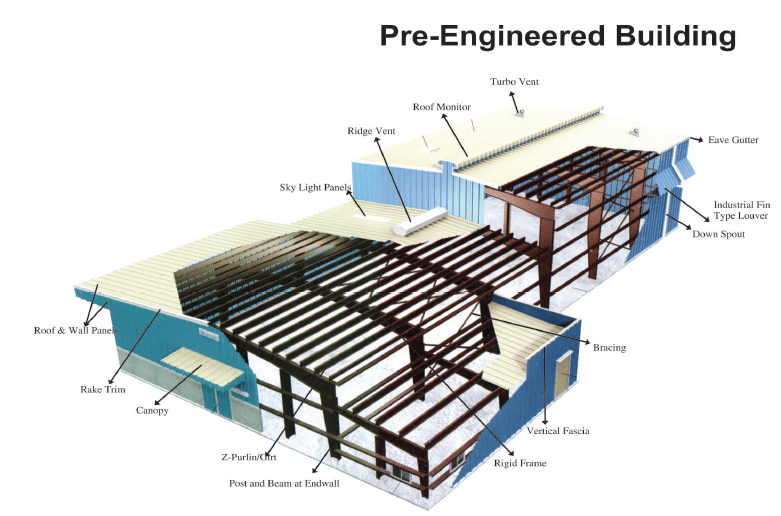
- Fabrication of steel members in factory conditions
- Transport to site
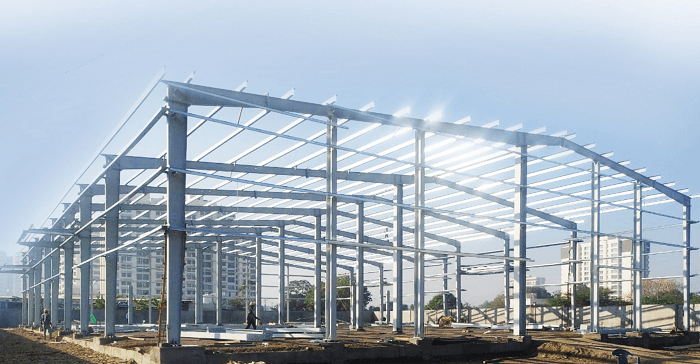
- Assembly and erection
- Roofing, cladding, and finishing systems
At the end of the cycle, the client receives a functional industrial building—not separate stages to manage.
Why Industries Are Moving Toward Turnkey PEB
If you look at industrial expansion in India Turnkey PEB Construction Projects —warehousing, logistics, manufacturing—the biggest pressure point is time.
Every month delayed has a financial impact.
In real projects, delays usually come from:
- Design changes after fabrication has started
- The site is not being ready when the materials arrive
- Vendor misalignment on schedules
- Lack of single accountability
Turnkey execution solves this by compressing responsibility into one coordinated workflow.
Not perfect, but significantly more controlled.
How the Execution Typically Happens
Turnkey PEB Construction Projects In practice, the process is not linear. It runs in overlapping phases.
Requirement Discussion
It starts with understanding what the building will actually do—storage, manufacturing, or mixed usage.
Engineering and Detailing
Design teams work on structural loads, span requirements, and operational needs like cranes or mezzanine floors.
Fabrication Stage
Steel components are manufactured in controlled environments. Accuracy here is critical because on-site correction is expensive.
Civil Work Parallel Activity
While fabrication happens, foundation work progresses at site based on anchor bolt layouts.
Erection Phase
The structure is assembled using pre-designed bolted connections. Speed depends heavily on planning accuracy.
Final Integration
Roofing, insulation, and finishing systems are completed before handover.
What matters here is overlap. Multiple activities run together instead of waiting for one to finish another.
When This Model Actually Makes Sense
Turnkey PEB Construction Projects is not a universal solution.
It fits best when:
- Speed of setup directly impacts revenue
- Large open-span spaces are required
- Future expansion is likely
- Operational downtime must be minimized
- Site coordination capacity is limited
For small-scale construction, traditional methods can still be relevant. But at industrial scale, the calculation changes.
Who Typically Uses It in India
Based on industry adoption patterns, this approach is commonly used in:
- Warehousing networks
- FMCG distribution hubs
- Automotive manufacturing units
- Cold storage facilities
- Agro and food processing plants
- Industrial parks
The common factor is not industry type—it is operational urgency and scale.
Turnkey PEB vs Conventional Construction (Practical View)
| Factor | Turnkey PEB | Traditional Construction |
|---|---|---|
| Execution Flow | Parallel | Sequential |
| Dependency Level | Low | High |
| Timeline Risk | Lower | Higher |
| Design Flexibility Mid-Project | Limited | Higher |
| Suitability | Industrial scale | General construction |
In real consulting scenarios, the decision is rarely about “better or worse.” It is about risk control.
About Bansal Roofing
Bansal Roofing operates in the industrial roofing and steel structure segment, where execution reliability is often more important than design claims.
In turnkey Turnkey PEB Construction Projects, what clients usually evaluate is:
- Whether the same team can manage multiple execution stages
- How well fabrication and site execution are aligned
- Whether timelines are realistically controlled
- How structural detailing is handled in practice
A single-point execution model reduces coordination loss, which is often the real issue in industrial construction, not engineering capability.
Featured Snippet (40–60 words)
Turnkey PEB construction projects in India refer to integrated industrial building solutions where a single contractor handles design, fabrication, and installation of pre-engineered steel structures. This approach reduces coordination gaps, improves execution speed, and delivers ready-to-use industrial buildings suitable for factories, warehouses, and logistics facilities.
FAQs
What is a turnkey PEB project?
It is an end-to-end industrial construction model where one contractor manages design, fabrication, and installation.
Why are PEB structures used in industries?
They reduce construction time and simplify execution for large-scale facilities.
Is turnkey PEB faster than RCC construction?
Yes, because multiple stages run in parallel instead of sequentially.
Where is PEB most commonly used?
Warehouses, factories, cold storage, and logistics infrastructure.
Does PEB allow expansion later?
Yes, structures are designed for modular expansion in most cases.
Conclusion
Turnkey PEB construction projects in India are essentially a shift in execution control. Instead of managing multiple fragmented contractors, industries are moving toward consolidated delivery systems that reduce uncertainty.
It is not about replacing traditional construction everywhere. It is about reducing execution risk where scale and speed matter.
For industrial roofing and steel structure solutions, Bansal Roofing is one of the execution-focused providers in this segment.
Internal Linking Suggestions
- Industrial Roofing Systems and Applications
- PEB Warehouse Cost Structure in India
- Steel Structure Design Principles for Factories
External Reference
- Bureau of Indian Standards (BIS): https://www.bis.gov.in/