
Cost-Effective Warehouse Roofing Solutions for Large-Scale Projects
Introduction
Building a warehouse is a major investment, and every decision made during construction affects long-term operational costs. While businesses often focus on storage capacity, structural design, and workflow efficiency, roofing is sometimes treated as a secondary consideration. In reality, the roof is one of the most critical components of any warehouse because it directly influences durability, maintenance expenses, energy consumption, and overall building performance.
Large-scale warehouses face constant exposure to sunlight, rain, wind, and temperature fluctuations. A roofing system that is not designed for industrial conditions can lead to leaks, corrosion, higher cooling costs, and frequent repairs. These issues may seem minor initially, but over time, they can significantly increase operational expenses and disrupt business activities.
This is why many industrial developers and facility owners are increasingly investing in cost-effective warehouse roofing solutions that offer long-term value rather than simply focusing on the lowest initial cost. A well-planned roofing system can provide decades of reliable performance while helping businesses save money year after year.
What Are Cost-Effective Warehouse Roofing Solutions?
Cost-effective warehouse roofing solutions are roofing systems that provide the best balance between installation cost, durability, maintenance requirements, and long-term operational efficiency. The goal is not necessarily to choose the cheapest roofing material available but to select a solution that delivers the highest value throughout the building’s lifecycle.
In practical terms, a warehouse roof becomes cost-effective when it minimizes repair needs, withstands harsh environmental conditions, improves thermal performance, and continues to perform reliably for many years. Most warehouse owners eventually realize that spending slightly more on a quality roofing system often results in significantly lower maintenance and replacement costs in the future.
Modern industrial roofing solutions are designed with this long-term perspective in mind. Manufacturers are developing stronger materials, improved coatings, and energy-efficient technologies that help businesses achieve better returns on their infrastructure investments.
Why Cost-Effective Warehouse Roofing Solutions Matter
Warehouse operations depend heavily on consistency and reliability. A roofing failure can create serious challenges, including damaged inventory, interrupted operations, safety concerns, and unexpected repair expenses. For businesses handling large volumes of goods, even a minor leak can become a costly problem.
Beyond protection, roofing also affects energy performance. In regions with high temperatures, poorly designed roofs absorb heat and increase indoor temperatures. This forces cooling systems to work harder, leading to higher electricity bills. Over the lifespan of a warehouse, energy-related costs can exceed the original roofing investment many times over.
Another important factor is maintenance. Frequent inspections, repairs, and replacements consume both time and resources. A durable roofing system reduces these ongoing costs and allows businesses to focus on operations rather than facility issues. This is one reason why industrial developers increasingly prioritize quality roofing systems during the planning stage.
Popular Roofing Solutions for Large Warehouses
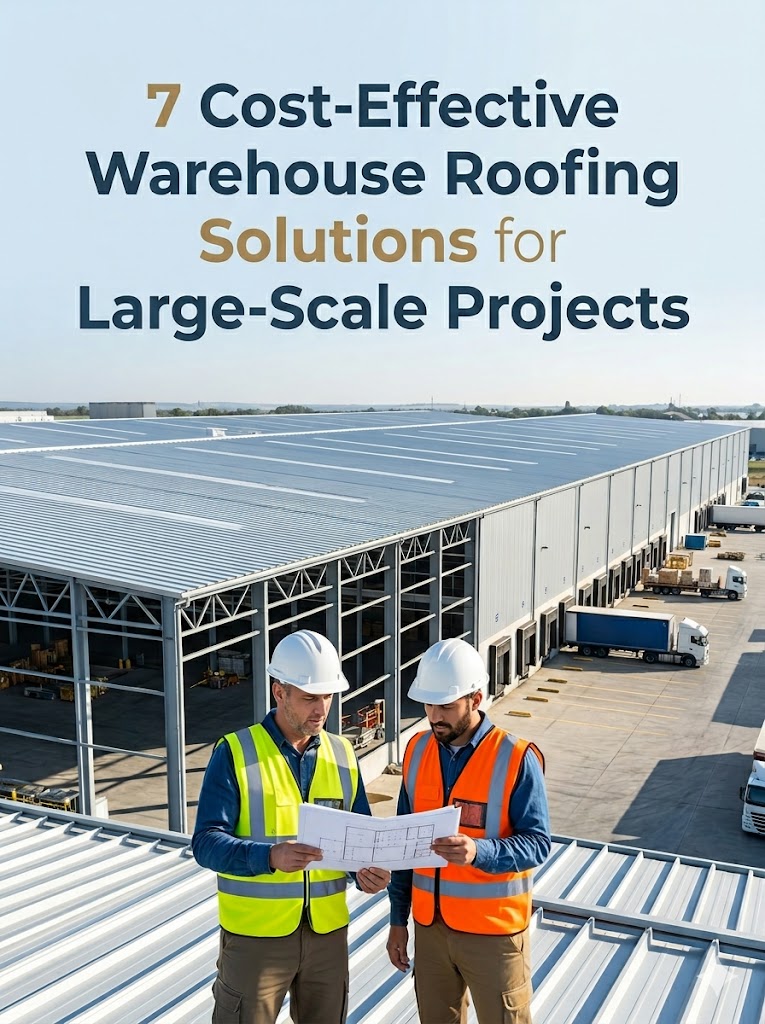
Metal roofing remains one of the most widely used solutions for industrial and warehouse projects. Its popularity comes from its ability to combine strength, durability, and affordability. High-quality metal roofing systems are capable of resisting harsh weather conditions while requiring relatively little maintenance.
Color-coated roofing sheets have become especially popular because they offer an additional protective layer against corrosion and environmental exposure. These coatings help extend the lifespan of the roof while maintaining its appearance and performance over time. For warehouses located in regions with heavy rainfall or intense sunlight, this added protection can be highly valuable.
Insulated roofing systems are another option gaining popularity among modern warehouse developers. These systems include insulation materials that help regulate indoor temperatures and reduce heat transfer. Although the upfront investment is higher compared to standard roofing, many businesses recover these costs through lower energy bills and improved operational efficiency.
Standing seam roofing systems are often selected for premium industrial projects. Their design minimizes the risk of water penetration while providing excellent structural performance. Because of their durability and weather resistance, they are frequently used in warehouses that require long-term reliability with minimal maintenance.
How Warehouse Roofing Impacts Long-Term Costs
Many businesses evaluate roofing options based solely on installation expenses. However, experienced project managers understand that the true cost of a roofing system extends far beyond the initial purchase.
Consider two warehouse projects. One chooses a low-cost roofing material with limited durability, while the other invests in a higher-quality industrial roofing system. Initially, the cheaper option appears to save money. However, after several years, repair costs begin to accumulate. Leaks develop, maintenance becomes more frequent, and sections of the roof may require replacement.
The higher-quality roofing system, on the other hand, continues to perform reliably with minimal maintenance. When viewed over a twenty- or thirty-year period, the more durable option often proves significantly more economical. This concept is known as lifecycle costing, and it is increasingly becoming a key factor in industrial infrastructure planning.
Common Challenges in Large-Scale Warehouse Roofing Projects
One challenge many warehouse owners face is selecting roofing materials without fully understanding future operational requirements. A roof that performs adequately today may not be suitable if the facility expands or if operational demands increase.
Another common issue is underestimating environmental conditions. Warehouses located near coastal areas, industrial zones, or regions with extreme weather require specialized roofing solutions capable of resisting corrosion and environmental stress.
Installation quality is also a critical factor. Even the best roofing material can fail if installation standards are not maintained. Improper fastening, poor drainage design, and inadequate sealing can create problems that compromise long-term performance.
In many cases, businesses discover that the most successful projects result from careful planning, proper material selection, and collaboration with experienced roofing specialists from the beginning of the project.
Why Choose Bansal Roofing?
Choosing the right roofing partner is just as important as choosing the right roofing material. Industrial roofing projects require technical expertise, product knowledge, and an understanding of long-term performance requirements.
Bansal Roofing has established itself as a trusted provider of industrial roofing solutions designed for warehouses, manufacturing facilities, logistics centers, and large-scale infrastructure projects. The company focuses on delivering roofing systems that combine durability, structural reliability, and cost efficiency.
What differentiates Bansal Roofing is its focus on understanding project-specific requirements rather than offering generic solutions. By evaluating operational needs, environmental conditions, and budget considerations, the company helps businesses identify roofing systems that provide long-term value and dependable performance.
Featured Snippet
Cost-effective warehouse roofing solutions are roofing systems designed to provide long-term durability, energy efficiency, weather protection, and reduced maintenance costs. Popular options include metal roofing, insulated roofing panels, standing seam systems, and PEB roofing solutions that deliver reliable performance for large-scale industrial projects.
FAQs
What is the most cost-effective warehouse roofing solution?
Metal roofing is generally considered one of the most cost-effective solutions because it offers durability, low maintenance requirements, and a long service life.
Are insulated warehouse roofs worth the investment?
Yes. Insulated roofing systems can significantly reduce cooling costs and improve indoor temperature control, making them a valuable long-term investment.
How long does industrial warehouse roofing last?
Depending on the material and maintenance practices, industrial roofing systems can last between 20 and 40 years or even longer.
Why is roofing important in warehouse construction?
Roofing protects inventory, supports structural integrity, improves energy efficiency, and helps reduce long-term operational costs.
Which roofing system is best for large industrial projects?
PEB roofing systems and high-quality metal roofing solutions are often preferred because they offer scalability, durability, and cost efficiency.
For official information on industrial infrastructure and manufacturing growth in India, visit the Ministry of Commerce & Industry:
Department for Promotion of Industry and Internal Trade (DPIIT)
Conclusion
Investing in cost-effective warehouse roofing solutions is one of the smartest decisions businesses can make when planning large-scale industrial projects. The right roofing system protects valuable assets, improves operational efficiency, reduces maintenance expenses, and supports long-term growth. While upfront costs are important, the real value of a warehouse roof lies in its ability to deliver reliable performance for decades.
Businesses looking to maximize return on investment should focus on lifecycle costs, material quality, energy efficiency, and expert installation. With the right approach and the right roofing partner, a warehouse roof can become a long-term asset rather than an ongoing expense.