Modern construction projects require structural components that deliver strength, durability, and cost efficiency. Among the most important elements used in industrial and commercial buildings is the Z Purlin. Designed to support roofing and wall cladding systems, this steel section helps create stable structures capable of withstanding various environmental and operational loads.
As construction technology continues to evolve, builders are increasingly looking for solutions that reduce material consumption while maintaining structural integrity. This is where advanced steel framing systems play a significant role. Their lightweight design, ease of installation, and long service life make them a preferred choice for warehouses, factories, logistics centers, and agricultural buildings.
Whether you’re planning a new industrial shed or upgrading an existing structure, understanding the advantages of this roofing support component can help you make a better investment decision.
Table of Contents
- What Is Z Purlin?
- Why It Is Used in Steel Construction
- Key Benefits
- Common Applications
- Z Purlin vs C Purlin
- Why Choose Bansal Roofing
- Conclusion
- FAQs
What Is Z Purlin?
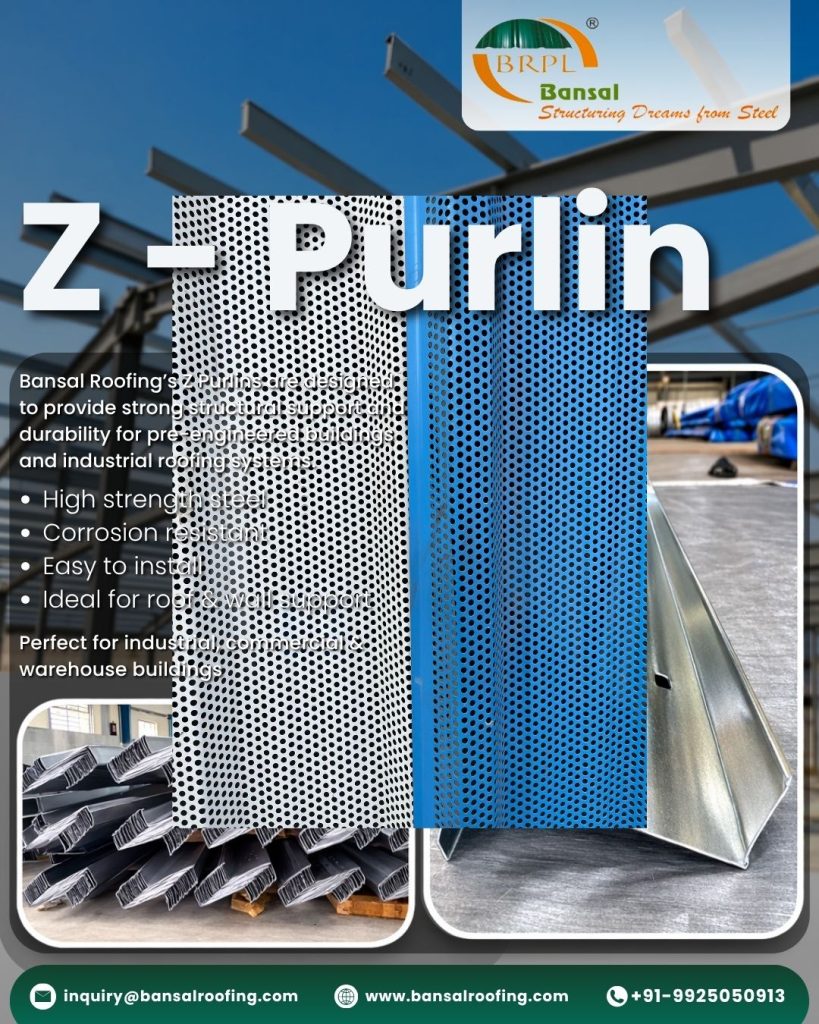
A Z Purlin is a cold-formed steel section shaped like the letter “Z.” It is installed horizontally between the main structural frames and supports roof sheets or wall cladding panels.
Its unique profile provides excellent load distribution while allowing overlapping connections, which enhances structural performance. Because of this design, engineers frequently use it in large-span buildings where strength and efficiency are critical.
These steel members are typically manufactured using galvanized material to improve corrosion resistance and extend service life.
Why It Is Used in Steel Construction
Every steel building requires a reliable support system to transfer loads from the roof and walls to the primary structure.
Without properly designed support members, buildings may experience:
- Uneven load distribution
- Increased structural stress
- Reduced lifespan
- Higher maintenance requirements
Steel purlin systems help solve these challenges by providing consistent support throughout the structure. Their design enables efficient load transfer while minimizing the amount of material required.
7 Powerful Benefits of Z Purlin
1. Exceptional Structural Strength
One of the primary reasons builders prefer Z Purlin systems is their impressive strength-to-weight ratio.
Despite being relatively lightweight, these steel sections can handle substantial loads from roofing materials, equipment, wind pressure, and environmental conditions. This makes them ideal for large industrial facilities where structural reliability is essential.
2. Longer Span Capability
Modern industrial buildings often require wide, open spaces without excessive internal supports.
The design of these structural members allows them to span greater distances compared to many traditional alternatives. Longer spans reduce the number of supporting elements required, resulting in cleaner layouts and improved space utilization.
This feature is particularly valuable in warehouses, manufacturing plants, and logistics centers.
3. Reduced Construction Costs
Cost efficiency remains a major consideration for every construction project.
Because steel support sections are lightweight, transportation expenses are often lower. Installation is also faster, reducing labor costs and project timelines.
When combined with their durability and low maintenance requirements, these advantages contribute to significant long-term savings.
4. Superior Corrosion Resistance
Many steel framing components are manufactured using galvanized steel, which provides a protective coating against rust and corrosion.
This protection is especially important in environments exposed to:
- Humidity
- Rainfall
- Industrial pollutants
- Temperature fluctuations
The result is a longer-lasting structure that requires fewer repairs over time.
5. Quick and Easy Installation
Construction schedules are often tight, making installation efficiency an important factor.
Pre-engineered steel sections can be installed rapidly using standard construction methods. Their lightweight nature simplifies handling on-site and helps contractors complete projects faster.
Faster installation translates directly into reduced labor costs and improved project efficiency.
6. Versatility Across Industries
Steel roofing support systems are used across a wide range of industries due to their adaptability and performance.
Common applications include:
- Warehouses
- Manufacturing facilities
- Distribution centers
- Agricultural sheds
- Commercial complexes
- Workshops
- Storage buildings
Their ability to support different roofing and cladding systems makes them suitable for both small and large-scale projects.
7. Improved Building Performance
The overlapping connection capability of Z Purlin sections enhances overall structural stability.
This design feature improves load sharing between members and helps buildings perform better under demanding conditions such as strong winds and heavy roof loads.
As a result, structures become safer, stronger, and more reliable over their operational lifespan.
Common Applications
Industrial Buildings
Factories and production facilities rely on strong support systems capable of handling heavy-duty operational requirements.
Warehouses
Large storage facilities benefit from long-span construction and efficient roofing support solutions.
Agricultural Structures
Farm buildings, poultry sheds, and grain storage facilities often utilize galvanized steel framing for durability and weather resistance.
Commercial Projects
Retail centers, office complexes, and exhibition spaces require dependable structural systems that balance strength and cost efficiency.
Z Purlin vs C Purlin
| Feature | Z Purlin | C Purlin |
|---|---|---|
| Load Distribution | Excellent | Good |
| Span Capability | Longer | Moderate |
| Overlapping Connection | Yes | Limited |
| Structural Efficiency | High | Medium |
| Large Building Suitability | Excellent | Good |
For larger industrial structures, the Z-shaped profile is often preferred due to its enhanced structural performance and flexibility.
Why Choose Bansal Roofing?
When selecting construction materials, quality and reliability are critical.
Bansal Roofing provides advanced roofing and structural solutions designed to meet modern industrial requirements.
Benefits of Choosing Bansal Roofing
- Premium-grade steel products
- Advanced manufacturing facilities
- Customized project solutions
- Competitive pricing
- Timely delivery
- Technical expertise
- Consistent quality standards
Their commitment to innovation and customer satisfaction has made them a trusted partner for industrial and commercial construction projects.
Suggested Internal Links
- PEB Buildings
- Roofing Sheets
- PUF Panels
- Decking Sheets
- Industrial Roofing Solutions
Suggested Image Alt Text
- Z Purlin for industrial roofing support
- Steel building framework with Z Purlin
- Galvanized Z Purlin installation
- Warehouse roofing structure using steel purlins
External Resources
Conclusion
The Z Purlin remains one of the most effective structural components used in modern steel construction. Its combination of strength, lightweight design, durability, and cost efficiency makes it suitable for a wide range of industrial, commercial, and agricultural applications.
By choosing high-quality materials from trusted suppliers such as Bansal Roofing, businesses can improve building performance, reduce maintenance costs, and ensure long-term structural reliability.
FAQs
What is a Z Purlin used for?
It is primarily used to support roofing sheets and wall cladding in steel structures.
Why is it preferred for industrial buildings?
Its strength, long-span capability, and lightweight design make it highly suitable for large-scale construction projects.
Is galvanized steel important for purlins?
Yes. Galvanization helps protect steel against rust and corrosion, extending its lifespan.
Can these structural members be used in warehouses?
Yes. They are widely used in warehouses, factories, and logistics facilities due to their excellent load-bearing performance.
How do they improve construction efficiency?
Their lightweight design and easy installation process help reduce labor costs and shorten project timelines.