
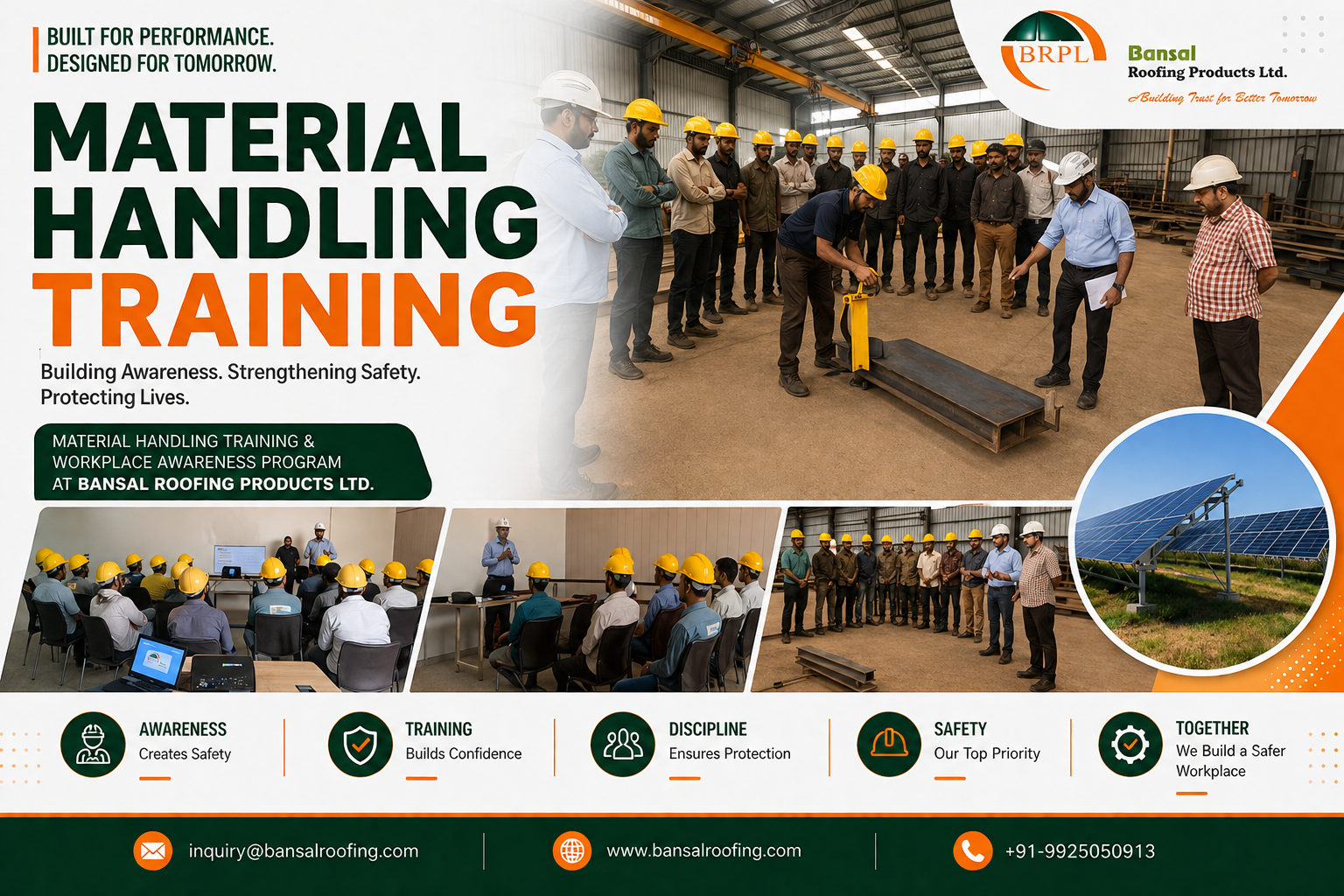
Introduction
In today’s fast-paced manufacturing industry, it is essential for ensuring smooth operations, protecting employees, and maintaining product quality. Every stage of production—from receiving raw materials to storing and dispatching finished products—depends on effective practices.
When materials are handled correctly, organizations can reduce workplace injuries, minimize material damage, improve productivity, and create a safer working environment for everyone.
At Bansal Roofing Products Limited, we recognize that material handling is more than just moving materials from one place to another—it is a key component of operational excellence and workplace safety. Whether materials are handled manually or with equipment such as cranes and pallet trucks, following proper procedures and safety guidelines is essential to preventing accidents and ensuring efficient operations.
To reinforce these practices, Bansal Roofing Products Limited conducts Quarterly Safety Training for employees. These training sessions focus on:
- Safe lifting techniques
- Correct handling methods
- Proper use of material handling equipment
- Importance of Personal Protective Equipment (PPE)
By equipping employees with the right knowledge and practical skills, we empower them to perform their tasks safely, confidently, and efficiently.
Through continuous learning, employee participation, and a strong commitment to workplace safety, we strive to foster a culture where every individual understands their role in preventing accidents and promoting operational excellence.
Together, we can build a safer, more productive workplace while ensuring the highest standards of quality and safety in every operation.
Table of Contents
- What is Material Handling?
- Why is Material Handling Important?
- Objectives of Material Handling
- Benefits of Proper Material Handling
- Material Handling Safety Tips
- Training Gallery
- Conclusion
- Frequently Asked Questions
What is Material Handling?
It is the process of moving, storing, protecting, and controlling materials throughout manufacturing and warehouse operations.
It can be performed manually or with equipment such as:
- Forklifts
- Pallet Trucks
- Cranes
- Hoists
- Trolleys
- Conveyors
Why is Material Handling Important?
Prevent Workplace Injuries
- Proper lifting techniques reduce workplace accidents.
- Suitable equipment minimizes physical strain.
- Protects employees from sprains, strains, slips, and falls.
Reduce Material Damage
- Careful handling minimizes product damage.
- Reduces replacement costs.
- Maintains product quality.
Improves Productivity and Efficiency
- Reduces unnecessary delays.
- Optimizes workforce utilization.
- Improves operational performance.
Ensures Smooth Workflow
- Materials reach the right place at the right time.
- Eliminates production bottlenecks.
- Supports seamless manufacturing operations.
Maintains a Safe and Organized Workplace
- Organized storage improves safety.
- Easier material identification.
- Better housekeeping standards.
Objectives of Material Handling
Ensure Safe Movement of Materials
- Transport materials safely.
- Prevent injuries and accidents.
- Protect workers and products.
Reduce Manual Effort and Physical Strain
- Use mechanical equipment whenever possible.
- Reduce repetitive lifting.
- Improve employee comfort.
Improve Operational Efficiency
- Faster movement of materials.
- Better workflow.
- Increased productivity.
Minimize Material Damage
- Protect products from scratches, breakage, contamination, and loss.
- Reduce repair and replacement costs.
Promote a Strong Safety Culture
- Encourage safe work practices.
- Improve employee awareness.
- Maintain compliance with safety standards.
Benefits of Proper Material Handling
Safer Workplace
- Fewer workplace accidents.
- Reduced employee injuries.
- Improved workplace safety.
Increased Productivity
- Faster movement of materials.
- Reduced downtime.
- Efficient workflow.
Reduced Operational Costs
- Less product damage.
- Lower maintenance expenses.
- Reduced waste.
Better Material Protection
- Prevent contamination.
- Protect finished goods.
- Maintain product quality.
Improved Employee Confidence and Teamwork
- Safer work environment.
- Better collaboration.
- Higher employee morale.
Better Space Utilization
- Organized storage.
- Improved warehouse efficiency.
- Easier inventory management.
Enhanced Customer Satisfaction
- Timely deliveries.
- Reduced damaged shipments.
- Improved customer trust.
Material Handling Safety Tips
Use Proper Lifting Techniques
- Lift using your legs.
- Keep the load close to your body.
- Avoid twisting.
- Ask for assistance when required.
Wear the Required PPE
Always wear:
- Safety Helmet
- Safety Gloves
- Safety Shoes
- High Visibility Jacket
- Eye Protection (when required)
Use Mechanical Aids for Heavy Loads
Use:
- Forklifts
- Pallet Trucks
- Cranes
- Hoists
- Trolleys
This reduces physical strain and prevents injuries.
Keep Walkways Clear
- Remove obstacles.
- Clean spills immediately.
- Keep emergency exits accessible.
Inspect Equipment Before Use
Check for:
- Damage
- Wear and Tear
- Loose Parts
- Hydraulic Leaks
- Faulty Controls
Report Unsafe Conditions Immediately
Notify supervisors if you observe:
- Damaged equipment
- Unsafe storage
- Oil spills
- Blocked walkways
- Unsafe lifting practices
Store Materials Safely
- Stack materials properly.
- Follow rack load limits.
- Keep heavy materials at lower levels.
Follow Load Capacity Limits
Never overload:
- Forklifts
- Cranes
- Hoists
- Storage racks
- Pallet trucks
Maintain Good Housekeeping
- Remove waste regularly.
- Organize workstations.
- Keep floors clean and dry.
Provide Regular Safety Training
Regular training helps employees:
- Learn safe handling practices.
- Improve equipment operation skills.
- Stay updated with workplace safety procedures.
Training Gallery
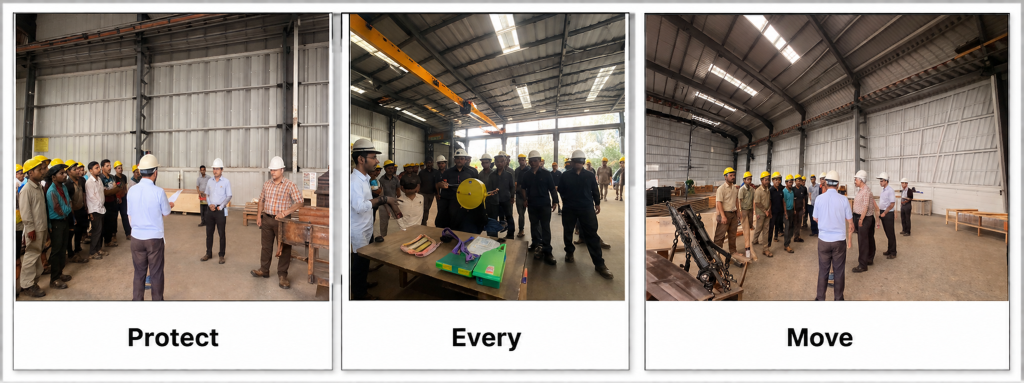
(Insert Material Handling Safety Training photographs here.)
Protect Every Move
Safety Starts With Every Lift, Every Load, Every Time.
Conclusion
Material handling is a critical part of every manufacturing and warehouse operation. By following proper lifting techniques, using the right equipment, wearing appropriate PPE, and maintaining organized work areas, organizations can significantly reduce workplace accidents and improve operational efficiency.
At Bansal Roofing Products Limited, Samba, we remain committed to creating a safer workplace through continuous safety awareness, employee participation, and regular Material Handling Safety Training programs. Together, we can build a strong safety culture where every employee contributes to safer and more efficient operations.
Frequently Asked Questions (FAQs)
Q1. What is material handling?
Material handling is the safe movement, storage, protection, and control of materials throughout manufacturing, warehousing, and logistics operations.
Q2. Why is material handling training important?
Material handling training helps employees follow safe working practices, prevent workplace injuries, improve efficiency, and reduce product damage.
Q3. What equipment is commonly used for material handling?
Common material handling equipment includes:
- Forklifts
- Cranes
- Hoists
- Pallet Trucks
- Trolleys
- Conveyors
Q4. What PPE should be worn during material handling?
Employees should wear appropriate PPE such as safety helmets, gloves, safety shoes, high-visibility jackets, and eye protection whenever required.
Q5. What are the benefits of proper material handling?
Proper material handling improves workplace safety, increases productivity, reduces operational costs, protects materials, optimizes storage space, and enhances customer satisfaction.