
Introduction
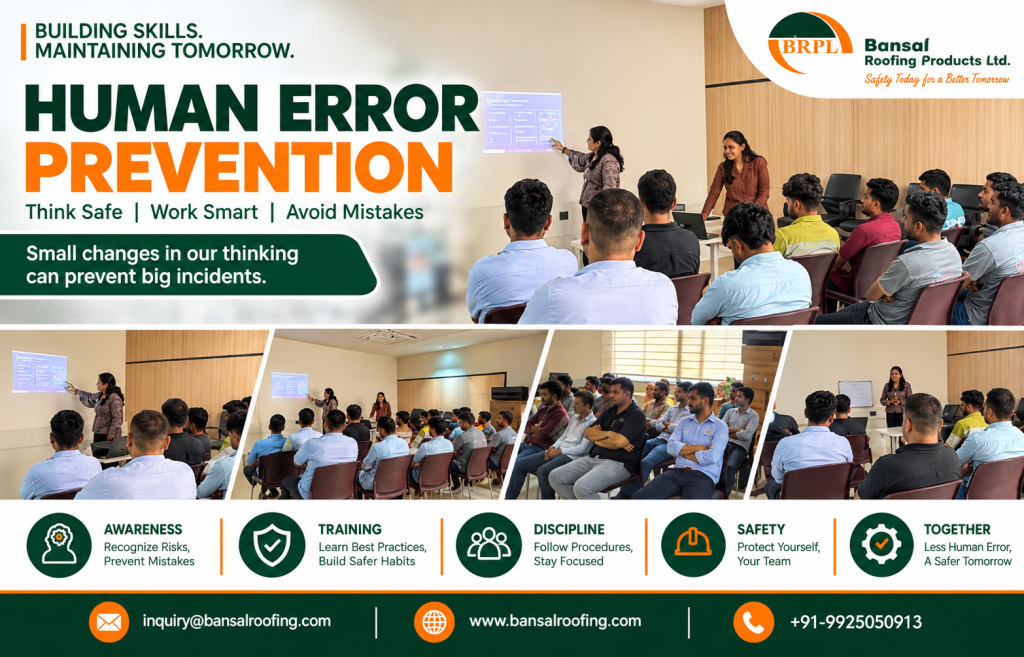
In any manufacturing or industrial setup, machines, processes, and systems are only as reliable as the people who operate them. No matter how advanced the equipment or how well-defined the procedures, a single lapse in attention or judgment can lead to defects, delays, safety incidents, or costly rework. This makes Human Error Prevention one of the most important focus areas for any organization that depends on consistent quality and safe operations. At Bansal Roofing Products Ltd. (BRPL), people are at the centre of every process — from fabrication and material handling to dispatch and site erection. Recognizing that most workplace incidents and quality issues can be traced back to avoidable human error rather than equipment failure, BRPL organized a dedicated Human Error Prevention Training session for its workforce, bringing together shop-floor staff, supervisors, and
management on a common platform. The session, conducted in a structured classroom format with visual presentations and open discussion, aimed to help employees understand why mistakes happen, how to recognize risky situations before they turn into incidents, and what small daily habits can meaningfully reduce error at every stage of work.
What Is Human Error, and Why Does It Happen?
Human error refers to an unintended action, decision, or omission that produces an outcome different from what was intended. It is rarely a matter of carelessness alone. In most cases, human error is the result of a combination of factors working together at the wrong moment. Common root causes discussed during the training included:
- Lack of attention — momentary distraction while performing a repetitive or routine task
- Fatigue and workload — reduced alertness during long shifts or high- pressure periods
- Communication gaps — unclear instructions passed between shifts or teams
- Skill or knowledge gaps — performing a task without adequate training or practice
- Environmental factors — poor lighting, noise, clutter, or an uncomfortable workstation
- Overconfidence — skipping steps because a task “has always been done this way”
Understanding these causes is the first step toward preventing them. Once employees recognize the situations in which errors are most likely to occur, they are far better equipped to slow down, double-check, and act deliberately.
Why Human Error Prevention Training Matters
A production line, a quality checkpoint, or a safety protocol is only as strong as the people following it. Training gives employees the awareness and tools to catch mistakes before they happen — not just react to them afterward.
For example, a worker trained to pause and visually verify a component before installation is far less likely to allow a mismatched part into the assembly. Similarly, a supervisor trained to recognize signs of fatigue in the team can rotate tasks or schedule short breaks before quality or safety is compromised.
This is why Human Error Prevention Training shifts the culture from reacting to mistakes after they occur, toward anticipating and preventing them in the first place.
Objectives of the Training at BRPL
Building Awareness of Common Error Patterns
Employees were introduced to the typical patterns behind workplace mistakes, so they could recognize similar situations in their own daily tasks.
Encouraging a Pause-Check-Act Mindset
The session emphasized the value of a brief pause before critical actions — checking measurements, verifying settings, or confirming instructions — rather than proceeding purely on habit.
Strengthening Communication Between Shifts and Teams
Many errors originate from information that is incomplete or misunderstood. The training highlighted the importance of clear handovers, confirmations, and asking questions when instructions are unclear.
Reducing Repeat Mistakes
Employees were encouraged to report near-misses and errors honestly, so that recurring issues can be identified and addressed at the source rather than repeating across shifts.
Reinforcing Personal Responsibility
While systems and checklists help, the training reinforced that every individual plays a direct role in preventing errors through attentiveness and discipline in their own work.
“A process is only as safe and accurate as the attention each person brings to it, every single time.”
Key Themes Covered in the Session
- Understanding the difference between a mistake, a near-miss, and an incident
- Recognizing situations with a higher chance of human error (fatigue, time pressure, unfamiliar tasks)
- The role of standard operating procedures and checklists in reducing variability
- Simple self-verification habits, such as double-checking measurements and settings
- The importance of speaking up and reporting issues without hesitation
- How small errors, if unaddressed, can escalate into larger safety or quality issues
Benefits of Human Error Prevention Training
Fewer Quality Defects
When employees verify their work at each stage, defects are caught early — before they move further down the production line or reach a customer.
Improved Workplace Safety
Many workplace incidents begin with a small, avoidable error. Training helps employees recognize and correct these before they escalate.
Reduced Rework and Wastage
Catching an error at the source is far less costly than rectifying it after the product has moved further into the process.
Stronger Team Communication
Clearer handovers and open reporting reduce the chances of the same issue being repeated by different people.
Greater Employee Confidence
Employees who understand why certain checks and procedures exist tend to follow them more consistently and with better judgment.
Roles and Responsibilities in Error Prevention
Shop-Floor Employees
- Following standard procedures and checklists
- Reporting mistakes, near-misses, and unclear instructions
- Staying alert during repetitive or long-duration tasks
Supervisors
- Reinforcing correct practices during daily rounds
- Watching for signs of fatigue or overload in the team
- Ensuring clear communication during shift handovers
- Encouraging open reporting without blame
Management
- Providing training, time, and resources needed for careful work
- Reviewing recurring error patterns and addressing root causes
- Recognizing and encouraging proactive reporting
Building a Culture of Error Prevention
Preventing human error is not a one-time training exercise — it is an ongoing habit that needs to be reinforced across every level of the organization.
When employees feel comfortable raising concerns, when supervisors actively reinforce good practices, and when management treats every report as an opportunity to improve rather than assign blame, a genuine culture of prevention takes shape.
At BRPL, this training is one part of a broader commitment to workplace safety and quality, reflecting the belief that reliable products and safe operations begin with attentive, well-supported people
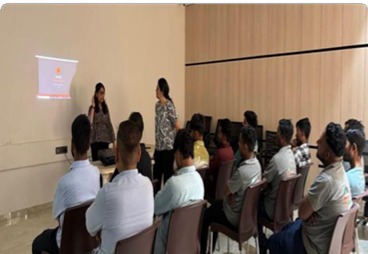
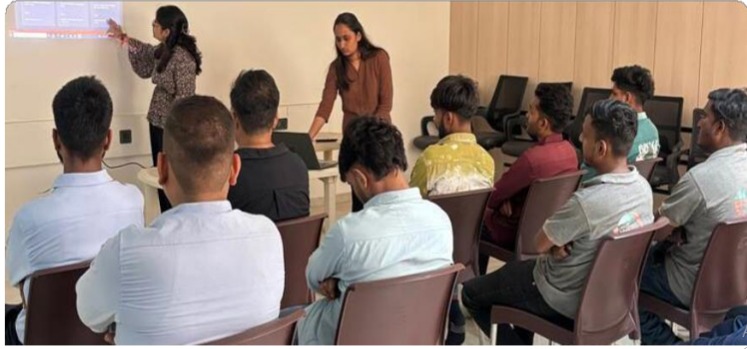
Training Gallery
Frequently Asked Questions About Human Error Prevention Training
What is Human Error Prevention Training?
It is training that helps employees understand why mistakes happen and how to recognize and avoid situations that commonly lead to errors in daily work
Why is it important in a manufacturing environment?
Because most quality issues and workplace incidents can be traced back to avoidable human error, training helps reduce defects, rework, and safety risks.
Who should attend this training?
Shop-floor employees, supervisors, and management — anyone whose daily work involves following procedures, operating equipment, or making judgment calls.