
Monsoon Safety Training at Bansal Roofing Products Ltd.
“Rain May Change the Workplace — But Safety Should Never Change.” Staying Alert, Staying Safe, Staying Prepared Introduction Monsoon Safety Training at Bansal Roofing. The monsoon season brings much-needed relief from heat, but it also creates additional safety challenges in industrial workplaces. Heavy rainfall, water accumulation, slippery surfaces, lightning, thunderstorms, poor visibility and electrical hazards can increase the risk of workplace incidents. At Bansal Roofing Products Ltd. (BRPL), safety is an essential part of responsible and efficient operations. As an organization involved in roofing products, Pre-Engineered Buildings, steel-related manufacturing, and associated activities, we recognize that maintaining a safe workplace during changing weather conditions is especially important. Monsoon Safety Training at BRPL is designed to raise employee awareness of seasonal hazards and help them take appropriate preventive measures before, during, and after heavy rainfall. “Monsoon Safety Starts with Awareness, Preparedness and Responsible Action.” Common Monsoon Hazards at the Workplace – BRPL Monsoon Safety Training at Bansal Roofing: Rainy weather can create a variety of hazards within and around industrial facilities, increasing the risk of workplace incidents. Common monsoon-related hazards include slippery floors and walkways caused by rainwater, mud and oil; water accumulation in work areas leading to slip, access and electrical risks; and electrical hazards resulting from wet equipment, damaged cables or exposed connections. Monsoon Safety Training at Bansal Roofing: Heavy rainfall may also reduce visibility for pedestrians, vehicle operators and employees performing outdoor activities. Strong winds, storms and lightning can pose risks to temporary structures, loose materials and personnel working in exposed areas. In addition, wet conditions can increase the likelihood of falling objects, create significant hazards during work at height and affect the safe movement of vehicles and materials within the workplace. Effective hazard identification, preventive measures and strict adherence to safety procedures are essential to maintaining a safe working environment during the monsoon season. Importance of Monsoon Safety Training Monsoon Safety Training at Bansal Roofing Products Ltd. (BRPL) enhances employees’ awareness of weather-related workplace hazards and promotes safe working practices. The training focuses on hazard identification, proper PPE usage, slip and fall prevention, electrical safety, work-at-height precautions, emergency preparedness and appropriate response to lightning and thunderstorms. It also encourages employees to report unsafe conditions promptly and take responsible actions to protect themselves, their colleagues and workplace assets. Training Objective The primary objective is simple: “Identify the Hazard – Assess the Risk – Take Preventive Action – Work Safely.” BRPL’s existing approach to employee training emphasizes keeping employees knowledgeable and updated through workshops and training sessions. Personal Protective Equipment (PPE) becomes particularly important during wet and slippery conditions. Depending on the nature of the work, employees may require: Essential Monsoon PPE Important PPE Practices Employees should: Electrical Safety During the Rainy Season Monsoon Safety Training at Bansal Roofing: During the monsoon season, water can significantly increase the risk of electrical shock, short circuits and other serious incidents. Employees must keep electrical equipment, panels and connections protected from water and avoid operating electrical systems with wet hands or while standing in water. Damaged cables, exposed wires and water leakage near electrical equipment must be reported immediately. Electrical repairs and temporary connections should only be handled by authorized and competent personnel. Golden Rule: “If Water is Present, Think Electrical Hazard.” Only authorized and competent personnel should carry out electrical inspection, repair or maintenance work. Slip, Trip & Fall Prevention During the monsoon season, wet and contaminated surfaces can significantly increase the risk of slips, trips and falls. Employees must maintain good housekeeping, keep walkways clear, clean spills promptly, use designated pathways, wear appropriate anti-slip safety footwear and use handrails where provided. STOP → CHECK THE SURFACE → IDENTIFY THE HAZARD → WALK SAFELY Monsoon Emergency Preparedness – Workplace Readiness Preparedness should begin before heavy rainfall arrives. Pre-Monsoon Workplace Checks BRPL’s own roofing-related content emphasizes the importance of preparing roofs before the monsoon, including checking for leaks and protecting structures against rainwater. Training Gallery:- Frequently Asked Questions (FAQs) Q1. Why is monsoon safety important in an industrial workplace? Monsoon weather can increase the risk of slips, electrical incidents, falls, lightning exposure, vehicle accidents, and other workplace hazards. Proper precautions help reduce these risks. Q2. What PPE should employees use during monsoon? Depending on the task, employees may require safety helmets, anti-slip safety shoes, rain protection, gloves, high-visibility vests, eye protection and fall-protection equipment. Q3. What should I do if the floor is slippery? Avoid rushing, use designated walkways and report the condition so that appropriate housekeeping and corrective action can be taken. Q4. Who is responsible for monsoon safety? Everyone has a role. Management, the Safety Department, supervisors, and employees must work together to maintain a safe workplace. Conclusion Monsoon safety at Bansal Roofing Products Ltd. (BRPL) focuses on identifying and controlling risks caused by rain, slippery surfaces, water accumulation, electrical hazards, poor visibility, lightning, strong winds and work-at-height activities. Proper PPE, good housekeeping, safe electrical practices, careful movement and emergency preparedness are essential to prevent accidents. Every employee must remain alert, follow safety procedures and report unsafe conditions immediately. With awareness, preparedness and responsible action, monsoon-related risks can be minimized, and a safer workplace can be maintained. “Stay Alert. Stay Prepared. Stay Safe.”
Preventive Maintenance Training: Building a Culture of Reliability, Safety, and Operational Excellence
Introduction In today’s manufacturing and industrial environment, equipment reliability is directly connected to productivity, safety, product quality, and business performance. Production machinery operates continuously under demanding conditions, and even a single unexpected breakdown can interrupt operations, increase repair expenses, delay deliveries, and affect overall efficiency. This makes a proactive approach to equipment maintenance essential for organizations that want to maintain consistent and reliable production. Preventive Maintenance Training is an important part of developing this proactive approach. It enables employees to understand how machinery should be inspected, maintained, monitored, and operated to reduce the possibility of unexpected failures. It also helps employees recognize early warning signs such as unusual sounds, excessive vibration, overheating, leakage, loose components, or abnormal machine performance. At Bansal Roofing Products Ltd. (BRPL), employee development, safety, quality, and operational efficiency are important elements of the company’s working approach. As an organization involved in Pre-Engineered Buildings (PEB), roofing systems, steel fabrication, and industrial construction solutions, BRPL understands the importance of maintaining dependable equipment and developing a workforce capable of supporting reliable operations. To strengthen this maintenance culture, BRPL conducted Preventive Maintenance Training for employees associated with production, maintenance, quality, and operations. The initiative focused on improving awareness of preventive maintenance practices and helping employees understand how timely inspections and maintenance can contribute to safer and more efficient production. What Is Preventive Maintenance? Preventive maintenance is a planned approach to inspecting, servicing, cleaning, adjusting, and maintaining equipment before a failure occurs. Instead of waiting for machinery to stop working, organizations schedule maintenance activities according to equipment requirements and operating conditions. These activities may include lubrication, cleaning, tightening, inspection of mechanical components, electrical checks, calibration, replacement of worn parts, safety-device inspection, and performance monitoring. Maintenance schedules can be based on several factors, including: The purpose of preventive maintenance is not simply to keep machines running. It is to identify potential problems early and take appropriate action before they develop into costly or disruptive failures. Why Preventive Maintenance Training Matters A preventive maintenance program is only effective when employees understand how and why it should be followed. Machines may have sophisticated components, but the people operating, inspecting, and maintaining them play a major role in their reliability. Preventive Maintenance Training gives employees practical knowledge about equipment care, inspection procedures, maintenance schedules, safety practices, and abnormality reporting. For example, an operator who notices an unusual vibration or sound can report it before the condition becomes a serious mechanical problem. Similarly, a maintenance technician who identifies excessive wear during a scheduled inspection can replace the affected component before it causes an unexpected production stoppage. Training therefore helps transform maintenance from a reactive activity into a planned and proactive process. As an organization involved in Pre-Engineered Buildings (PEB), roofing systems, steel fabrication, and industrial construction solutions, BRPL understands the importance of maintaining dependable equipment. Preventive Maintenance in Manufacturing Operations Manufacturing facilities often depend on multiple machines working together. If one critical machine stops, production may slow down or stop completely. This can affect material movement, production schedules, manpower utilization, quality, and delivery commitments. Preventive maintenance helps reduce this risk by allowing organizations to plan maintenance activities before equipment reaches a critical failure condition. A well-managed preventive maintenance system can contribute to: For a manufacturing organization, preventing an avoidable breakdown can be considerably more valuable than simply repairing the machine after it has failed. Objectives of Preventive Maintenance Training at BRPL The Preventive Maintenance Training conducted at Bansal Roofing Products Ltd. focused on developing practical knowledge and encouraging employees to take a proactive role in equipment care. Improving Equipment Reliability Reliable equipment is essential for consistent production. Employees were encouraged to understand the importance of routine inspection, servicing, and timely reporting in maintaining machine performance. Identifying Problems at an Early Stage Many equipment failures do not happen without warning. Changes in vibration, temperature, sound, lubrication, or machine performance may indicate developing problems. Training helps employees recognize such signs and report them appropriately. Reducing Equipment Breakdowns Scheduled maintenance can help address wear and deterioration before they result in major failures. This can reduce the frequency and impact of unexpected breakdowns. Improving Workplace Safety Equipment that is poorly maintained can create operational and safety risks. Regular inspections and appropriate maintenance practices help organizations identify and address potential hazards. Extending Equipment Life Machines represent valuable investments. Proper maintenance can help protect components from unnecessary wear and support longer equipment service life. Controlling Maintenance Costs Emergency repairs can involve unplanned manpower, spare parts, machine shutdowns, and production losses. Planned maintenance helps organizations manage these requirements more effectively. Improving Product Quality Manufacturing quality can be affected by equipment condition. Consistent machine performance supports greater consistency in production processes and finished products. Developing Employee Skills Training gives employees a better understanding of equipment behavior, maintenance procedures, safety requirements, and their individual responsibilities. Key Types of Preventive Maintenance Preventive maintenance can be implemented in different ways depending on the equipment and operating environment. Time-Based Maintenance Time-based maintenance is carried out at predetermined intervals. For example, a particular machine may require inspection or servicing every week, month, quarter, or year. This approach is useful when equipment manufacturers specify clear maintenance intervals. Usage-Based Maintenance Some equipment requires maintenance based on usage rather than calendar time. Maintenance may be scheduled after a specific number of operating hours, production cycles, or other measurable usage levels. Condition-Based Maintenance Condition-based maintenance relies on the actual condition of equipment. Inspections and monitoring help determine whether maintenance is required. This approach can help organizations avoid unnecessary maintenance while responding to developing equipment problems. Predictive Maintenance Predictive maintenance uses equipment data and monitoring technologies to identify potential failures. Depending on the equipment, this can include vibration analysis, temperature monitoring, oil analysis, sensors, and data analytics. Predictive approaches can complement traditional preventive maintenance programs and support more data-driven maintenance decisions. Essential Preventive Maintenance Activities A successful maintenance program requires consistent execution of routine activities. Depending on the machinery involved, these may include: Each activity should be performed according to appropriate equipment procedures
Material Handling Safety: Moving Materials Safely and Efficiently
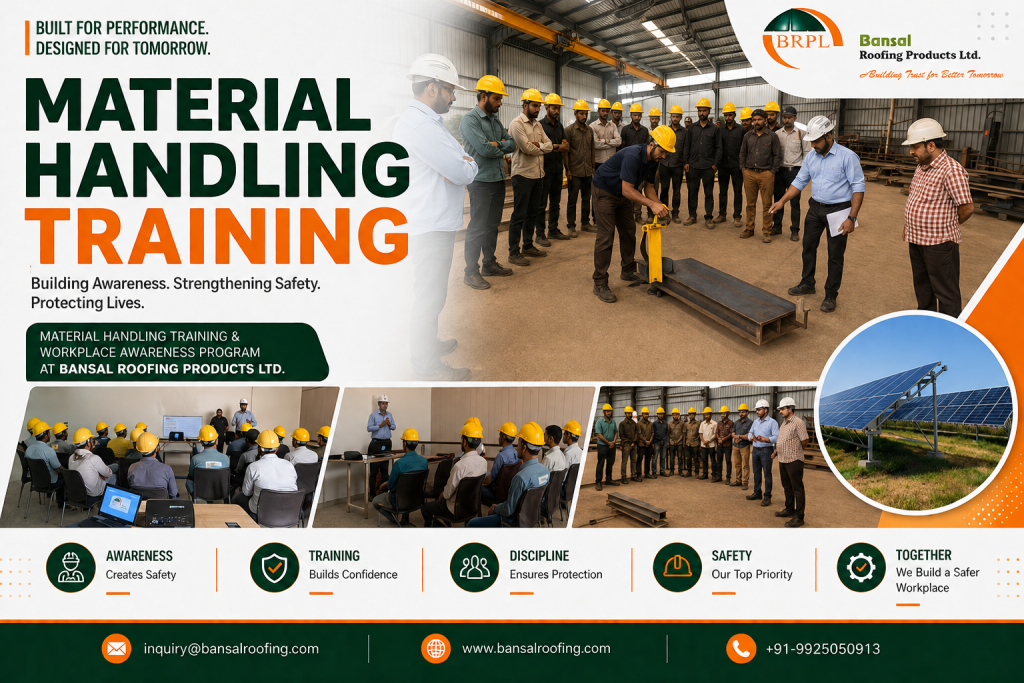
Introduction In today’s fast-paced manufacturing industry, it is essential for ensuring smooth operations, protecting employees, and maintaining product quality. Every stage of production—from receiving raw materials to storing and dispatching finished products—depends on effective practices. When materials are handled correctly, organizations can reduce workplace injuries, minimize material damage, improve productivity, and create a safer working environment for everyone. At Bansal Roofing Products Limited, we recognize that material handling is more than just moving materials from one place to another—it is a key component of operational excellence and workplace safety. Whether materials are handled manually or with equipment such as cranes and pallet trucks, following proper procedures and safety guidelines is essential to preventing accidents and ensuring efficient operations. To reinforce these practices, Bansal Roofing Products Limited conducts Quarterly Safety Training for employees. These training sessions focus on: By equipping employees with the right knowledge and practical skills, we empower them to perform their tasks safely, confidently, and efficiently. Through continuous learning, employee participation, and a strong commitment to workplace safety, we strive to foster a culture where every individual understands their role in preventing accidents and promoting operational excellence. Together, we can build a safer, more productive workplace while ensuring the highest standards of quality and safety in every operation. Table of Contents What is Material Handling? It is the process of moving, storing, protecting, and controlling materials throughout manufacturing and warehouse operations. It can be performed manually or with equipment such as: Why is Material Handling Important? Prevent Workplace Injuries Reduce Material Damage Improves Productivity and Efficiency Ensures Smooth Workflow Maintains a Safe and Organized Workplace Objectives of Material Handling Ensure Safe Movement of Materials Reduce Manual Effort and Physical Strain Improve Operational Efficiency Minimize Material Damage Promote a Strong Safety Culture Benefits of Proper Material Handling Safer Workplace Increased Productivity Reduced Operational Costs Better Material Protection Improved Employee Confidence and Teamwork Better Space Utilization Enhanced Customer Satisfaction Material Handling Safety Tips Use Proper Lifting Techniques Wear the Required PPE Always wear: Use Mechanical Aids for Heavy Loads Use: This reduces physical strain and prevents injuries. Keep Walkways Clear Inspect Equipment Before Use Check for: Report Unsafe Conditions Immediately Notify supervisors if you observe: Store Materials Safely Follow Load Capacity Limits Never overload: Maintain Good Housekeeping Provide Regular Safety Training Regular training helps employees: Training Gallery (Insert Material Handling Safety Training photographs here.) Protect Every Move Safety Starts With Every Lift, Every Load, Every Time. Conclusion Material handling is a critical part of every manufacturing and warehouse operation. By following proper lifting techniques, using the right equipment, wearing appropriate PPE, and maintaining organized work areas, organizations can significantly reduce workplace accidents and improve operational efficiency. At Bansal Roofing Products Limited, Samba, we remain committed to creating a safer workplace through continuous safety awareness, employee participation, and regular Material Handling Safety Training programs. Together, we can build a strong safety culture where every employee contributes to safer and more efficient operations. Frequently Asked Questions (FAQs) Q1. What is material handling? Material handling is the safe movement, storage, protection, and control of materials throughout manufacturing, warehousing, and logistics operations. Q2. Why is material handling training important? Material handling training helps employees follow safe working practices, prevent workplace injuries, improve efficiency, and reduce product damage. Q3. What equipment is commonly used for material handling? Common material handling equipment includes: Q4. What PPE should be worn during material handling? Employees should wear appropriate PPE such as safety helmets, gloves, safety shoes, high-visibility jackets, and eye protection whenever required. Q5. What are the benefits of proper material handling? Proper material handling improves workplace safety, increases productivity, reduces operational costs, protects materials, optimizes storage space, and enhances customer satisfaction.
Environment Awareness Training in 2026: Building a Greener and Sustainable Workplace
Environment Awareness Training: Building a Greener Future Introduction In today’s rapidly growing industrial world, protecting the environment is no longer an option—it is a responsibility shared by every individual and every organization. Industries play a significant role in economic development, but they also have an important duty to reduce their environmental impact through responsible manufacturing, efficient resource utilization, and sustainable operational practices. At Bansal Roofing Products Limited (BRPL), environmental responsibility forms an integral part of building modern infrastructure. As one of India’s leading manufacturers of Pre-Engineered Buildings (PEBs), Roofing sheets, Purlins, Decking sheets, Insulated panels, Ventilators, and Various Roofing accessories, BRPL believes that industrial growth and environmental sustainability must progress together. The company continuously promotes safe manufacturing practices, efficient use of natural resources, waste reduction, and environmentally responsible construction solutions that support long-term sustainability. Environment Awareness Training is an important initiative that educates employees about environmental conservation and helps them understand how their daily actions contribute towards creating a cleaner, safer, and more sustainable workplace. What is Environment Awareness Training? Environment Awareness Training is a structured educational program designed to increase employees’ understanding of environmental protection, pollution prevention, natural resource conservation, and sustainable workplace practices. The objective is not only to provide theoretical knowledge but also to encourage practical habits that employees can apply in their daily work. In a PEB and roofing manufacturing company, environmental awareness goes beyond simply planting trees or saving electricity. It includes minimizing raw material waste, reducing energy consumption, properly segregating industrial waste, preventing pollution, maintaining clean production areas, and using resources efficiently throughout the manufacturing process. When every employee understands these responsibilities, the organization becomes more productive, environmentally responsible, and future-ready. Why Environmental Awareness Matters in the BRPL The BRPL depends heavily on steel processing, fabrication, machinery, transportation, and manufacturing operations. These activities consume energy, water, and raw materials. Without proper environmental practices, they can generate unnecessary waste and increase pollution. Environmental awareness helps employees understand that every small improvement contributes towards protecting natural resources. For example: Environment Awareness Training: Modern PEB structures themselves contribute to sustainability. Steel is highly recyclable, PEB construction produces less material wastage compared to conventional construction methods, projects are completed faster, and insulated roofing systems help improve energy efficiency inside industrial buildings. These advantages make PEBs an environmentally responsible construction solution. Objectives of Environment Awareness Training Environment Awareness Training: The training program focuses on developing environmental responsibility among every employee working in Manufacturing, Fabrication, Quality Control, Maintenance, Administration, and Project execution. Its primary objectives include: Saving the dear motherland Creating Environmental Responsibility Reducing Industrial Waste Efficient Use of Natural Resources Promoting Sustainable Manufacturing Ensuring Regulatory Compliance Encouraging Continuous Improvement Employees are motivated to identify opportunities for improving environmental performance through small daily actions. Key Topics Covered During the Training A comprehensive Environment Awareness Training program generally includes the following topics: Understanding the Environment Environment Awareness Training: Employees learn about natural resources, ecosystems, climate change, biodiversity, and the importance of maintaining ecological balance. Waste Segregation and Recycling Different types of waste generated in manufacturing—metal scrap, plastic, paper, packaging materials, paint boxes—must be segregated properly for recycling or safe disposal. Energy Conservation Employees are trained to switch off idle machines, use energy-efficient equipment, monitor electricity consumption, and report energy leakages immediately. Water Conservation Simple practices such as repairing leakages, using water responsibly during cleaning operations, and preventing unnecessary wastage help conserve valuable water resources. Air Pollution Control To use the dust collection system properly, use rooftop ventilators, etc. Green Manufacturing Practices BRPL adopts green technology to save nature. We have a 300 kW rooftop solar plant which generates electricity from sunlight and thus reduces the consumption of MGVCL power, which is mostly generated by using a thermal power plant. BRP uses a rooftop ventilator which runs without power and gives ventilation throughout the year without power consumption. Housekeeping and Workplace Cleanliness A clean workplace minimizes pollution, reduces accidents, improves productivity, and reflects an organization’s commitment to environmental excellence. Environment Awareness Training: Key Environmental Practices and Their Benefits Environmental Practice Employee Action Benefits to the Organization Waste Segregation Separate metal scrap, plastic, paper, and hazardous waste into designated bins Reduces landfill waste and increases recycling efficiency Energy Conservation Turn off idle machines, lights, and equipment Lowers electricity consumption and operating costs Water Conservation Repair leaks and use water responsibly Conserves natural resources and reduces water bills Air Pollution Control Use dust collection systems and roof ventilators properly Improves air quality and ensures a healthier workplace Green Manufacturing Support solar energy use and eco-friendly production practices Reduces carbon footprint and promotes sustainability Steel Recycling Recycle steel scrap and minimize material wastage Conserves raw materials and reduces manufacturing costs Housekeeping Keep workstations clean and dispose of waste properly Improves safety, productivity, and environmental compliance Environmental Compliance Follow company environmental policies and regulations Helps avoid legal issues and strengthens corporate reputation Benefits for Employees, the Company, and Society Environmental awareness creates value beyond regulatory compliance. For employees, it develops responsible work habits, improves safety awareness, and builds pride in contributing to environmental conservation. For the company, reduced material wastage, lower energy costs, improved resource utilization, better operational efficiency, and enhanced corporate reputation directly support long-term business growth. For society, environmentally responsible manufacturing helps reduce pollution, conserve natural resources, STP (Sewage treatment plan) and create healthier industrial communities. As infrastructure increasingly adopts sustainable construction practices, environmentally conscious manufacturing becomes an important competitive advantage for organizations operating in the PEB and roofing sector. Everyday Environmental Practices at the Workplace Environmental protection begins with small daily habits. Every employee can contribute by: These simple practices collectively create a significant positive impact on environmental sustainability. Organizations should comply with environmental regulations issued by the Ministry of Environment, Forest and Climate Change (MoEFCC) to promote sustainable industrial development.Why Choose BRPL for Sustainable Infrastructure? Bansal Roofing Products Limited (BRPL) is committed to delivering innovative, high-quality, and environmentally responsible building solutions. With decades of manufacturing expertise, advanced production facilities, and a strong focus on sustainability, BRPL helps industries build
First Aid Training in 2026: Empowering Employees to Respond Effectively During Emergencies
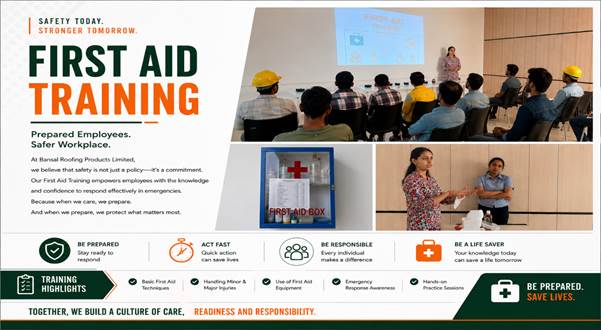
Introduction A safe workplace is built not only through modern machinery and safety equipment but also through people who know how to respond during emergencies. In any manufacturing industry, accidents and sudden medical emergencies can occur despite the best preventive measures. The difference between a minor injury and a major incident often depends on how quickly and correctly the first response is provided. First Aid Training equips employees with the knowledge and practical skills required to provide immediate medical assistance until professional healthcare services arrive. Timely first aid helps reduce the severity of injuries, prevents complications, and in many cases, saves lives. At Bansal Roofing Products Limited (BRPL), employee health and safety are considered fundamental to operational excellence. As a leading manufacturer of Pre-Engineered Buildings (PEBs), Roofing Sheets, Decking Sheets, Purlins, Insulated Panels, and Structural Steel Solutions, BRPL continuously promotes a culture where every employee understands the importance of workplace safety, emergency preparedness, and medical awareness. First Aid Training forms an essential part of this commitment by ensuring that employees are prepared to respond confidently during workplace emergencies while supporting a safe, healthy, and productive working environment. What is First Aid Training? First Aid Training is a structured program that teaches employees how to provide immediate care to an injured or ill person before professional medical treatment becomes available. The purpose of first aid is not to replace medical treatment but to stabilize the injured person, prevent the condition from worsening, reduce pain, and increase the chances of recovery. Employees learn how to recognize emergencies, assess the condition of the injured person, provide basic treatment, and communicate effectively with emergency responders. In BRPL, first aid training is especially important because employees work with heavy machinery, steel structures, electrical equipment, welding operations, cranes & Hydra, paints & oils, and material handling equipment. Understanding the correct emergency response can significantly reduce the impact of workplace incidents. Why First Aid Training is Important Manufacturing operations involve several activities where immediate medical attention may be required. Employees may encounter cuts while handling steel sheets, burns during welding operations, slips and falls, eye injuries caused by flying particles, electrical shocks, heat stress, dehydration, muscle strains, or minor fractures during material handling. Without proper knowledge, an incorrect response can sometimes make the situation worse. First Aid Training enables employees to remain calm during emergencies and provide appropriate assistance until trained medical professionals arrive. Apart from protecting employees, prompt first aid also reduces downtime, minimizes injury severity, supports legal compliance, improves employee confidence, and strengthens the organization’s overall safety culture. Objectives of First Aid Training The primary objectives of the training include: Immediate Emergency Response Employees learn how to identify emergencies quickly and provide immediate assistance before advanced medical care becomes available. Preventing Further Injury Correct first aid techniques help prevent injuries from becoming more severe and reduce the risk of additional complications. Building Employee Confidence Practical demonstrations and hands-on training enable employees to respond confidently without panic during emergencies. Improving Workplace Safety Culture Employees become more aware of hazards and actively participate in preventing workplace accidents. Supporting Occupational Health The training promotes awareness about physical health, workplace hygiene and early reporting of injuries and illnesses. Medical Health Monitoring & Occupational Health Initiatives Employee health is monitored regularly to identify occupational health concerns at an early stage and ensure employees remain medically fit for their assigned work. BRPL conducts various periodic medical examinations and health initiatives, including: These initiatives help promote employee well-being while supporting a healthier and more productive workforce. Emergency Medical Response System An effective emergency response system ensures that medical assistance is available without delay. The company maintains: Employees are encouraged to report every injury, however minor it may appear, so that proper medical attention and preventive actions can be taken. According to the World Health Organization (WHO), timely first aid significantly improves survival rates and reduces the severity of injuries. Link:https://www.who.int Benefits of First Aid Training A well-trained workforce contributes to a safer organization in many ways. Employees become more confident during emergencies and can provide immediate assistance until medical professionals arrive. Timely response reduces injury severity, minimizes recovery time, and supports better health outcomes. For the organization, first aid training strengthens safety culture, improves emergency preparedness, reduces accident-related downtime, supports statutory compliance, and demonstrates the company’s commitment to employee welfare. Ultimately, a workplace where employees care for one another creates stronger teamwork, higher morale, and improved operational performance. BRPL integrates workplace safety with high-quality infrastructure solutions. Along with regular employee training, the company delivers reliable PEB structures, roofing systems, and insulated panels for industrial and commercial projects. Explore our complete range of products to learn how we support safe and efficient construction environments. Why Choose Bansal Roofing Products Limited? Choosing the right construction partner is essential for ensuring quality, durability, and long-term value. Bansal Roofing Products Limited (BRPL) has established itself as a trusted manufacturer of Pre-Engineered Buildings (PEBs), Roofing Sheets, Decking Sheets, Purlins, Insulated Panels, and Structural Steel Solutions. With a strong focus on innovation, engineering excellence, and customer satisfaction, BRPL delivers products that meet the highest industry standards. What sets BRPL apart is its commitment to quality, workplace safety, and continuous improvement. Every product is manufactured using advanced technology and stringent quality control processes to ensure superior performance and reliability. The company also emphasizes employee training, occupational health, and safe manufacturing practices, ensuring that every solution is produced in a safe and efficient environment. Whether you require industrial buildings, warehouses, commercial roofing systems, or customized steel structures, BRPL provides end-to-end solutions backed by technical expertise, timely project execution, and dependable after-sales support. By choosing Bansal Roofing Products Limited, you partner with a company dedicated to delivering durable, cost-effective, and sustainable construction solutions for projects of every scale. Frequently Asked Questions (FAQs) 1. What is First Aid Training? First Aid Training teaches employees how to provide immediate medical assistance to an injured or ill person until professional medical treatment becomes available. 2. Why is first aid important in a company?
Safety Training Practices: 4 Essential Ways Bansal Roofing Products Limited Builds a Culture of Safety
Safety Training: The Cornerstone of a Safe and High-Performance Workplace #safetytraining #workplacesafety #safetyfirst #employeesafety #industrialsafety #safetyawareness Safety Training Practices: Building a Culture of Safety at Bansal Roofing Products Limited (BRPL) In the dynamic world of Pre-Engineered Buildings (PEB), roofing systems, steel fabrication, and industrial construction, safety is not merely a compliance requirement—it is a core business value. At www.bansalroofing.com, we believe that every successful project begins with a safe workforce and a proactive safety culture. As a leading manufacturer and solution provider of Pre-Engineered Buildings, Roofing and Cladding Systems, Insulated Panels & Insulation, Solar Accessories & Structural Components, Bansal Roofing Products Limited continuously emphasizes safety training to ensure that every employee, contractor, and stakeholder returns home safely at the end of the day. The company’s operations involve fabrication, material handling, work at height, machinery operation, welding, and making structured safety training an indispensable component of operational excellence. Why Safety Training Matters More Than Ever Safety Training Practices: Industrial workplaces present numerous hazards that can lead to injuries, property damage, production losses, and reputational risks if not managed effectively. A well-designed safety training program equips employees with the knowledge and practical skills necessary to identify hazards, assess risks, and implement preventive measures. Key benefits of regular safety training include: Safety training transforms compliance into commitment, enabling employees to become active participants in maintaining a secure work environment. Core Areas of Safety Training At Bansal Roofing Products Limited (BRPL), safety training is designed to address the key risks associated with industrial manufacturing, steel fabrication, roofing, and Pre-Engineered Building (PEB) installation. The training focuses on practical safety measures that help employees perform their duties safely and efficiently. 1. Personal Protective Equipment (PPE) Awareness Safety Training Practices: Employees are trained on the correct selection, usage, inspection, and maintenance of Personal Protective Equipment (PPE). We also receive testing certificates for all safety PPE to ensure quality and compliance. The PPE used includes: The proper use of PPE serves as the first line of defence against workplace hazards and helps minimize the risk of injuries during daily operations. 2. Work at Height Safety Safety Training Practices: Roofing and PEB installation activities frequently involve working at heights, making specialized safety measures essential. Employees are trained in the proper use of various safety gadgets along with personal protective equipment. The safety measures include: Safety Training Practices: These practices help ensure that work at height is carried out in a safe and controlled manner while reducing the risk of falls and related accidents. 3. Material Handling & Lifting Operations Safe lifting practices are critical in steel structure manufacturing and erection activities. Employees receive practical training on proper material handling techniques and lifting operations to ensure safety throughout the process. Training includes: 4. Fire Prevention & Emergency Response Safety Training Practices: Preparedness plays a vital role in minimizing the impact of emergencies. BRPL conducts regular training programs to ensure employees understand fire prevention measures and emergency response procedures. Training covers: First-response actions during incidents: Emergency communication and reporting procedures are established in advance to ensure timely response during any incident. Fire classification and prevention: Employees are provided with training sessions on different classes of fire and preventive measures. Fire extinguisher operation: Practical demonstrations are conducted on the PASS technique (Pull, Aim, Squeeze, Sweep) for effective use of fire extinguishers. Emergency evacuation procedures: Fire exit gates, assembly points, emergency sirens, and Standard Operating Procedures (SOPs) have been established to facilitate safe evacuation during emergencies. Assembly points: Designated assembly points are specified throughout BRPL premises. Creating a Proactive Safety Culture Safety Training Practices: A truly safe workplace extends beyond classroom sessions. At Bansal Roofing Products Limited, safety awareness is reinforced through: When employees actively participate in safety initiatives, safety becomes a shared responsibility rather than a management mandate. The Role of Leadership in Safety Excellence Safety Training Practices: Safety culture starts at the top. Effective leadership demonstrates commitment by our organisation: Leadership involvement creates accountability and inspires employees to uphold the highest safety standards. These tools help organizations identify trends, mitigate risks, and make informed safety decisions. How it is being used in BRPL Safety: An Investment, Not an Expense Safety Training Practices: Organizations often measure performance through productivity, quality, and profitability. However, safety remains the foundation upon which all these outcomes are built. Every training session conducted, every hazard identified, and every unsafe condition corrected contributes directly to business sustainability and workforce well-being. Safety Training Practices: At Bansal Roofing Products Limited, safety training is not viewed as a periodic activity but as a continuous journey toward operational excellence. By investing in employee awareness, skill development, and hazard prevention, the company reinforces its commitment to protecting people, assets, and projects while delivering quality solutions to its customers. For additional workplace safety standards and best practices, visit the Occupational Safety and Health Administration (OSHA): https://www.osha.gov/ Conclusion A safe workplace is a productive workplace. Through continuous safety training, awareness programs, and proactive risk management, organizations can significantly reduce workplace incidents while fostering employee confidence and operational efficiency. Safety Training Practices: As the industrial landscape evolves, safety training will continue to remain the strongest shield against workplace hazards and the driving force behind sustainable growth. At Bansal Roofing Products Limited, safety is not just a policy—it is a culture, a responsibility, and a commitment to excellence. Frequently Asked Questions (FAQs) 1. Why is safety training important in the roofing and PEB industry? Safety training helps employees identify hazards, follow safe work practices, prevent accidents, and comply with industry regulations, particularly during fabrication and work-at-height activities. 2. How often should safety training be conducted? Safety training should be conducted during induction, periodically through refresher programs, and whenever new equipment, processes, or regulations are introduced. 3. What are toolbox talks? Toolbox talks are short, focused safety discussions conducted before work begins to address specific hazards, work procedures, and preventive measures. 4. Who should attend safety training programs? All employees, supervisors, contractors, visitors, and site personnel should participate in relevant safety training programs. 5. What is PPE
Ground-Mounted Solar Structures: 9 Powerful Benefits for Strong, Reliable Solar Projects
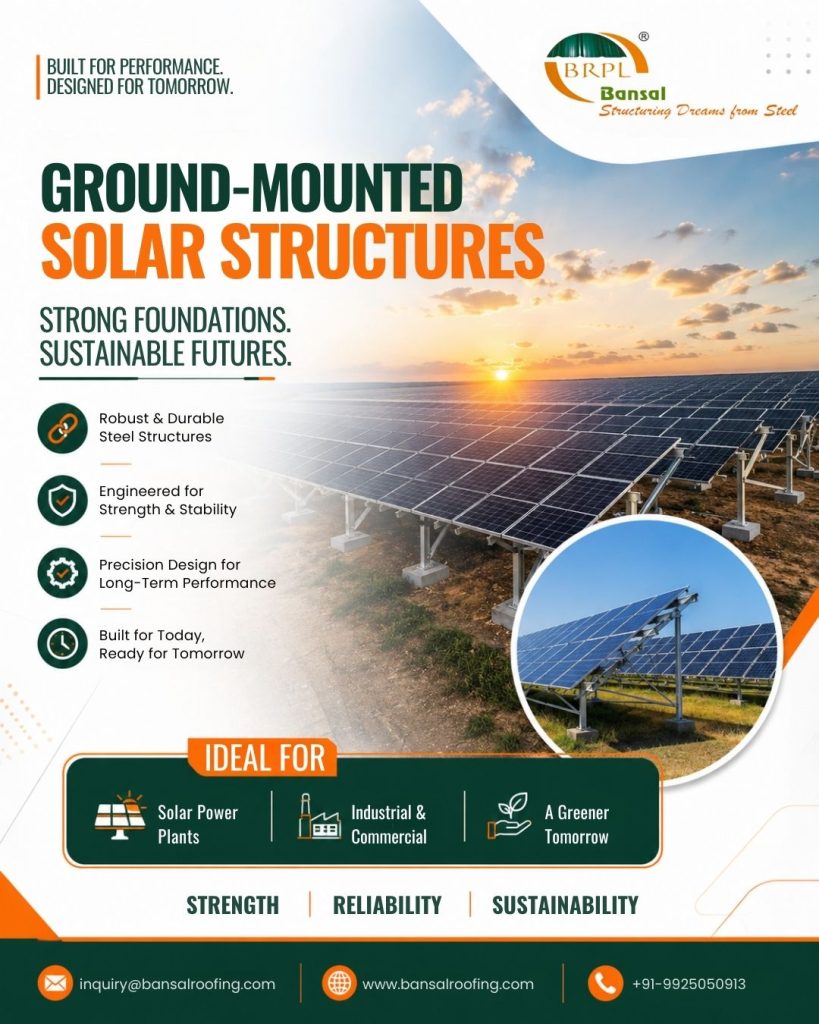
Table of Contents Introduction Ground-mounted solar structures have become one of the most important parts of modern solar power infrastructure. When people think about solar projects, they often focus first on solar panels, inverters, generation capacity, and payback period. However, the structural system below the panels is equally critical because it is the foundation that supports long-term performance, safety, and return on investment. A well-designed solar structure is not just a frame that holds modules in place. It is the backbone of the entire installation. In utility-scale projects, industrial solar plants, commercial open-land installations, and captive power projects, the structural design directly affects panel stability, wind resistance, alignment, maintenance access, drainage behavior, and overall lifespan of the system. Poor-quality support structures can lead to panel misalignment, corrosion, foundation failure, high maintenance costs, and reduced system reliability over time. On the other hand, robust ground-mounted solar structures help project owners create a solar plant that remains stable, efficient, and dependable for years. As India continues to expand renewable energy capacity, solar developers, EPC companies, industrial businesses, and infrastructure planners are increasingly looking for solar mounting solutions that are durable, engineered, and suited to local site conditions. This is where the right structural partner matters. A reliable manufacturer can help ensure that the mounting system is designed not only for load-bearing performance but also for lifecycle durability, ease of installation, and project-specific customization. What Are Ground-Mounted Solar Structures? Ground-mounted solar structures are engineered steel support systems installed on land to hold solar panels at the required tilt angle and orientation. Unlike rooftop solar systems, these structures are not fixed to a building roof. Instead, they are installed directly on foundations prepared on the ground, which may include RCC pedestals, pile-driven systems, or other suitable base arrangements, depending on the site and soil conditions. The purpose of a ground-mounted solar mounting system is simple in theory but demanding in practice. It must keep the solar modules securely positioned through years of exposure to wind, rain, heat, dust, and temperature fluctuations. It must maintain structural integrity under static and dynamic loads. It must also support practical project requirements such as proper row spacing, maintenance access, drainage management, and long-term corrosion protection. In large solar parks and industrial solar plants, ground-mounted solar structures are often preferred because they provide greater flexibility in layout planning, module orientation, expansion, and land utilization. They can be designed for fixed-tilt systems and, depending on project requirements, can also be adapted for more specialized configurations. Their real value lies in combining structural strength with precision engineering so that the solar plant performs consistently over its full lifecycle. Why Ground-Mounted Solar Structures Matter in Solar Projects The performance of a solar plant depends on more than panel efficiency. The structural system underneath the modules plays a direct role in project reliability. If the structure is weak, poorly coated, or not engineered for the site, the entire solar installation becomes vulnerable. That is why Ground Mounted Solar Structures should be treated as a strategic asset rather than a minor steel component. One of the biggest reasons these structures matter is stability. Solar modules remain exposed to environmental loads every day. Wind uplift, gust pressure, uneven terrain, soil settlement, and seasonal weather variation all place stress on the support system. If the structure does not have the required strength, the risk of misalignment, deformation, or even structural damage increases significantly. Another major reason is durability. Solar projects are expected to operate for decades. Developers and industrial owners do not want frequent structural repairs, coating failures, rusting, or foundation issues. A high-quality structure reduces maintenance burden and protects the long-term economics of the project. This becomes especially important in hot regions, dusty industrial zones, coastal environments, and locations with heavy monsoon exposure. There is also an efficiency angle. Properly engineered ground-mounted solar structures help maintain the intended tilt and orientation of modules. This supports energy generation consistency and simplifies cleaning and inspection. In practical terms, a strong structure protects not only the panel physically, but also the energy output and financial performance of the entire solar project. For solar developers working in India, it is also useful to stay aligned with broader renewable energy and quality standards guidance published by the government and official institutions such as the Ministry of New and Renewable Energy and the Bureau of Indian Standards. You can refer to the Ministry of New and Renewable Energy (MNRE) for the broader renewable energy policy ecosystem in India and the Bureau of Indian Standards (BIS) for national standards relevant to construction and material quality. Ministry of New and Renewable Energy (MNRE) Bureau of Indian Standards (BIS) Key Components of Ground-Mounted Solar Structures Although the exact configuration may vary from project to project, most ground-mounted solar structures are built around a few essential structural elements. These include columns, rafters, purlins or rails, bracing systems, base plates or foundation connectors, fasteners, and corrosion-protected steel members. Every component has a specific role, and the quality of each part affects the overall performance of the installation. The vertical support members carry the structural load and transfer it safely to the foundation. The horizontal members support the solar modules and maintain alignment. Bracing helps resist lateral forces and improves stiffness. Fasteners and connection details are equally important because poorly designed joints often become weak points in structural systems. In solar applications, even small issues in alignment or connection quality can create larger maintenance and reliability problems later. Material selection is another important factor. Structural steel is commonly preferred for its strength, fabrication flexibility, and suitability for large-scale projects. However, steel performance depends heavily on grade, section design, coating quality, and fabrication precision. A properly engineered steel solar structure is expected to balance load capacity, corrosion resistance, and ease of installation. This is why solar mounting systems should never be viewed as generic steel fabrication. Good ground-mounted solar structures are the result of structural design, project understanding, material quality control, and execution capability. Types of Ground-Mounted
3rd Mobile Crane to the BRPL Fleet: A Powerful Upgrade for High-Rise Lifting Success in 2026
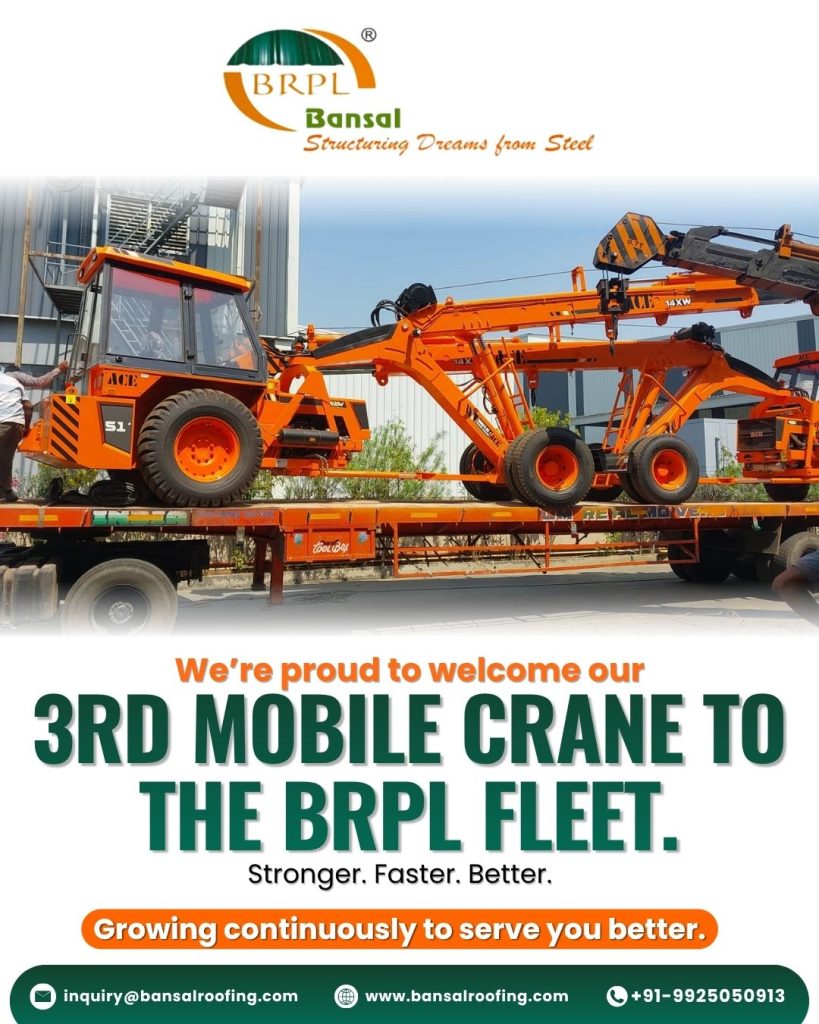
Table of Contents Introduction The 3rd Mobile Crane to the BRPL fleet marks a major operational upgrade in high-rise construction and heavy lifting capability. As infrastructure projects become more complex and vertically demanding, lifting systems are no longer optional support equipment—they are core execution assets. This addition strengthens BRPL’s ability to handle steel structures, roofing assemblies, and heavy construction materials with improved speed and precision. In modern construction environments, where deadlines are strict and safety requirements are higher than ever, this enhancement plays a critical role in improving project delivery outcomes. For roofing and structural engineering companies such as Bansal Roofing, such advancements directly improve installation efficiency and reduce execution delays at height. High-Rise Construction Challenges High-rise construction involves continuous vertical movement of heavy materials. Steel beams, reinforcement cages, prefabricated roofing systems, and mechanical components must be lifted repeatedly to different elevations. This creates logistical pressure, especially when lifting equipment is limited. Earlier systems often faced bottlenecks due to single-crane dependency. This resulted in delays, idle labor time, and increased coordination complexity. As building heights increase, these challenges multiply. The 3rd Mobile Crane to the BRPL fleet directly addresses these constraints by increasing lifting availability and enabling parallel execution of tasks across multiple zones. 3rd Mobile Crane to the BRPL Fleet Upgrade The introduction of the 3rd Mobile Crane to the BRPL fleet significantly increases operational flexibility. Instead of sequential lifting operations, multiple lifting activities can now take place simultaneously. This upgrade also improves project redundancy. Even if one crane is undergoing maintenance or assigned to another site, operations can continue without interruption. This ensures better continuity in high-rise construction schedules. The mobility factor further strengthens its advantage, allowing quick repositioning across sites without long setup delays. Technical Impact on Lifting Operations From a technical standpoint, mobile cranes provide controlled lifting capacity with hydraulic precision. The addition of the third crane enhances load distribution across projects, reducing pressure on individual machines. This results in smoother handling of heavy steel structures and roofing components. Precision placement at height becomes more reliable, reducing installation errors and rework. The system also improves adaptability in congested urban environments where fixed crane setups are not always feasible. Safety Improvements in Modern Construction Safety is one of the most critical aspects of high-rise lifting operations. The 3rd Mobile Crane to the BRPL fleet reduces dependency on manual lifting methods, which are more prone to accidents and instability. Mechanized lifting ensures controlled movement of heavy loads, minimizing human exposure to high-risk zones. This aligns with global construction safety standards and reduces overall site hazards. International Labour Organization Safety Standards Operational Efficiency Gains The operational impact of the 3rd Mobile Crane on the BRPL fleet is significant. Project timelines improve due to parallel lifting operations, while labor utilization becomes more efficient. Material handling becomes smoother as multiple cranes can operate in different zones simultaneously. This reduces congestion at ground level and prevents workflow interruptions. Overall productivity increases due to reduced waiting time and improved resource allocation. Integration in Roofing & Steel Projects In roofing and structural projects, lifting accuracy is essential. Steel trusses, roofing sheets, and prefabricated assemblies require precise placement at height. The 3rd Mobile Crane to the BRPL fleet ensures smoother execution of such tasks by providing consistent lifting availability and controlled positioning. This is especially valuable for industrial roofing projects where installation speed and alignment accuracy directly affect project cost and quality. Industry Impact The expansion of BRPL’s lifting capacity reflects a broader trend in the construction industry toward mechanization and scalability. As urban infrastructure grows vertically, companies with higher lifting capacity gain a competitive advantage. Mobile cranes are becoming essential assets for high-rise construction execution rather than optional equipment. 📌 Feature Snippet (Google Answer Box Ready) What is the 3rd Mobile Crane to the BRPL fleet? The 3rd Mobile Crane to the BRPL fleet is an additional heavy-lifting machine that enhances construction capacity, improves high-rise lifting efficiency, and enables faster, safer, and more flexible material handling across infrastructure projects. Why Choose Bansal Roofing? Choosing the right roofing and structural solutions partner is a critical decision in any construction project, especially when dealing with high-rise buildings, industrial sheds, warehouses, and large-scale infrastructure works. 3rd Mobile Crane to the BRPL fleet. The performance of a structure is not only defined by its design but also by the quality of materials, execution capability, and long-term reliability of the roofing system used. In this context, Bansal Roofing has established itself as a dependable name in the Indian construction ecosystem by consistently delivering engineered roofing and structural solutions that align with modern industrial demands. Bansal Roofing is not just a product supplier; it operates as a complete solutions provider for roofing sheets, PEB structures, insulation systems, and installation support. This integrated approach reduces dependency on multiple vendors, which is often a major challenge in large construction projects. By consolidating services under one system, project timelines become more predictable, coordination improves, and execution risks are reduced. One of the strongest advantages of choosing Bansal Roofing is its focus on engineering precision and project-specific customization. Every construction site has different load requirements, environmental conditions, and design constraints. Instead of offering one-size-fits-all solutions, the company provides tailored roofing and structural systems designed to match project specifications. This becomes especially important in industrial and high-rise environments where even minor deviations can lead to structural inefficiencies or long-term maintenance issues. Another key factor is material quality and durability. Roofing systems are constantly exposed to environmental stress such as heat, rain, wind load, and chemical exposure in industrial zones. Bansal Roofing emphasizes the use of durable, corrosion-resistant, and weather-adaptive materials that improve structural lifespan and reduce maintenance frequency. This directly impacts long-term cost efficiency for developers and contractors. Operational capability is also a major differentiator. Large infrastructure projects require not just materials but also reliable execution support. With strong project experience across industrial, commercial, and infrastructure segments, the company is able to handle complex installation requirements with better coordination and planning. This reduces downtime
7 Powerful Perforated Sheets Benefits for Industrial Roofing
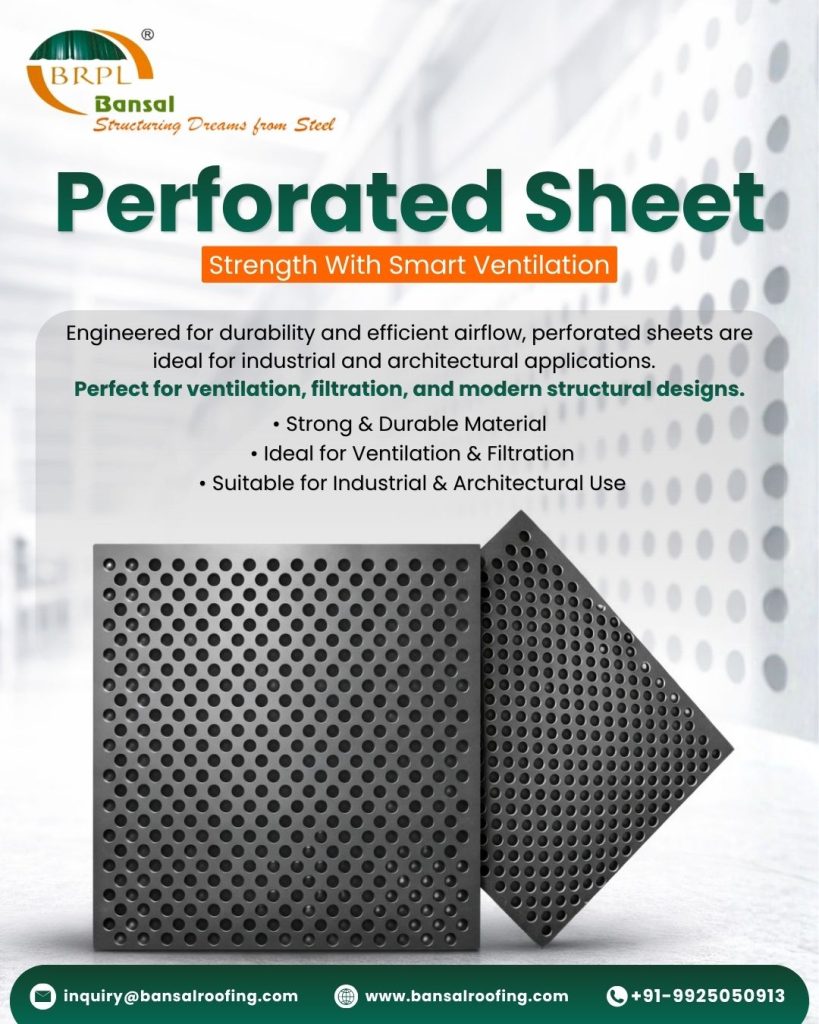
Table of Contents 7 Powerful Benefits of Perforated Sheets for Industrial and Commercial Buildings in 2026 Modern construction demands materials that combine functionality, durability, and visual appeal. Among the many options available today, Perforated Sheets have emerged as a practical solution for industrial, commercial, and architectural projects. These specially engineered metal panels contain evenly distributed holes or decorative patterns that allow airflow, visibility, and light penetration while maintaining structural strength. Their versatility makes them suitable for everything from factory roofing and wall cladding to decorative facades and safety barriers. As businesses increasingly focus on energy-efficient and sustainable construction, these metal panels continue to gain popularity across multiple sectors. What Are Perforated Sheets? Perforated Sheets are metal sheets manufactured with a pattern of punched holes, slots, or decorative openings. The perforations can vary in size, shape, and arrangement depending on project requirements. They are commonly produced using: Because of their adaptability, architects and engineers can customize designs to meet both technical and aesthetic goals. Why Modern Construction Uses These Metal Panels Industrial and commercial facilities often require effective ventilation without compromising durability. Traditional solid panels may restrict airflow, whereas perforated designs help maintain comfortable environments. In addition to practical performance, they also contribute to modern architectural aesthetics. Many contemporary buildings use ventilated metal panels to create visually striking exteriors while supporting natural air circulation. 7 Powerful Benefits of Perforated Sheets 1. Improved Ventilation One of the primary reasons builders choose Perforated Sheets is their ability to support natural airflow. Proper ventilation helps: This makes them particularly useful for warehouses, factories, and production facilities. 2. Long-Term Durability Industrial environments expose building materials to harsh weather conditions, dust, and pollutants. High-quality metal panels are designed to resist: Their long service life reduces maintenance requirements and replacement costs. 3. Better Acoustic Performance Noise control is important in manufacturing plants, machinery rooms, and commercial spaces. When paired with insulation materials, perforated metal panels can help absorb sound and reduce noise transmission. This contributes to a more comfortable and productive environment. 4. Modern Architectural Appearance Today’s architects frequently incorporate decorative metal facades into building designs. The wide variety of patterns and finishes allows designers to create: These applications enhance visual appeal without sacrificing functionality. 5. Enhanced Energy Efficiency Buildings that promote natural airflow often require less mechanical cooling. By allowing controlled ventilation and daylight penetration, Perforated Sheets can contribute to: These advantages support green building initiatives and energy-conscious construction. 6. Lightweight Yet Strong Construction Despite containing multiple openings, these engineered panels retain excellent structural integrity. Their lightweight nature offers several installation benefits: This combination of strength and efficiency makes them suitable for large-scale projects. 7. Wide Range of Applications Few construction materials offer the versatility found in Perforated Sheets. They can be customized for various industrial, commercial, and architectural requirements, making them a practical investment for many projects. Common Applications Industrial Roofing Many factories use ventilated metal sheets in roofing systems to improve airflow and create comfortable working conditions. Building Facades Architectural facades benefit from the combination of aesthetics and functionality offered by perforated designs. Ceiling Systems Decorative ceiling panels often utilize punched metal sheets for both appearance and acoustic performance. Machine Safety Guards Manufacturing facilities install metal screens around machinery to provide protection while maintaining visibility. Partitions and Screens Commercial buildings frequently use these panels to create stylish interior dividers and privacy screens. Filtration Equipment Industrial filtration systems often rely on perforated materials because of their precision and durability. Why Industries Continue to Prefer This Material Several factors contribute to the growing demand for this solution: These advantages make it suitable for both new construction and renovation projects. Why Choose Bansal Roofing? Bansal Roofing provides reliable metal roofing and building solutions designed for modern industrial requirements. Key benefits include: Whether your project involves industrial roofing, wall cladding, or specialized construction applications, choosing quality materials plays an important role in long-term performance. Learn more about roofing and construction solutions:https://bansalroofing.com/ Steel industry information:https://worldsteel.org International quality standards:https://www.iso.org Frequently Asked Questions What are Perforated Sheets used for? They are commonly used in roofing, facades, ceilings, partitions, safety guards, filtration systems, and architectural applications. Can they be customized? Yes. Hole size, pattern, material thickness, and surface finish can all be customized according to project requirements. Are these sheets suitable for outdoor installations? Yes. Galvanized steel, stainless steel, and aluminum options offer excellent weather resistance. Do they help reduce energy consumption? They can improve natural ventilation and daylight penetration, helping reduce dependence on cooling and lighting systems. Which industries use these products most frequently? Manufacturing, warehousing, infrastructure, architecture, transportation, and commercial construction sectors widely use them. Conclusion Perforated Sheets continue to be one of the most versatile materials used in industrial and commercial construction. Their ability to balance ventilation, durability, aesthetics, and energy efficiency makes them valuable for a wide range of applications. From roofing systems and facades to partitions and industrial equipment, these engineered metal panels deliver reliable performance while supporting modern design requirements. As construction trends move toward sustainability and efficiency in 2026, demand for this solution is expected to remain strong.
Z Purlin: A 7 Reliable Solution for Strong Steel Structures
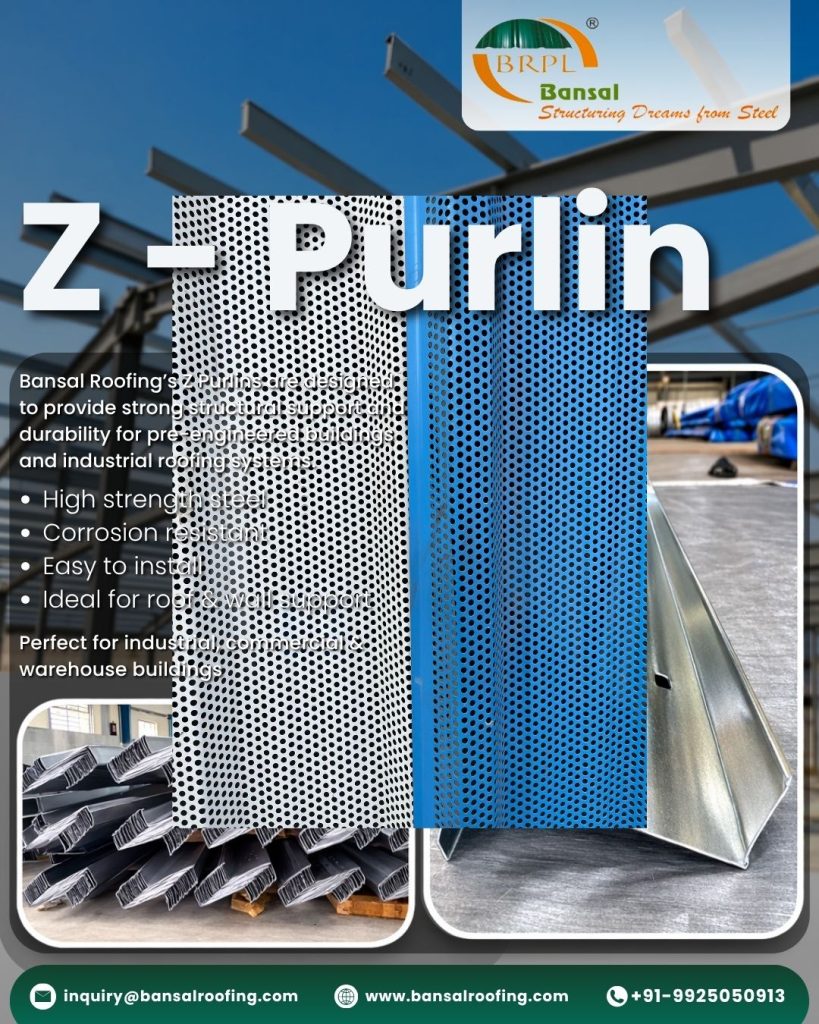
Modern construction projects require structural components that deliver strength, durability, and cost efficiency. Among the most important elements used in industrial and commercial buildings is the Z Purlin. Designed to support roofing and wall cladding systems, this steel section helps create stable structures capable of withstanding various environmental and operational loads. As construction technology continues to evolve, builders are increasingly looking for solutions that reduce material consumption while maintaining structural integrity. This is where advanced steel framing systems play a significant role. Their lightweight design, ease of installation, and long service life make them a preferred choice for warehouses, factories, logistics centers, and agricultural buildings. Whether you’re planning a new industrial shed or upgrading an existing structure, understanding the advantages of this roofing support component can help you make a better investment decision. Table of Contents What Is Z Purlin? A Z Purlin is a cold-formed steel section shaped like the letter “Z.” It is installed horizontally between the main structural frames and supports roof sheets or wall cladding panels. Its unique profile provides excellent load distribution while allowing overlapping connections, which enhances structural performance. Because of this design, engineers frequently use it in large-span buildings where strength and efficiency are critical. These steel members are typically manufactured using galvanized material to improve corrosion resistance and extend service life. Why It Is Used in Steel Construction Every steel building requires a reliable support system to transfer loads from the roof and walls to the primary structure. Without properly designed support members, buildings may experience: Steel purlin systems help solve these challenges by providing consistent support throughout the structure. Their design enables efficient load transfer while minimizing the amount of material required. 7 Powerful Benefits of Z Purlin 1. Exceptional Structural Strength One of the primary reasons builders prefer Z Purlin systems is their impressive strength-to-weight ratio. Despite being relatively lightweight, these steel sections can handle substantial loads from roofing materials, equipment, wind pressure, and environmental conditions. This makes them ideal for large industrial facilities where structural reliability is essential. 2. Longer Span Capability Modern industrial buildings often require wide, open spaces without excessive internal supports. The design of these structural members allows them to span greater distances compared to many traditional alternatives. Longer spans reduce the number of supporting elements required, resulting in cleaner layouts and improved space utilization. This feature is particularly valuable in warehouses, manufacturing plants, and logistics centers. 3. Reduced Construction Costs Cost efficiency remains a major consideration for every construction project. Because steel support sections are lightweight, transportation expenses are often lower. Installation is also faster, reducing labor costs and project timelines. When combined with their durability and low maintenance requirements, these advantages contribute to significant long-term savings. 4. Superior Corrosion Resistance Many steel framing components are manufactured using galvanized steel, which provides a protective coating against rust and corrosion. This protection is especially important in environments exposed to: The result is a longer-lasting structure that requires fewer repairs over time. 5. Quick and Easy Installation Construction schedules are often tight, making installation efficiency an important factor. Pre-engineered steel sections can be installed rapidly using standard construction methods. Their lightweight nature simplifies handling on-site and helps contractors complete projects faster. Faster installation translates directly into reduced labor costs and improved project efficiency. 6. Versatility Across Industries Steel roofing support systems are used across a wide range of industries due to their adaptability and performance. Common applications include: Their ability to support different roofing and cladding systems makes them suitable for both small and large-scale projects. 7. Improved Building Performance The overlapping connection capability of Z Purlin sections enhances overall structural stability. This design feature improves load sharing between members and helps buildings perform better under demanding conditions such as strong winds and heavy roof loads. As a result, structures become safer, stronger, and more reliable over their operational lifespan. Common Applications Industrial Buildings Factories and production facilities rely on strong support systems capable of handling heavy-duty operational requirements. Warehouses Large storage facilities benefit from long-span construction and efficient roofing support solutions. Agricultural Structures Farm buildings, poultry sheds, and grain storage facilities often utilize galvanized steel framing for durability and weather resistance. Commercial Projects Retail centers, office complexes, and exhibition spaces require dependable structural systems that balance strength and cost efficiency. Z Purlin vs C Purlin Feature Z Purlin C Purlin Load Distribution Excellent Good Span Capability Longer Moderate Overlapping Connection Yes Limited Structural Efficiency High Medium Large Building Suitability Excellent Good For larger industrial structures, the Z-shaped profile is often preferred due to its enhanced structural performance and flexibility. Why Choose Bansal Roofing? When selecting construction materials, quality and reliability are critical. Bansal Roofing provides advanced roofing and structural solutions designed to meet modern industrial requirements. Benefits of Choosing Bansal Roofing Their commitment to innovation and customer satisfaction has made them a trusted partner for industrial and commercial construction projects. Suggested Internal Links Suggested Image Alt Text External Resources Conclusion The Z Purlin remains one of the most effective structural components used in modern steel construction. Its combination of strength, lightweight design, durability, and cost efficiency makes it suitable for a wide range of industrial, commercial, and agricultural applications. By choosing high-quality materials from trusted suppliers such as Bansal Roofing, businesses can improve building performance, reduce maintenance costs, and ensure long-term structural reliability. FAQs What is a Z Purlin used for? It is primarily used to support roofing sheets and wall cladding in steel structures. Why is it preferred for industrial buildings? Its strength, long-span capability, and lightweight design make it highly suitable for large-scale construction projects. Is galvanized steel important for purlins? Yes. Galvanization helps protect steel against rust and corrosion, extending its lifespan. Can these structural members be used in warehouses? Yes. They are widely used in warehouses, factories, and logistics facilities due to their excellent load-bearing performance. How do they improve construction efficiency? Their lightweight design and easy installation process help reduce labor costs and shorten project timelines.